
Which WiFi band will finally stop your buffering and give you flawless live sports and 4K movies at home?
You need clear answers fast. Choosing the right band affects speed, range, and everyday streaming quality. This guide cuts through jargon so you can pick the best frequency for each room and device.
The core difference is simple: 2.4 ghz favors range and wall penetration, while higher ghz bands focus on top speed and less congestion at short distances. Knowing when to use each band helps you avoid dropped channels and long load times.
We’ll explain how devices connect, how interference affects performance, and which band suits 1080p or 4K viewing. You’ll also see how pairing the right setup with GetMaxTV — 19,000+ live channels and 97,000+ VOD for $6.95/month with instant activation — delivers the best value and smoothest streaming in 2025.
Key Takeaways
- 2.4 ghz gives better range and wall penetration for distant rooms.
- Higher ghz bands provide faster speed and less local interference.
- Match band choice to device location for stable 1080p and 4K playback.
- Dual-band routers let you place devices on the best frequency.
- GetMaxTV pairs affordable content with universal device compatibility.
- Quick setup and 24/7 support make it easy to optimize your home internet.
Why your WiFi band choice matters for IPTV in 2025
Picking the right WiFi band changes how reliably your streams play at home. Your band affects range, interference, and the steady data flow that live channels and VOD need.
2.4 ghz travels farther and cuts through walls, but it can get crowded in apartments and busy neighborhoods. Higher ghz options give more channels and less interference near the router, which helps with HD and 4K playback.
Think about users and devices in your house. Newer gear often supports faster ghz bands, while older devices may need the longer reach of 2.4 ghz. When multiple people stream, splitting load across bands keeps picture quality steady.
- Internet speed consistency matters for continuous playback and fewer stutters.
- Interference spikes in dense areas—choose the band that avoids congestion.
- Practical tip: use the faster band near the TV and 2.4 ghz for distant devices, then tweak as needed.
Remember: you don’t have to change your broadband plan to improve streaming. Tuning band use can unlock better performance so services like GetMaxTV — with 19,000+ live channels and 97,000+ VOD for $6.95/month — deliver their full value. For step-by-step setup tips, see the connectivity guide.
IPTV 5GHz vs 2.4GHz: the practical difference for streaming
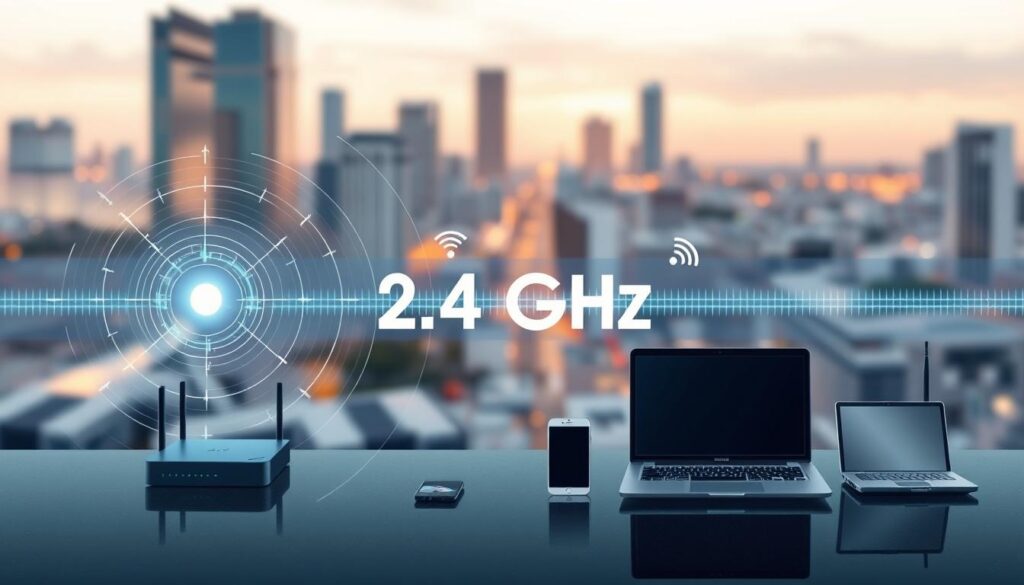
Match each device to the best band and your streams will stay steady.
How frequency bands affect speed, range, and interference
Higher ghz delivers faster throughput and cleaner airspace near the router. That makes it better for 4K VOD and fast live sports where steady bitrates matter.
The 2.4 ghz frequency band travels farther and penetrates walls better. It keeps distant TVs and older devices connected, though you may see lower speeds and more interference from household gear.
When each band wins: real-world streaming scenarios
- Near the router: use the higher ghz band for 4K sticks and smart TVs to avoid frame drops.
- Distant rooms: choose 2.4 ghz for TVs behind multiple walls to maintain a reliable connection.
- Many devices: split devices across bands so one guest’s downloads don’t ruin your main video stream.
- Troubleshooting tip: if a game stutters, try moving the device from 2.4 ghz to the higher band or select the SSID manually.
| Feature | Higher ghz | 2.4 ghz |
|---|---|---|
| Typical throughput | Up to ~1,300 Mbps | Lower, variable |
| Range & penetration | Shorter range, weaker through walls | Longer reach, better wall penetration |
| Interference | More channels, less local congestion | Impacted by microwaves and cordless devices |
Quick takeaway: connect 4K and primary streaming devices to the faster band and leave smart home gadgets on 2.4 ghz. Dual-band routers make this simple.
If you want step-by-step setup help, see the connectivity guide. Regardless of which band you use, GetMaxTV gives you 19,000+ live channels and 97,000+ VOD for $6.95/month with instant activation and 24/7 support to help optimize your connection.
Speed and bandwidth: 5GHz for 4K VOD, 2.4GHz for basic streaming
For high-bitrate 4K and fast live sports, raw throughput and stable bandwidth matter most.
Expect much higher top speeds on 5 GHz, often reaching up to ~1,300 Mbps on modern routers. That headroom keeps bitrates steady during action scenes and big sports moments.
The 2.4 ghz band usually tops out around 150–300 Mbps in ideal conditions. It works fine for 1080p HD and everyday video streaming, but peak-time congestion can cause buffering.
Throughput, congestion and older devices
Less interference and more channels on 5 GHz mean smoother playback when multiple devices compete for data.
Older devices may only support the 2.4 ghz band, so plan device placement. Use separate SSIDs on your router to put primary TVs on the faster band and secondary screens on 2.4 ghz.
- Smoother 4K VOD and live sports on 5 GHz thanks to higher speed headroom.
- 1080p is often fine on 2.4 ghz if conditions are clean, but it can suffer during peak congestion.
- Microwave or cordless interference often hits 2.4 ghz; switching bands can fix drops.
| Use case | Preferred band | Typical result |
|---|---|---|
| 4K VOD & live sports | 5 GHz | Stable high bitrate, fewer stalls |
| 1080p HD and older devices | 2.4 ghz band | Better range, possible congestion |
| Many devices at once | Split across bands | Balanced speeds, less interference |
Pro tip: run quick speed tests on both bands and host your main streaming device on whichever delivers higher, consistent throughput. When you want the most from GetMaxTV’s 4K catalog, prioritize the faster band — GetMaxTV still gives you 19,000+ live channels and 97,000+ VOD for $6.95/month with instant activation and 24/7 support. For viewing tips, see the viewing FAQs.
Range and obstacles: choosing 2.4 GHz for larger homes, 5 GHz for short distance
Large houses often expose where each wireless band wins or loses. Walls, floors, and heavy materials change signal strength more than raw router specs do.
Better range and wall penetration on 2.4 ghz
2.4 ghz travels farther and handles obstacles better. In multi-room homes, it keeps distant TVs and devices online when the other band fades.
Shorter distance but higher speeds on 5 GHz
The higher band gives faster throughput close to the router, ideal for your main living room or any near-line-of-sight device. Hard surfaces like brick and metal reduce its reach faster than 2.4 ghz.
“If 5 GHz drops in a room, switch that device to 2.4 ghz for a steady stream.”
- In larger homes with many walls, 2.4 ghz holds a connection where the faster band weakens.
- Keep premium video devices close to the router to benefit from the higher speeds of 5 GHz.
- Use extenders or mesh nodes to bring higher-band performance deeper into your home when needed.
- Do a quick walk test with your streaming stick; if the higher band fails, move that device to 2.4 ghz.
Whatever you choose, GetMaxTV works across rooms and devices — 19,000+ live channels and 97,000+ VOD for $6.95/month, no contract, instant activation, and 24/7 help to optimize placement and band selection.
Interference, channels, and stability: keeping your streams stutter‑free

Local radio noise and crowded channels are the usual culprits when a stream stutters at the worst moment. You can spot common sources and fix them fast to keep your connection steady during important live events.
Why 2.4 GHz is crowded
Everyday devices like microwaves, cordless phones, and baby monitors share the 2.4 ghz frequency. That creates overlap with neighbors’ networks and forces retries that show up as stutter or pixelation.
5 GHz channels reduce congestion for around‑the‑world events
Use the cleaner band near the TV for big, time‑sensitive broadcasts. More channels mean fewer collisions and better stability when dozens of users stream at once.
“If your stream glitches at dinnertime, microwave interference could be the culprit; testing the other band can restore stability.”
- Move the TV to the less-crowded band if interference spikes.
- Keep Bluetooth speakers and baby monitors away from the device path.
- Enable automatic channel selection on your router to dodge noisy channels.
- When you need help, GetMaxTV’s 24/7 support can guide band changes so you don’t miss around‑the‑world events across 19,000+ live channels for $6.95/month.
Router setup and networks: dual‑band tips for the best connection
Get your router working for you with a few simple, low‑risk tweaks. Start with clear SSIDs and a smart placement plan so your main screen gets priority throughput.
Use dual‑band SSIDs to match devices with the right band
Create separate names for each band so you can pin your main streaming device to the faster channel. This lets you keep low‑priority devices on the longer‑range network without interruptions.
Placement, signal strength, and overcoming obstacles
Place the router centrally and up high to improve signal strength and line‑of‑sight for the faster ghz band. Avoid putting routers near large electronics or aquariums; even small moves help.
When to switch bands for better speeds or range
If your TV buffers on 2.4 ghz, move it to the faster band. If the signal drops in a far room, switch that device back to 2.4 ghz for range.
- Separate SSIDs: pin main devices to the faster band and distant devices to the long‑range network.
- Check analytics: use your router’s per‑device stats to adjust placements or bands.
- Segment devices: move background gadgets off the primary band so your video stays stable.
- Consider mesh: add nodes for tricky layouts or carefully segment bands to preserve range.
| Action | Why it helps | Quick result |
|---|---|---|
| Create separate SSIDs | Pin devices to the best band | Stable playback for your main screen |
| Raise and centralize router | Improves signal strength and reduces obstacles | Better throughput across rooms |
| Check per‑device speeds | Shows real bottlenecks | Informed band moves and placement fixes |
Make optimization easy: GetMaxTV works on Firestick, Smart TV, Android, Mac, Windows and more. Sign up in two minutes for $6.95/month with no contract. If you need help fine‑tuning SSIDs, placement, or switching bands, GetMaxTV’s 24/7 support can walk you through the best access settings and tweaks.
For a short setup walkthrough, see the connectivity guide for practical steps and examples.
GetMaxTV: the best-value IPTV that works on your band and your devices
GetMaxTV turns your existing home network into a huge entertainment hub in minutes. It pairs with your router and gives you massive content without extra hardware.
Whether your setup favors reach or raw speed, GetMaxTV streams reliably across common ghz bands and keeps bandwidth demands efficient.
Massive content library
19,000+ live channels and 97,000+ VOD mean you’ll find sports, movies, and shows for everyone in your house. That volume maximizes the value from your broadband and internet plan.
Unbeatable price and compatibility
Only $6.95/month includes all sports and movie packages. It works on Firestick, Smart TV, Android, Mac, Windows, and other common devices.
Fast setup and support
- Activation in about 2 minutes — no contract.
- 24/7 customer support to help with SSID choices and quick data fixes.
- Tuned to run well on both 2.4 ghz and faster ghz bands so people can watch without hassle.
“A huge catalog, tiny price, and instant activation—set it up and start watching tonight.”
| Feature | Why it helps | Result |
|---|---|---|
| Massive library | More choices for all people | Better value from your internet |
| Universal devices | No extra hardware | Easy install on your home setup |
| Instant activation | Fast onboarding | Watch in minutes |
Ready to watch? Visit https://watchmaxtv.com/ or grab a free trial via WhatsApp at https://wa.me/message/OZ4NORVZQTYAC1.
Quick decision guide: 2.4 GHz vs 5 GHz for your home and habits
Pick the band that matches your home layout and watching habits to stop guessing and start streaming.
Simple rules to choose fast:
- Choose 2.4 ghz if you live in larger homes, have many walls, or need reliable access at a distance where higher bands drop off.
- Choose 5 GHz when your main TV sits near the router and you want the highest speeds for 4K and smooth video streaming.
- If multiple users stream, split devices across both bands to balance load and keep your primary screen steady.
- For travel or around world viewing, prefer reliability: use the closer, high‑speed band when near the router and 2.4 ghz when you need reach.
If you’re unsure, start your main TV on the faster band and keep secondary devices on the 2.4 ghz band. When a room buffers because of distance, move that device to 2.4 ghz for better range and steadier access.
“Match band choice to where people watch most — layout beats raw specs every time.”
Use this quick guide to map band choice to your rooms and users in minutes. Then activate GetMaxTV for instant access to 19,000+ live channels and 97,000+ VOD at $6.95/month, no contract, instant activation, and 24/7 support — or start with a free trial via WhatsApp to test performance right away.
Conclusion
Conclusion
Close with steps you can use tonight to stop buffering and enjoy shows.
Choose the right frequency band for each room: use 5 GHz near the router for higher bandwidth and top speeds, and 2.4 GHz for better range through walls. Dual‑band routers let you match devices and users so your main screen stays stable.
Watch for signal strength and simple obstacles; a quick band switch often fixes interference without changing your broadband plan. Small router moves and per‑device placement improve overall networks and data flow.
GetMaxTV unlocks massive value—19,000+ live channels and 97,000+ VOD for $6.95/month. Universal device support, 2‑minute activation, no contract, and 24/7 help make setup easy. Ready to subscribe? Visit https://watchmaxtv.com/. Prefer a free trial? Message support on WhatsApp: https://wa.me/message/OZ4NORVZQTYAC1.
FAQ
Which band should you pick for smooth video streaming at home?
Choose the higher-frequency band for fast, short-range streaming like 4K video and live sports. Pick the lower-frequency band when you need better range and wall penetration in larger homes or areas with many obstacles.
How do speed and range differ between the two bands?
The higher band offers greater throughput, so you get faster downloads and less buffering nearby the router. The lower band travels farther and goes through walls better, so it keeps a stable link where distance or obstacles matter more.
Will my older devices work on the faster band?
Many legacy devices only support the lower band. If a device doesn’t see the higher band, connect it to the lower-frequency network or enable a dual-band SSID so each device uses the best available connection.
Does one band handle congestion and interference better?
The higher-frequency band has more channels and typically faces less interference from neighbors and household appliances, so it often delivers smoother video during peak times. The lower band gets crowded by common devices like microwaves and cordless phones.
How should you position your router for the best coverage?
Place the router centrally and elevated, away from thick walls and metal objects. For large homes, use extenders or mesh nodes on the lower band to improve range, and reserve the higher band for nearby streaming devices.
What’s the simplest way to let devices use the optimal band?
Enable dual-band SSIDs or use band-steering on modern routers. That way, devices automatically connect to the most suitable frequency based on distance, interference, and throughput needs.
Can switching bands fix buffering or stutter during live events?
Yes. If you see buffering, try switching the streaming device to the higher-frequency network for more bandwidth or to the lower-frequency network for a steadier signal if you’re farther from the router.
How many users can each band support for simultaneous streaming?
The higher band supports more high-bandwidth streams nearby, while the lower band supports more simultaneous users over a wider area but at lower per-device speeds. For many users in one room, use the higher-frequency option.
Do routers require special setup to support both bands well?
Modern dual-band routers handle both bands out of the box. Update firmware, set clear SSID names, and configure quality-of-service (QoS) if you want to prioritize video traffic for fewer interruptions.
Is one band better for international live events and high-density venues?
The higher-frequency band usually performs better in crowded wireless environments because it offers more non-overlapping channels, reducing congestion during global live events and peak viewing times.
The WatchMaxTV Team is a dedicated group of streaming specialists and entertainment technology reviewers covering IPTV services for viewers in the USA, UK, and Canada since 2023. Our team independently evaluates every service we feature — testing across Smart TVs, streaming sticks, mobile devices, and gaming consoles. We measure stream stability, picture clarity in HD and 4K, program guide accuracy, and customer support quality. Our goal is simple: help cord-cutters find reliable, affordable alternatives to overpriced cable. Every recommendation on WatchMaxTV.com comes from real-world testing — not sponsored content or paid placements.