

Curious how to tell real streaming quality from flashy ads? You want steady live TV, clear channels, and service that doesn’t vanish during the big game. This guide shows you what “reliable” means in real-world viewing so you can compare services without getting sidetracked by marketing.
Who this is for: you, if you expect predictable streaming, quick support, and device flexibility—whether you’re shopping in Vancouver or searching for a reliable iptv provider montreal.
You’ll get two clear deliverables: a buyer’s checklist that shows what good looks like, and a red-flag list of things to avoid. You’ll also learn how both the service and your home internet affect quality, and what to test during a “reliability week”—from channel availability to sports performance and device compatibility.
Later in the guide you can evaluate legal-minded options like GetMaxTV and compare features. If you want a practical example and a legal subscription option now, check this WatchMaxTV resource.
Key Takeaways
- Define reliability by stream stability, channel accuracy, and support speed.
- Compare services with a short trial week to validate channels and sports performance.
- Test on all your devices and check your internet speed before subscribing.
- Watch for red flags: no trial, vague channel lists, or poor support response.
- Consider legal-minded options like GetMaxTV as you finalize your choice.
What “reliable” really means for an IPTV service in the US
Start by defining what steady streaming looks like in your living room. Reliability is not a slogan — it is a set of things you can measure and test.
Concrete signs to watch: consistent uptime, fast channel start, few buffering events, and quick support responses when issues appear.
Reliability vs. channel count: why bigger isn’t always better
More channels can sound great, but many large lists hide duplicates, dead links, or feeds that fail under load.
Focus on the channels you actually watch, not raw counts. A cleaner line-up often equals fewer playback problems.
Uptime, buffering, and support response time as trust signals
Measure three metrics: uptime percentage, buffering events per hour, and average support response time.
Independent testing over 90 days found some services near 99.9% uptime and support replies as fast as four minutes, while slower ones averaged 45–60 minutes.
How reliability changes during peak hours and live sports
Evening peaks and live sports create the heaviest load on systems. If a service handles live sports at peak time, it will likely meet your daily needs.
Run a test week that includes weekend evenings and a live match to see real-world performance.
“Measure uptime, not promises. A short demo can’t match 90 days of real testing.”
- Prefer providers that publish uptime and support targets.
- Ask for channel lists and test the channels you care about during peak hours.
- Validate claims with a 7–14 day trial and log buffering and start times.
| Metric | Good | Acceptable | Poor |
|---|---|---|---|
| Uptime | 99.5%–99.9% | 99.0%–99.4% | <99.0% |
| Buffering events (per hour) | <1 | 1–3 | >3 |
| Support response time | <10 minutes | 10–60 minutes | >60 minutes |
| Peak sports performance | Stable 1080p/4K | Occasional drops | Frequent blackouts |
For a practical comparison and a legal-conscious option, see this WatchMaxTV guide or review long-term test results like those linked at independent testing summaries.
Internet Protocol Television basics you need before you buy
Before you shop, learn the basics of how internet-delivered TV actually reaches your screen.
What internet protocol television actually is
Internet protocol television means TV sent over your internet connection instead of coax cable. The “service” supplies the feed and channel list. The “player app” on your TV or stick decodes and shows the channels.
How it differs from traditional cable and streaming services
Traditional cable runs on dedicated infrastructure that keeps signals steady. Internet-based services depend more on your home network, the provider servers, and the player app.
Streaming services like Netflix use closed apps and fixed catalogs. By contrast, many IPTV offers use third-party players and M3U playlists or Xtream Codes credentials to deliver channels and content.
Core content types and what to expect
- Live channels: real-time TV and sports; needs low latency for best results.
- VOD: on-demand movies and shows; tolerant of buffering and easier to cache.
- Catch-up: recent shows (often ~72 hours) you can replay.
- PPV events: pay-per-view sports or concerts that demand high peak capacity.
“Know the terms: EPG, VOD, catch-up, PPV, M3U, Xtream — they help you read any offer.”
| Content Type | Typical Use | Quality Need |
|---|---|---|
| Live channels | News, sports | Low latency, stable stream |
| VOD | Movies, shows on demand | Buffering tolerant |
| Catch-up | Missed episodes | Short-term availability (~72 hrs) |
| PPV | Events, fights | High capacity, peak performance |
Your quick pre-check: is your internet connection ready for IPTV?
Before you blame the service, check whether your home internet can actually handle live TV and 4K streams. A few focused checks will show if the problem is your network or the streaming source.
Speed targets for HD and 4K streaming
Simple targets: aim for ~10 Mbps per HD stream and 25 Mbps+ per 4K stream. For real homes, a plan in the 50–100 Mbps range gives headroom for other activity and peak hours.
Wi‑Fi vs. Ethernet, routers, and avoiding evening slowdowns
Speed alone isn’t enough. Latency, jitter, and packet loss also break video. If you watch live sports or 4K, prefer Ethernet or a strong 5 GHz/6 GHz Wi‑Fi link.
Move the router central, limit background downloads in the evening, and put high-use devices on a separate band to reduce slowdowns.
Multi-device streaming: how concurrent streams affect quality
Each additional stream raises bandwidth needs and the chance of drops. Plan by adding 10–25 Mbps per extra 4K stream or 5–10 Mbps per HD stream.
- Run speed tests at different times of day on the device you use for watching.
- Test wired vs. wireless to see real gains.
- Use this connectivity guide to dig deeper: connectivity guide.
“Test on your actual device and at peak time—real results beat advertised speeds.”
reliable iptv provider montreal: what to look for when you compare providers
A clear plan page saves you time—look first for exact channel lists, connection limits, and add-ons.
Transparent plans, pricing, and what “too cheap” can signal
Plans should list what’s included, how many concurrent streams you get, and which features cost extra.
Very low price can mean unstable servers, slow support, or short-lived domains. Very high price doesn’t guarantee better service either.
Real device compatibility: smart TVs, Amazon Fire TV, and mobile
Check the device list before you buy. If a service only works with one app, you may need workarounds.
Make sure they support smart tvs and amazon fire devices you own. Confirm app names and sideload requirements.
EPG quality and how it impacts everyday viewing
EPG accuracy matters. A slow or wrong program guide makes browsing frustrating even when streams play fine.
Ask for screenshots or a demo of the guide and test search, categories, and catch-up links during any trial.
“Focus on transparency, compatibility, EPG quality, and clear support standards when you compare service providers.”
When you finish the checklist, you can review a legal-minded option like GetMaxTV’s main offer to see how those criteria map to a real plan.
A buyer’s checklist for IPTV providers you can trust
Start with a focused list of checks you can run in 24–72 hours to validate any plan.
Quick checklist you can copy:
- Confirm a clear channel list: look for exact channel names, regional notes, and sample streams during peak hours.
- Sample the VOD library: test a mix of new movies and older shows to spot duplicates or broken links.
- Run a trial on your devices: ensure the subscription’s app, EPG, and concurrent streams work for your TV and phone.
- Read refund terms carefully: get money-back windows and conditions in writing before you pay.
- Check payment options: standard cards or PayPal signal normal billing; opaque methods can be a red flag.
What a good trial includes: peak-time access to the channels you care about, full EPG, and enough time to test multiple devices. Paid or 24-hour demos are common; plan your test during an evening or a live match.
Tip: Verify “channels available” by asking for screenshots or a temporary login to play a few live channels and VOD items.
For a practical comparison and legal-minded options, see this service guide.
Red flags: signs an IPTV provider may be unreliable or risky
Some warning signs show up long before you pay—learn to spot them fast. Spotting these issues helps you avoid wasted money and frustration. Use them as quick checks when you compare any service.
Multiple copycat domains and confusing URLs
Frequent domain changes or many similar sites often mean unstable branding and short-lived operations.
Why it matters: if a provider moves domains often, channels and account access can break without notice.
No support standards or vague contact methods
If you can’t find clear contact options or service hours, plan for slow problem resolution.
Look for written refund and response windows. If those are missing, treat the offer with caution.
Inconsistent streams, frequent blackouts, and “anti-freeze” hype
Test several live channels at peak time. Frequent buffering, long startup times, or blackouts during sports events are immediate red flags.
Marketing claims like “anti-freeze tech” are not a substitute for real uptime numbers and logged performance.
Missing legal or legitimacy signals
Transparent business details, clear terms, and consistent documentation signal a more stable service.
Be skeptical of vague licensing claims. If the site is evasive before you buy, it usually stays evasive after payment.
“If something feels evasive, trust that instinct and verify before you commit.”
| Check | Red flag | Action |
|---|---|---|
| Domain stability | Multiple similar URLs | Search archives and WHOIS |
| Contact info | No clear hours or refund terms | Ask for written policy |
| Performance | Frequent blackout during sports | Run a peak-time trial |
What independent testing data suggests you should measure
Longer, systematic tests reveal patterns short trials simply can’t catch. Independent labs ran 90-day checks across 15+ services and found real differences that matter to your living room experience.
Why a 90-day approach beats short demos:
Why short demos can mislead
A midday demo may show perfect streams while evenings and big sports events fail. Short trials rarely expose peak-hour slowdowns or weekend spikes in traffic.
Uptime benchmarks and what they mean in practice
Uptime: 99.2% vs 99.9% explained
99.2% uptime equals about 7 hours of downtime a year. 99.9% is roughly 8.8 hours less per year. That gap matters during a crucial game or breaking news.
Support response: realistic expectations
Support response time ranges
Testing showed replies from ~4 minutes to ~1 hour. Fast support (minutes) reduces frustration when a service hiccups. Slower replies make outages feel much worse.
Streaming metrics to track
Startup time and buffering events
Measure channel startup time and buffering events per hour on the channels you watch most—news, local stations, and sports content. Also test on your actual internet link and devices.
“You’re not chasing perfection—aim for predictable performance and clear, timely support when things go wrong.”
How to evaluate streaming quality on your devices before committing
A quick device-first check will reveal more than marketing screenshots ever will. Before you subscribe, run simple tests on the exact devices you use most. That way you know how live channels and on-demand content behave in your home.
Testing live channels at different times of day
Set a short schedule: morning, evening, and one weekend block. Each test should be 10–20 minutes long and include at least one live news feed and one sports channel.
Check for fast start, steady audio, and consistent frame rate. Note any resolution drops or buffering during peak time.
Validating 1080p and 4K claims on real content
Pick the same channel or event across your TV, streaming stick, and phone. Compare the picture—don’t trust labels in the app alone.
What to watch for: true 1080p shows solid detail and little pixelation; 4K should remain crisp during motion. If a stream drops resolution under load, that’s a sign the connection or service can’t hold peak quality.
- Test on the living-room TV and on a mobile device you use often.
- Run one wired test and one over Wi‑Fi to spot local connection issues.
- Keep a short log of time, channel, device, and any problems you see.
“Measure streams on your devices at peak time—real tests beat glossy claims.”
Support and setup: what a good IPTV provider experience looks like
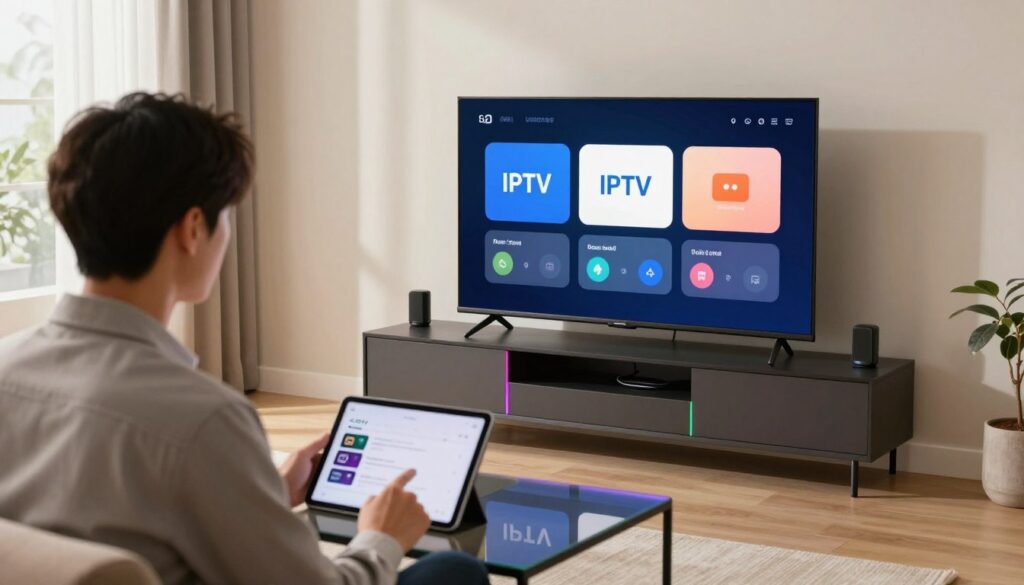
Good setup begins with clear onboarding steps and a fast way to get access to your channels. The first day often shows how the service handles problems and what options you’ll have if something breaks.
Instant activation vs. delayed approval
Some iptv provider accounts activate instantly. Others take a few hours while the team provisions credentials. Both are normal when explained up front.
What you should receive: login method (Xtream or M3U), server URL, username, password, and any EPG links or XMLTV details.
Setup help for IPTV Smarters and other players
A good setup guide for iptv smarters or similar apps includes step-by-step instructions, screenshots, and where to paste the M3U or Xtream credentials.
Look for simple app walk-throughs and a short troubleshooting list for common access errors.
What great support looks like when something breaks
Great support gives clear timelines, specific fixes, and follow-up — not vague advice. Expect a response window and a simple fix path.
“Ask a real question before you buy and time the reply. Fast, helpful answers are a strong signal.”
- Test support with a setup question.
- Confirm how they deliver access and what help is included.
- Choose the provider that offers clear setup options and quick follow-up.
Device compatibility checklist for smart TVs, Amazon Fire, and mobile
Check each of your home devices before you sign up so you don’t end up with an app that won’t run on your TV.
Smart TVs: when you need an app vs. when you need a player
First, confirm whether your smart tvs can install a dedicated app. A native app usually gives better EPG, smoother navigation, and fewer steps to start a stream.
If a native app is missing, you’ll need a separate player (M3U/Xtream). That works, but it can add setup time and reduce ease of use.
Amazon Fire TV/Fire Stick: the common pitfalls
Watch for storage limits on older Fire sticks and for sideload steps on newer models. Low storage can block updates or cause crashes.
Newer Fire TV models perform better; older sticks may drop resolution or stutter under load.
Phones and tablets: stability on cellular vs. home internet
Mobile streams often look fine on home internet but struggle on cellular. Test both networks if you plan to watch on the go.
Tip: check cellular playback, data usage, and whether the app auto-switches to lower quality on weak connections.
Households with multiple devices: stream limits and account rules
Count the number of concurrent streams your household uses and match that to the plan. Too few authorized streams leads to forced logouts or errors.
Also confirm login methods and whether one login can run on multiple device types simultaneously.
“Match your plan’s streams and connection options to real household use — don’t buy the cheapest option that might fail under load.”
Before subscribing, run a quick live test on each device and follow the setup guide for common player steps.
Features that separate the best IPTV providers from average ones
After your trial week, comfort and speed matter more than channel totals. The best services earn your trust by making everyday tasks faster: finding shows, replaying missed events, and surviving big sports nights.
EPG depth, search, and navigation that saves you time
Look for deep EPGs that show several days of listings and let you set favorites. Good search finds shows across live, VOD, and catch-up in seconds.
Favorites, filters, and fast category jumps cut browsing time. That matters when a lineup contains hundreds of channels.
Catch-up windows and how they affect missed shows
Catch-up length determines whether you can replay a missed show or game without recording. Short windows (24–48 hours) can cost you a full series episode.
Prefer services that keep at least 72 hours of catch-up for news and entertainment. That gives you breathing room when life interrupts your viewing.
PPV and sports reliability during high-traffic events
Sports and PPV are the real stress tests. Look for documented performance during big matches and events.
- Stable 1080p/4K during peak times is a key sign of quality streaming.
- Providers that throttle or black out during major games are poor choices for sports fans.
- Prioritize the features you’ll use: EPG accuracy, catch-up length, and sports stability beat gimmicks.
“Choose a service that helps you find and replay what matters, not just one with the biggest channel list.”
For a practical comparison of subscriptions that score well in testing, see this best iptv subscriptions guide.
Pricing and plans: how to compare IPTV subscriptions without getting fooled

Compare real-world costs, not marketing copy: monthly flexibility often beats a deep annual discount until you confirm performance.
Monthly vs. annual: value vs. flexibility
Monthly plans (often CAD $10–12/month in testing) give you a low-risk way to test stream quality and support. Annual plans (roughly CAD $97–118/year in some summaries) save money if the service holds up.
Tip: Start short-term. Upgrade to an annual plan only after a reliable trial week and a fast support response.
Cost-per-channel thinking vs. what you watch
Don’t be swayed by headline channel counts. Thousands of channels mean little if you only watch a handful.
- Prioritize channels you use daily.
- Ignore cost-per-channel math that rewards raw totals over usefulness.
Hidden costs to watch for
Common extras include extra connections for multiple rooms, premium EPG or extended catch-up tiers, and paid player features (TiviMate paid tiers, for example).
“Calculate your real monthly cost: base price + streams + player or EPG fees = true price.”
How to run a “reliability test week” on any IPTV provider
Plan a week of real-use tests so you can spot issues that a short demo will hide. Use simple checks each day and record results. This quick routine shows whether the streaming service meets your needs over actual living-room use.
Create a watchlist: sports, news, local, and entertainment
Pick four to six channels that match your habits: one local, one news, two entertainment, and at least one sports channel or event. Schedule viewing blocks across morning, evening, and one weekend session to simulate real life.
Log buffering, outages, and resolution drops
Keep a short log with time, channel, startup time, buffering events, and any drops from 1080p/4K to lower quality. Note outages and whether the app reconnects automatically.
Test customer support with real questions (and track response time)
Ask a practical setup or billing question on day two and time the reply. Independent testing showed responses from minutes up to about an hour, so track both speed and helpfulness.
- Test on multiple devices and both Wi‑Fi and Ethernet to isolate network issues.
- Run the same channel at peak time to reveal congestion under load.
- Summarize findings at week’s end and compare to your expectations before you buy access.
“A one-week, evidence-based test beats a good afternoon of streaming every time.”
How GetMaxTV fits into a safer, more trustworthy IPTV decision
Start any legal-minded search by confirming simple facts: what’s included, how you pay, and who answers support questions.
When you want a legal option, start with the provider’s transparency
Transparency means clear terms, straightforward billing, and contact details that work. If a service posts refund rules, renewal terms, and a visible help channel, you can verify those claims during a trial.
Treat legal services the same way you treat any other service. Check uptime behavior, device support, and written policies before you commit to a subscription.
Explore the main offer details at GetMaxTV
GetMaxTV is an example you can evaluate with this lens. Look for what you get, which devices are supported, how subscriptions renew, and how customer help works.
“Clear terms let you test claims and keep proof of access and refunds if you need them.”
- Confirm exact access methods and login type.
- Note supported devices and concurrent streams.
- Verify renewal rules and refund windows in writing.
| Check | Positive sign | Action |
|---|---|---|
| Terms & billing | Plain renewal and refund rules | Save a screenshot of the page |
| Device support | Named apps and tested list | Run a trial on your TV and phone |
| Support access | Visible hours and quick replies | Ask a setup question and time the reply |
| Service uptime | Published targets or test logs | Log performance during a week |
Buying checklist you can use right before you subscribe
Pause at the checkout and confirm these simple facts to protect your purchase. This final pass takes about ten minutes and prevents surprises after payment.
Confirm the channels you care about and verify they actually play
Do not rely on listings alone. Ask for a temporary login or sample streams and play the specific channels you watch most.
Test live news, local stations, and one sports channel at peak time to check startup and buffering.
Confirm device support, concurrent streams, and login method
Make sure the service runs on your main devices: smart TV, streaming stick, and phone.
Verify the number of simultaneous streams allowed and whether the connection is tied to one login or per device.
Confirm the login method (Xtream or M3U) and test it in IPTV Smarters or your preferred player app so you know the device setup works.
Confirm trial, refund terms, and support hours in writing
Get trial length, refund policy, and support hours as text on the order page or via email. Save a screenshot or copy of those terms.
Re-check the total price including extra streams, premium features, and any paid player options before you click “pay.”
- Run a 10-minute playback test of your top 4 channels on each device you use.
- Confirm concurrent streams and note how many active connections you need at once.
- Test the exact login flow in the player you plan to use.
- Save written trial/refund/support terms for reference.
- Compare the final price to other plans and count any add-on costs.
“Quick, targeted checks beat assumptions. Verify playback, devices, streams, and written terms before you buy.”
Conclusion
Let evidence guide you: choose a service by measuring uptime, checking written terms, and timing support responses—don’t be swayed by headline channel counts.
Do these quick steps: verify your internet connection, run a peak-time test on your main devices, and log startup time and buffering before you commit.
The best iptv for you delivers the specific channels you watch—especially sports nights—across the devices you actually use. Use the checklists and red flags in this guide to narrow options fast, then run a real test week so you decide with data, not ads.
If you want a legal subscription option, review long-term comparisons like long-term comparisons and discover legal options, or check GetMaxTV’s offer at WatchMaxTV.
FAQ
How do you choose a trustworthy IPTV service in Vancouver without getting overwhelmed?
Start with a checklist: verify transparent plans and pricing, check realistic channel lists, confirm device compatibility for smart TVs and Amazon Fire TV, and look for clear trial and refund terms. Test support responsiveness before you subscribe and avoid offers that look too cheap or promise every channel without specifics.
What does “reliable” really mean for an Internet Protocol Television service in the US?
Reliability means consistent uptime, minimal buffering, accurate EPG data, and responsive customer support. It also covers honest channel availability, VOD library integrity, and predictable performance during peak hours and live sports events.
Why isn’t a bigger channel count always better?
A huge channel list can hide duplicated or inactive streams and padded VOD catalogs. Focus on channels you watch regularly and check that those channels actually stream in the quality promised rather than trusting raw numbers.
Which trust signals show good uptime and quick support response?
Look for third-party uptime reports, clear SLAs or uptime benchmarks, documented support hours, and multiple contact methods (chat, email, ticket). Past customer reviews that mention fast problem resolution are useful too.
How does reliability change during peak hours and big sports events?
Peak times and major live events often stress servers and CDN links, causing longer startup times, more buffering, or bitrate drops. A reliable service uses adequate scaling, strong CDNs, and event-specific capacity planning to minimize these issues.
How does Internet Protocol Television differ from traditional cable and streaming services?
Internet Protocol Television delivers channels and on-demand content over your internet connection rather than coax cable. Unlike single-provider cable, IPTV often works across multiple devices and apps, and it can combine live channels, VOD, catch-up TV, and PPV in one subscription.
What’s the difference between live channels, VOD, catch-up TV, and PPV?
Live channels stream scheduled programming in real time. VOD (video on demand) gives you a library of movies and shows to watch anytime. Catch-up TV lets you view recently aired programs after broadcast. PPV (pay-per-view) covers one-off paid events like fights or concerts.
Is my internet connection ready for streaming HD or 4K content?
Aim for at least 10–15 Mbps for reliable 1080p and 25 Mbps or more for consistent 4K. Also factor in other household usage and concurrent streams when judging whether your plan is sufficient.
Should you use Wi‑Fi or Ethernet for the best performance?
Ethernet gives the most stable connection and lower latency. Modern Wi‑Fi can be fine if you’re close to the router and on a 5 GHz band, but avoid shared or distant wireless links during live sports or 4K viewing.
How do multiple simultaneous streams affect quality?
Every active stream consumes bandwidth. If multiple devices watch HD or 4K content at once, your total required speed increases. Confirm the service’s concurrent stream policy and match it to your home’s capacity.
What should you look for when comparing services available in Montreal?
Focus on transparent plans, honest channel lists, real device support (smart TVs, Amazon Fire TV, Android/iOS), and a clear EPG. Check trial options and refund policies before committing to a subscription.
How do you evaluate EPG quality and why it matters?
Good EPG data is accurate, up-to-date, and easy to navigate. It saves time finding live programs, scheduled recordings, and catch-up items. Poor EPG leads to missed shows and frustration.
How can you tell if a VOD library is padded or genuine?
Look for recent release dates, search test samples you care about, and confirm playable content during a trial. Large numbers alone can include duplicates or placeholder entries.
What should a good trial include?
A useful trial gives you access to live channels, VOD titles, EPG features, and support. It should allow realistic testing across your devices and include a clear trial length with no surprise charges.
What does a legitimate money-back guarantee usually cover?
A clear refund policy states the time window, eligible reasons for refund (technical or service issues), and the refund method. Avoid services with vague or no written guarantees.
What can payment options reveal about a service?
Multiple reputable payment methods (credit card, PayPal) suggest professional operations. Exclusively anonymous crypto-only payments may raise questions about longevity or support.
Which domain and contact signs indicate risk?
Multiple copycat domains, inconsistent URLs, or only social-media contact details can be red flags. Reliable services offer stable domains, clear business contact info, and formal support channels.
What support standards should you expect?
Expect published support hours, ticketing or live chat, and documented setup help. Good services provide setup guides for players like IPTV Smarters and quick escalation for outages.
How do you spot inconsistent streams and frequent blackouts?
Check user reports for repeated blackout complaints, test multiple channels across times of day, and look for promises like “anti-freeze” without technical explanation—those often mask instability.
How should you run a 90-day testing approach?
Track uptime, buffering, and picture quality across different days and times. Log support interactions and test peak-event performance. Short demos can hide problems that appear after regular use.
What uptime benchmarks should you expect?
High-quality services aim for 99.5% or higher. Understand that small percentage differences (99.2% vs 99.9%) translate to minutes vs. hours of downtime over months, so look for measured data.
Which streaming metrics matter most?
Pay attention to startup time, buffering frequency and duration, resolution drops, and stream stability during channel changes. These affect your viewing more than raw bitrate claims.
How can you test streaming quality on your devices before committing?
Use a trial to watch live channels and VOD at different times, verify 1080p and 4K claims with native-content examples, and test on smart TVs, Fire TV sticks, phones, and tablets to ensure consistent performance.
What setup help should you expect for IPTV Smarters and other players?
A good service provides step-by-step guides, sample playlist files, and troubleshooting tips for common apps. Some offer remote setup or screen-share assistance for first-time installations.
What does great support look like when something breaks?
Fast, transparent communication; clear next steps; and timely fixes or credits for prolonged outages. Proactive updates during incidents are a strong positive sign.
How do device compatibility rules differ between smart TVs and media players?
Some smart TVs run native apps, others need a compatible player app. Devices like Amazon Fire TV often require sideloading or specific app versions. Confirm exact models supported before subscribing.
What are common pitfalls with Amazon Fire TV or Fire Stick?
App compatibility issues, outdated firmware, or missing DRM support can block 4K or HD playback. Check device requirements and installation steps the service provides.
How stable is streaming on phones and tablets over cellular networks?
Cellular can work well for SD and HD but may throttle or switch quality dynamically. For reliable HD or 4K, prefer a strong Wi‑Fi or Ethernet connection when available.
How should households with multiple devices manage stream limits?
Verify the concurrent stream allowance in the service terms. If you need more simultaneous streams, look for plans that explicitly include them or offer add-on connections.
Which features distinguish the best services from average ones?
Deep, accurate EPGs, robust search, meaningful catch-up windows, reliable PPV handling, and a well-maintained VOD library separate top-tier services from mediocre ones.
How long should catch-up windows be to be useful?
Useful catch-up windows typically range from 24 hours to several days. Longer windows give you time to catch missed episodes; short windows limit flexibility.
How do pricing and plans compare between monthly and annual subscriptions?
Monthly plans give flexibility; annual plans often lower average monthly cost. Compare cancellation terms, renewal pricing, and whether long-term plans include the same features as month-to-month offers.
What hidden costs should you watch for?
Watch for extra fees for additional connections, premium channels, dedicated player apps, setup help, or required hardware. Confirm everything in writing before you pay.
How do you run a “reliability test week”?
Create a watchlist with sports, news, local, and favorite entertainment channels. Log buffering, outages, resolution drops, and note times. Submit test questions to support and track response times.
What should you ask support during a test week?
Ask about planned maintenance, peak-event capacity, and troubleshooting steps for slow streams. Track how quickly they respond and whether their answers resolve your issues.
How can you confirm channels you care about will actually play?
Use trial access to stream those exact channels at different times. Check the EPG and try catch-up features. If a trial isn’t available, request sample links or recorded proof of playback.
What final checks should you do right before subscribing?
Confirm channel availability, device support, concurrent stream limits, trial and refund terms, support hours, and the exact price you’ll pay after any introductory period.
Where can you start if you want a legal, transparent IPTV option?
Begin with services that publish clear channel lists, licensing information, and payment options through reputable processors. Transparency about content rights and business location helps you make a safer choice.
The WatchMaxTV Team is a dedicated group of streaming specialists and entertainment technology reviewers covering IPTV services for viewers in the USA, UK, and Canada since 2023. Our team independently evaluates every service we feature — testing across Smart TVs, streaming sticks, mobile devices, and gaming consoles. We measure stream stability, picture clarity in HD and 4K, program guide accuracy, and customer support quality. Our goal is simple: help cord-cutters find reliable, affordable alternatives to overpriced cable. Every recommendation on WatchMaxTV.com comes from real-world testing — not sponsored content or paid placements.