
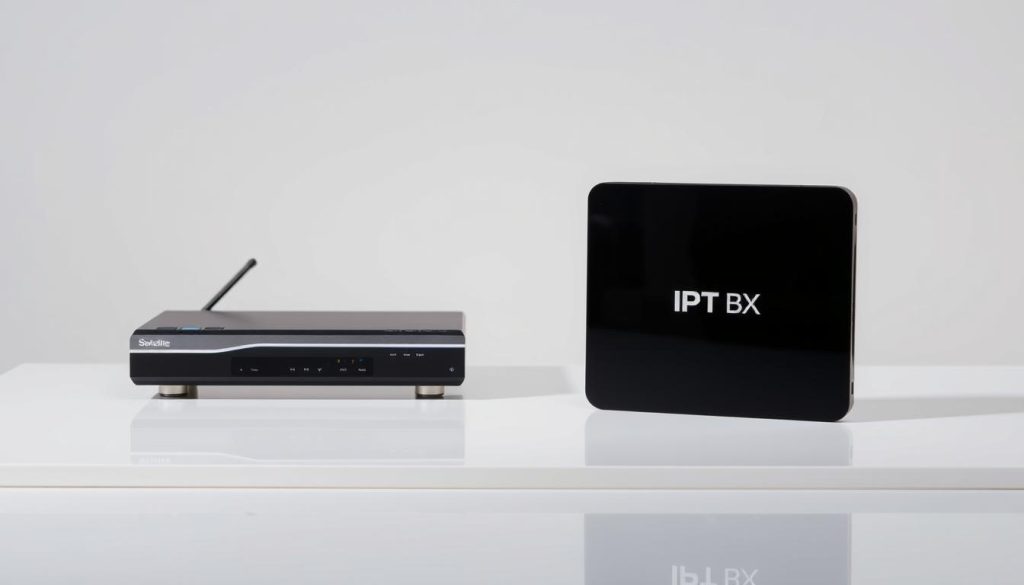
Did you know millions are switching from traditional TV to online streaming? The debate between IPTV technology and satellite receivers is growing.
Choosing between a satellite receiver and an IPTV box depends on what you like to watch. Satellite receivers give you lots of channels. On the other hand, IPTV boxes offer flexibility and on-demand content.
At WatchMaxTV, you can enjoy top streaming and even try their free IPTV trial. For help, just WhatsApp them at https://wa.me/message/OZ4NORVZQTYAC1.
Key Takeaways
- IPTV boxes offer more flexibility compared to traditional satellite receivers.
- Satellite receivers provide a broader range of channels.
- WatchMaxTV offers a free IPTV trial for new users.
- On-demand content is a significant advantage of IPTV boxes.
- Support is available through WhatsApp for WatchMaxTV users.
The Changing Landscape of Television Technology
How we watch TV is changing fast, thanks to digital streaming and satellite tech. It’s not just about new devices. It’s about how these techs are changing our TV watching.
From Traditional Broadcasting to Digital Streaming
For years, traditional TV has been the norm. But now, digital streaming gives us more choices than ever. Digital streaming lets us watch what we want, when we want. It’s more interactive and personalized.
This move to digital streaming is big. It’s changing how we watch TV. With streaming, we don’t need traditional TV as much. This change is revolutionizing the TV world, giving us more options and flexibility.
Why Consumers Are Exploring New Options
People are looking at IPTV boxes and satellite receivers for good reasons. They offer more control over what we watch. They also give us access to more channels and shows, including international ones.
Also, streaming quality has gotten much better. Many services now offer high-definition content. This, along with the ease of digital streaming, is making old TV seem less appealing. So, more people are choosing satellite to ip options for a better TV experience.
What Exactly Is a Satellite Receiver?
A satellite receiver is key for those who watch TV through satellite signals. It’s an electronic gadget that catches and decodes signals from satellites. This lets users enjoy a wide variety of channels and content.

Core Technology and Functionality
The main tech in a satellite receiver is capturing signals from satellites orbiting Earth. These signals are then decoded to bring TV channels, radio, and other data services. Modern satellite receivers can handle HD and 4K content, giving viewers top-notch visuals and sound.
Types of Satellite Receivers Available Today
There are many types of satellite receivers out there. You have HD receivers for high-definition content and 4K receivers for even better resolution. Some also have DVR features, letting users record their favorite shows.
Required Equipment and Setup Basics
To get a satellite receiver working, you need a satellite dish, a receiver box, and a TV. The dish captures the signal from the satellite, which is then sent to the receiver box. The receiver box decodes the signal and sends it to the TV for viewing. Proper alignment of the satellite dish is key for a clear signal.
Understanding IPTV Box Systems
IPTV box systems are changing how we watch TV. They use the internet to send TV shows, unlike old ways. This makes watching TV more flexible and fun.
How IPTV Technology Works
IPTV streams TV shows over the internet. This lets users watch lots of channels and shows whenever they want. A set-top box or smart device app makes it happen, showing the TV on your screen.
Using a sat iptv converter can make watching TV even better. It changes satellite signals into IPTV format. This gives you more ways to watch your favorite shows.
Popular IPTV Box Models and Brands
Many IPTV box models and brands are out there. You can find MAG, Formuler, and Android-based boxes. Each has different features like how fast it works and how much memory it has.
Network Requirements for Optimal Performance
IPTV box systems need a fast and stable internet connection. For standard definition, 10 Mbps is the minimum. But, for high-definition, you need at least 25 Mbps.
A strong internet connection is key for a good viewing experience. It helps avoid buffering and keeps the quality high.
IP Satellite Receiver Technology: The Best of Both Worlds
Now, consumers can enjoy the best of both worlds with IP satellite receivers. This technology combines satellite broadcasting’s reliability with IPTV’s flexibility. It offers a complete viewing experience.
Hybrid Functionality Explained
IP satellite receivers mix satellite and IPTV benefits. They let users access more channels and on-demand content. An industry expert says, “The future of television lies in hybrid solutions that offer both reliability and flexibility.”
This is done through DVB to IPTV conversion. It makes switching between content sources easy.
Advanced Features of Modern IP Receivers
Modern IP satellite receivers have cool features. They include electronic program guides, digital video recording, and support for multiple streaming protocols. These features give users more control over what they watch.
A tech reviewer notes, “IP satellite receivers are setting a new standard for television entertainment.”
Integration with Smart Home Systems
IP satellite receivers can connect with smart home systems. This makes watching TV more streamlined and connected. Users can control their entertainment systems better.
With the ability to link to smart devices, IP satellite receivers lead in home entertainment innovation.
Content Comparison: Channels and Programming Options
Satellite and IPTV services both have a lot of content. But, they differ in important ways. Knowing these differences helps you choose the best service for your entertainment needs.
Satellite Broadcasting Content Libraries
Satellite TV has a wide range of channels, including international and niche content. DISH Network and DIRECTV offer lots of programming, like sports, news, and entertainment. But, you might get channels you don’t watch because they’re bundled together.
IPTV Channel Selection and On-Demand Content
IPTV gives you more control over channels and on-demand content. WatchMaxTV lets you pick channels and access a huge library of movies and TV shows. This can save you money and make watching more enjoyable if you have specific interests.
Regional Availability and Geo-Restrictions
Where you can watch content matters a lot. Satellite TV works everywhere if you can see the satellite. IPTV needs internet and might not work in all places due to geo-restrictions. Some IPTV has content you can’t get on satellite TV because of these rules.
| Feature | Satellite TV | IPTV |
|---|---|---|
| Content Variety | Broad range of channels | Flexible channel selection |
| On-Demand Content | Limited | Extensive |
| Regional Availability | Wide coverage | Dependent on internet |
The table shows both satellite TV and IPTV have good points and bad points. Your choice depends on what you like to watch and how you prefer to watch it.
Cost Analysis: Budget Considerations for Both Options
It’s important to look at the costs of satellite receivers and IPTV boxes. Knowing these costs helps you pick the best option for your entertainment.
Equipment and Installation Expenses
The cost of a satellite receiver or IPTV box varies a lot. Satellite receivers range from simple to advanced IP satellite receivers with hybrid features. IPTV boxes start at $50 for basic models. Installation costs, like for satellite receivers, can add up.
Subscription Fees and Package Options
Subscription fees keep coming back and can add up. Satellite TV offers various packages, including sports and premium channels. IPTV services have different plans, some with customizable packages. It’s key to compare these to find the best deal.

Long-Term Cost Projections
Think about long-term costs, including price changes and equipment durability. IPTV boxes might be cheaper upfront but could cost more over time due to upgrades. Satellite receivers might be pricier at first but could save money in the long run. Using a sat iptv converter is another option to consider.
Doing a detailed cost analysis will help you choose wisely. It ensures your choice fits your budget and viewing habits.
Technical Solutions: Satellite to IP Conversion Methods
The need to link satellite and IP technologies has led to new ways to convert signals. As demand for flexible TV services grows, converting satellite signals to IP is key.
DVB to IPTV Converters Explained
DVB to IPTV converters are vital in turning traditional satellite broadcasts into IP-based streaming. They let users watch satellite content on internet-connected devices. This offers more flexibility and a wider range of viewing options.
For more detailed information on configuring IPTV services, you can refer to the IPTV configuration guide.
Sat IPTV Converter Devices on the Market
Many devices can convert satellite signals to IP, meeting various needs and budgets. Some popular choices include:
- Devices with built-in DVB-S/S2 tuners for direct satellite signal reception
- External converters that connect to existing satellite receivers
- Software-based solutions for advanced users
| Device Type | Key Features | Typical Use Case |
|---|---|---|
| Built-in DVB-S/S2 Tuner | Direct satellite reception, compact design | Home entertainment systems |
| External Converter | Compatibility with existing receivers, easy installation | Upgrading legacy satellite systems |
| Software-based Solution | Highly customizable, scalable | Commercial broadcasting, large installations |
DIY Solutions vs Professional Installation
Users can choose between DIY solutions or professional installation for satellite to IP conversion. DIY is cost-effective, but professional installation offers better performance and reliability for complex setups.
Key considerations for choosing between DIY and professional installation include:
- The complexity of the conversion required
- The scale of the installation (single device vs. multiple devices)
- The user’s technical expertise
Reliability and Performance Factors
When choosing between satellite and IPTV systems, understanding their reliability and performance is key.
Weather Dependency of Satellite Systems
Satellite TV can be affected by weather like heavy rain or snow. This is called “rain fade.” It can cause signal problems. IPTV, being internet-based, is not affected by weather.
Weather conditions greatly impact satellite TV reliability. For example, a severe storm can interrupt signals, making it unreliable during bad weather.
Internet Bandwidth Requirements for IPTV
IPTV needs a stable internet connection with enough bandwidth to stream content. The needed bandwidth depends on the stream quality. For example, SD needs about 3 Mbps, HD needs 5-8 Mbps, and UHD needs 25 Mbps or more.
For a smooth IPTV experience, having a reliable internet service provider is key. WatchMaxTV’s IPTV quality guide offers more tips for optimizing your IPTV experience.
Stability Comparison in Different Environments
The stability of satellite and IPTV systems can differ in various environments. Satellite signals can be blocked by physical barriers like mountains. IPTV can be affected by network congestion and internet quality.
| System | Weather Dependency | Bandwidth Requirement | Environmental Stability |
|---|---|---|---|
| Satellite TV | High | None | Low (Physical Barriers) |
| IPTV | Low | High | Medium (Network Congestion) |
| IP Satellite Receiver | Medium | Medium | High (Hybrid Functionality) |
In conclusion, both satellite and IPTV systems have their own reliability and performance factors. Knowing these can help consumers make a better choice based on their needs and environment.
WatchMaxTV: Premium IPTV Experience with Free Trial
WatchMaxTV is changing the game in IPTV with top-notch features and a free trial. It’s a great choice for those in the United States looking for a top streaming service. With a wide range of channels and a focus on customer happiness, WatchMaxTV is ready to meet today’s viewer needs.
Comprehensive Channel Lineup and Streaming Quality
WatchMaxTV has a huge selection of channels. This means you can find something for everyone, from sports and movies to news and documentaries. Plus, it offers high-definition (HD) streaming on many channels, making your viewing experience better.
Customer Support via WhatsApp and Service Guarantees
WatchMaxTV shines with its customer support, available on WhatsApp. This makes it easy to get help with any problems or questions. They also promise reliable service, giving you confidence in what you’re getting.
| Feature | Description | Benefit |
|---|---|---|
| Comprehensive Channel Lineup | Extensive selection of channels | Diverse programming options |
| Streaming Quality | High-definition content | Enhanced viewing experience |
| Customer Support | WhatsApp support available | Quick issue resolution |
| Service Guarantees | Reliable service commitment | Subscriber peace of mind |
Ready to try premium IPTV? Check out https://watchmaxtv.com and start your free trial today! For help, just WhatsApp them at https://wa.me/message/OZ4NORVZQTYAC1.
Conclusion: Selecting the Right Entertainment
When choosing between a satellite receiver and an IPTV box, think about what you need for entertainment.
If you want flexibility and on-demand content, IPTV might be best. Services like WatchMaxTV offer a wide range of channels and high-quality streaming.
For those in areas with poor internet, satellite receivers are a good choice.
Technologies like dvb to iptv conversion can help move from traditional satellite to modern streaming. This makes a smooth transition from satellite to ip possible.
Understanding your viewing habits and technical needs will help you choose the right entertainment solution.
FAQ
What is the main difference between a satellite receiver and an IPTV box?
A satellite receiver gets TV signals from satellites. An IPTV box streams content over the internet.
Can I get a free trial for IPTV services?
Yes, WatchMaxTV offers a free IPTV trial for new customers.
What kind of support does WatchMaxTV offer?
WatchMaxTV provides customer support via WhatsApp. They also have service guarantees in place.
How do I convert satellite signals to IP?
You can use DVB to IPTV converters or Sat IPTV converter devices. These devices convert satellite signals to IP.
What are the network requirements for optimal IPTV performance?
A stable internet connection with enough bandwidth is needed for the best IPTV performance.
Are satellite receivers affected by weather conditions?
Yes, satellite receivers can be affected by weather like heavy rain or fog.
Can I integrate my IP satellite receiver with my smart home system?
Yes, many modern IP satellite receivers can be integrated with smart home systems.
What are the costs associated with satellite receivers and IPTV boxes?
Costs include equipment and installation expenses, subscription fees, and ongoing package costs.
Can I install a DVB to IPTV converter myself?
While you can install a DVB to IPTV converter yourself, professional installation is often recommended for the best performance.
How do I choose between a satellite receiver and an IPTV box?
Think about what you need, like the type of content, your internet, and your budget.
The WatchMaxTV Team is a dedicated group of streaming specialists and entertainment technology reviewers covering IPTV services for viewers in the USA, UK, and Canada since 2023. Our team independently evaluates every service we feature — testing across Smart TVs, streaming sticks, mobile devices, and gaming consoles. We measure stream stability, picture clarity in HD and 4K, program guide accuracy, and customer support quality. Our goal is simple: help cord-cutters find reliable, affordable alternatives to overpriced cable. Every recommendation on WatchMaxTV.com comes from real-world testing — not sponsored content or paid placements.