
Did you know millions use IPTV worldwide? But, its legality changes with each country. By 2025, the IPTV legality debate is heating up. IPTV lets users stream TV over the internet, skipping cable or satellite.
IPTV itself isn’t illegal. But, streaming copyrighted content without permission is a big no-no in many places. This makes us wonder about the future of TV streaming and iptv laws. Check out premium streaming at https://watchmaxtv.com and dive into the IPTV legality world.
Key Takeaways
- IPTV services are used by millions worldwide, but their legality varies by country.
- Accessing copyrighted content without permission is illegal in many jurisdictions.
- The future of television streaming is impacted by iptv laws.
- Understanding iptv legality is key for users and providers.
- Keeping up with the latest iptv laws is vital.
What Is IPTV and Why Legal Questions Arise
IPTV, or Internet Protocol Television, has changed how we watch TV. It uses the internet to stream TV shows, giving us more control over what we watch. This method is popular because it offers many channels and on-demand shows.
Many people like IPTV because it’s flexible and easy to use. But, this new way of watching TV has brought up legal issues, mainly about copyright.
The Technology Behind IPTV Services
IPTV works by turning TV signals into digital packets and sending them online. This lets users watch a variety of shows and movies. You can watch IPTV on smart TVs, phones, and set-top boxes.
Key features of IPTV technology include:
- Digital signal encoding for high-quality transmission
- Use of internet protocols for content delivery
- Support for various devices and platforms
- On-demand content and live streaming capabilities
The Growth of IPTV and Regulatory Challenges
IPTV’s rise has brought up big legal issues, like copyright infringement. Many IPTV services stream copyrighted content without permission. This raises questions about their legality. As IPTV gets more popular, governments struggle to balance giving people access to content with protecting creators’ rights.
Some of the key regulatory challenges include:
- Ensuring compliance with copyright laws
- Addressing issues related to content licensing and distribution
- Developing frameworks to regulate IPTV services
The Current State of IPTV Laws Worldwide
IPTV is becoming more popular, and lawmakers are taking a closer look. They are looking at international copyright laws to protect intellectual property. These laws are key in shaping IPTV rules.
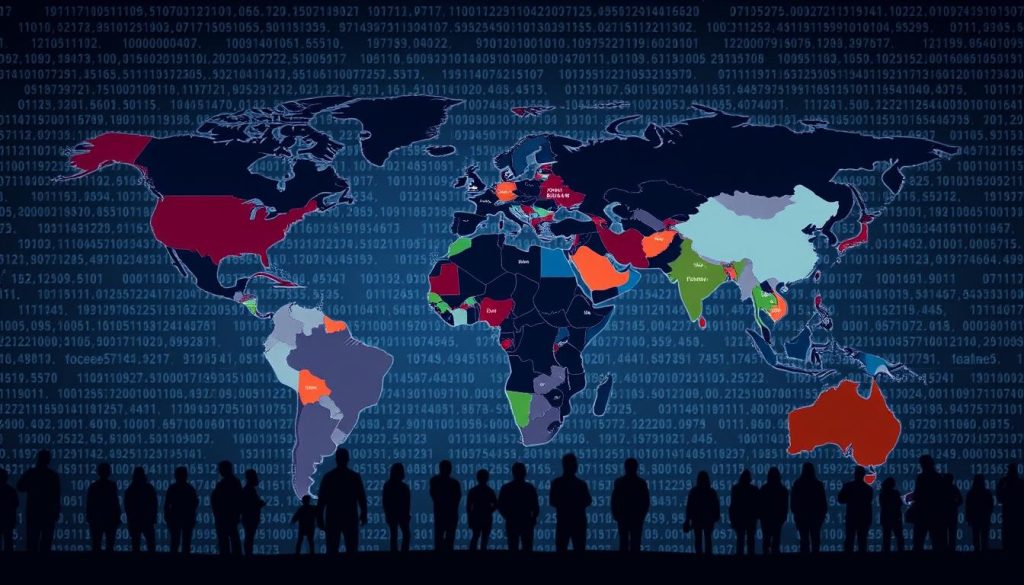
International Copyright Frameworks Affecting Streaming
International copyright laws are vital for IPTV services. The Berne Convention and the Rome Convention set global copyright standards. These treaties ensure countries protect copyrights, affecting their IPTV laws.
These frameworks influence how countries handle copyright. For example, the U.S. has the Digital Millennium Copyright Act (DMCA). It helps address copyright issues online, including with IPTV.
| Country | Copyright Law | IPTV Regulation |
|---|---|---|
| United States | Digital Millennium Copyright Act (DMCA) | Strict regulations on copyright infringement |
| European Union | EU Copyright Directive | Harmonized copyright laws across member states |
| China | Copyright Law of the People’s Republic of China | Regulations on online streaming and IPTV |
How IPTV Regulations Have Evolved
Regulations have changed a lot for IPTV, getting stricter to fight illegal streaming. Pirate IPTV sites are blocked, and those running illegal services face prosecution. This shows how serious the issue of copyright infringement is.
Different countries have different ways to regulate IPTV. Some have made their laws stronger, while others have new rules. For example, some require IPTV providers to get licenses to operate legally.
North American IPTV Legal Framework
The IPTV legal framework in North America varies by country. The United States, Canada, and Mexico each have their own rules. These rules affect both those who offer IPTV services and those who use them.
United States IPTV Laws and Recent Court Decisions
In the United States, IPTV laws mainly come from federal copyright law. Recent court decisions have made it clear that streaming copyrighted content without permission is against the law. For example, a court ruled against Streaming Services Inc. for streaming copyrighted material without permission.
This ruling is important for IPTV providers in the U.S. It shows the need to follow copyright laws.
Canadian and Mexican Approaches to IPTV Regulation
Canada and Mexico have their own ways of regulating IPTV. In Canada, the government is strict about enforcing copyright laws against illegal IPTV services. They have been working hard to stop piracy by targeting unauthorized IPTV providers.
In Mexico, the focus is on protecting intellectual property rights. The Mexican government is working with international partners to fight global piracy networks.
As IPTV keeps changing, it’s more important to know the laws in each country. Following local laws is essential for success in this region.
European Union's Stance on IPTV Services
The European Union has been active in regulating IPTV services. It has done this through laws. The EU Copyright Directive is a key example, changing the streaming world a lot.
EU Copyright Directive and Its Impact on Streaming
The EU Copyright Directive has greatly influenced IPTV laws. It works to harmonize copyright laws across the EU. This means streaming services must follow the same rules everywhere.
This directive makes sure IPTV providers have the right licenses for content. It helps cut down on copyright infringement. The OECD found that illegal streaming has dropped a lot in the EU because of this.
You can learn more about the OECD’s study on IPTV market developments.
Country-Specific Variations in IPTV Enforcement
Even with the EU Copyright Directive, IPTV laws are enforced differently in each country. France and Germany are strict, while others are more relaxed. This makes it hard for IPTV providers to follow the law in every country.
To deal with this, IPTV providers need to know the laws in each country they operate in. They must understand the specific rules and how they are enforced.
IPTV Laws in Asia-Pacific and Other Regions
IPTV laws in the Asia-Pacific area vary a lot. This is because each country has its own legal and cultural background. These differences come from their history, economy, and technology.
Regulatory Approaches in China, Japan, and South Korea
China, Japan, and South Korea have their own rules for IPTV. China has strict rules for IPTV, controlling content and licensing closely. Japan takes a more open stance, focusing on copyright laws. South Korea aims to grow IPTV while protecting users.
| Country | IPTV Regulation Approach | Key Features |
|---|---|---|
| China | Highly Regulated | Strict content control, licensing requirements |
| Japan | Open Market with Regulations | Compliance with copyright laws, consumer protection |
| South Korea | Supportive Regulations | Growth of IPTV, consumer rights protection |
IPTV Regulations in Australia, the Middle East, and Africa
Australia, the Middle East, and Africa have their own IPTV rules. Australia has strong laws for copyright and consumer rights. The Middle East and Africa have different rules, with some being strict and others more relaxed.
The IPTV rules in these areas are always changing. This is due to new technology and how people use it. It’s important for IPTV providers and users to know these rules to understand the legal world.
Distinguishing Between Legal and Illegal IPTV Services
The IPTV market is growing fast. It’s key for users to know the difference between legal and illegal IPTV services. With so many choices, it can be hard to know what’s legal. Knowing the signs of legal IPTV and illegal services helps users make smart choices.
Characteristics of Legitimate IPTV Providers
Legal IPTV providers follow the law and offer top-notch streams. They respect copyright laws. Here are some signs of legal IPTV providers:
- Transparency: They clearly state their services and how to contact them.
- Quality Streams: Legal providers give you smooth, high-quality streams.
- Compliance with Laws: They make sure their content is legal and authorized.
- Customer Support: They have good customer support to help with any problems.

Warning Signs of Potentially Illegal IPTV Services
Illegal IPTV services have clear warning signs. Here are some:
| Warning Sign | Description |
|---|---|
| Suspiciously Cheap Subscriptions | Very low prices might mean it’s illegal. |
| Lack of Transparency | They often don’t share much about themselves or their services. |
| Poor Stream Quality | Bad video quality or constant interruptions are red flags. |
| No Customer Support | They usually don’t help or respond to questions. |
Knowing these signs helps you choose legal IPTV services. Using legal services improves your viewing and supports fair content distribution.
Legal Consequences of Violating IPTV Laws
It’s important to know the legal issues with IPTV today. IPTV is getting more popular, and so are the legal problems for those who use or provide it without permission.
Penalties for Providers and Resellers of Illegal Services
Those who offer illegal IPTV services face big fines and even jail time. In the U.S., breaking IPTV copyright laws can cost up to $150,000 per case. People running these services might also get charged with crimes, leading to jail.
Law enforcement worldwide is teaming up to fight IPTV piracy. This means those who break the law are more likely to get caught and punished.
Risks for Consumers Using Unauthorized IPTV
But it’s not just providers who are at risk. People who use illegal IPTV services can also face legal trouble. They might get fined or sued, though this happens less often.
The bigger danger is to their safety online. Illegal IPTV can expose users to malware or identity theft. These services are often run by criminals who use malware to harm users.
Users should be careful with unauthorized IPTV services. The promise of cheap or free IPTV might seem good, but the risks are too high.
Finding Legal IPTV Options in2025
The IPTV world is changing fast. In 2025, finding legal IPTV services is key. With more people wanting streaming, knowing the legal side is important.
Legitimate IPTV Services Worth Considering
In 2025, many legal IPTV services are out there. They offer lots of channels and on-demand content. Some top ones include:
- WatchMaxTV
- Other reputable IPTV providers
These services are known for great streams and good customer service. It’s important to check the provider’s reputation and if they have the right licenses.
| IPTV Service | Channel Offerings | Free Trial |
|---|---|---|
| WatchMaxTV | Over 10,000 channels | Yes |
| Other IPTV | Varied channel packages | Yes/No |
Try Before You Buy: Free IPTV Trials from Legal Providers
Many legal IPTV services give free trials. This lets you try before you buy. WatchMaxTV, for example, has a free trial with lots of channels and on-demand content.
WatchMaxTV's Free Trial Offer (Special Promotion)
WatchMaxTV’s free trial is a good way to see what they offer. Just visit https://watchmaxtv.com. You can also use WhatsApp support at https://wa.me/message/OZ4NORVZQTYAC1.
“The best way to ensure you’re using a legal IPTV service is to look for providers that offer transparent information about their licensing and operations.” – IPTV Expert
Trying before you buy helps you choose a legal and quality IPTV service. Enjoy premium streaming now at https://watchmaxtv.com.

Conclusion: Navigating the Complex World of IPTV Legality
Understanding IPTV laws is key to avoiding legal trouble. Laws about IPTV vary a lot from one place to another. It’s important for both users and providers to know these laws well.
Knowing about iptv laws helps everyone follow the rules. Choosing legal IPTV services means better streaming and less risk. Keeping up with new IPTV laws is important for everyone involved.
Knowing if IPTV is legal in your area is essential. Following local rules helps everyone enjoy IPTV safely and without worry.
FAQ
Is IPTV legal?
IPTV itself is not illegal. But using it to watch copyrighted content without permission is illegal in many places.
What is the difference between legal and illegal IPTV services?
Legal IPTV services give high-quality streams and follow copyright laws. They also tell you what you’re getting. Illegal services are cheap, don’t tell you much, and can harm your computer.
What are the legal consequences of using unauthorized IPTV services?
Using unauthorized IPTV can lead to fines or legal trouble. It also puts your computer at risk of malware or identity theft.
How can I identify a legitimate IPTV provider?
Look for IPTV services that offer quality streams and follow copyright laws. They should be clear about what they provide. Many also offer free trials so you can try before you buy.
Are there any legitimate IPTV services available?
Yes, services like WatchMaxTV are legitimate. They offer a free trial and access to many channels and on-demand content.
How have IPTV regulations evolved in 2020?
IPTV rules have gotten stricter in 2020. Countries are now blocking pirate sites and prosecuting those who run illegal streaming services.
What is the EU Copyright Directive, and how does it impact IPTV services?
The EU Copyright Directive makes copyright laws the same across the EU. It requires IPTV services to get the right licenses for content. This has changed how streaming works a lot.
Is it safe to use IPTV services that offer very cheap subscriptions?
No, cheap IPTV services are often illegal. They can also put your computer at risk of malware or identity theft.