Curious whether streaming can replace costly satellite bundles and still give you the channels you love?
You’re in the right place. This brief guide sets clear expectations for the “iptv uk providers comparison 2025” list and who it serves—especially if you live in the United States but want British TV, sports, or other UK content.
What you’ll get: a practical look at options across the market, a simple snapshot of channels and stability, and hands-on checks for device support, trials, and safety.
Claims in this space vary, so I focus on testable criteria, not hype. You’ll see side-by-side matchups and “A vs. B” notes that match viewing priorities like sports or kids’ shows.
I also cover red flags and safer evaluation steps before you pay. Quick setup tips and a buffer-reduction checklist round out the guide.
For an example of a branded service to explore, see https://getmaxtv.com. Ready to get a legal subscription? Visit watchmaxtv.com to subscribe now.
Key Takeaways
- You’ll learn practical criteria to judge services, not marketing claims.
- Expect comparisons on channels, stability, device support, and trials.
- Find a shortlist of options and a quick setup checklist.
- Watch for red flags and safer ways to verify a service.
- Actionable tips help reduce buffering and improve viewing.
Why UK IPTV Is on Your Radar in 2025 (Even If You Live in the US)
If you want reliable British channels at home, internet delivery has changed the game. In plain terms, internet protocol television sends TV over your broadband instead of through a dish or a cable line.
This matters if you live in the United States because it gives you direct access to UK networks, sports coverage, and shows for expats and fans. You get more channels and easier cross-border access without swapping physical service.
People switch for clear reasons: lower monthly prices, no long contracts, and flexible multi-device viewing. Expect big VOD libraries for movies and series, plus HD and 4K streams when your home internet can handle them.
What makes a good service? Quick channel changes, stable live channels during peak hours, and VOD that stays updated. If a stream buffers at the times you watch, try a short trial before committing.
| Sign | Good | Poor |
|---|---|---|
| Channel Changes | Instant, smooth | Delay or freeze |
| Peak Hour Uptime | Consistent | Frequent dropouts |
| VOD Library | Regularly updated | Stale or missing movies |
| Video Quality | HD/4K options | Only SD or poor streams |
How This Comparison Evaluates IPTV Providers
This section shows the exact checklist I use to test each streaming service so you can run the same checks at home. You’ll learn what matters for channel coverage, live sports, and everyday reliability.
Channel lineup and coverage: I verify UK terrestrial and premium channels, sports packages, US networks, and multilingual international options. Check for complete channel names, regional variations, and promised packages during a trial.
Streaming performance: Focus on buffering at peak time, adaptive bitrate behavior, server redundancy, and realistic uptime targets (many top services aim for ~99%+). A 24–36 hour trial often exposes weak servers during busy hours.
Video quality and features: Confirm HD vs 4K availability, EPG accuracy, catch-up, and cloud DVR reliability. These daily features affect your viewing far more than marketing claims.
Device support and apps: Test setup on Fire TV Stick, Android/Google TV, Smart TVs, iOS, and desktops. Try common apps like IPTV Smarters Pro, TiviMate, and VLC. Use M3U for simple playback or Xtream Codes when the provider offers account-based logins.
Customer support and trials: Good support answers setup questions fast, helps during live events, and responds within a few hours. Always use a short trial to spot broken channels, poor EPG, or buffering before buying subscriptions.
- Checklist summary: channel completeness, peak-hour buffering, adaptive bitrate, EPG/catch-up, device app tests, and support response time.
- For a quick list of tested services, see this roundup of top options.
- To try a branded service, consider a trial at this subscription page.
| Metric | Target | Why it matters |
|---|---|---|
| Peak-hour buffering | Rare | Shows real live reliability |
| Uptime | ~99%+ | Reduces dropouts for sports |
| EPG accuracy | High | Helps navigation and catch-up |
iptv uk providers comparison 2025: Side-by-Side Snapshot of Top Options
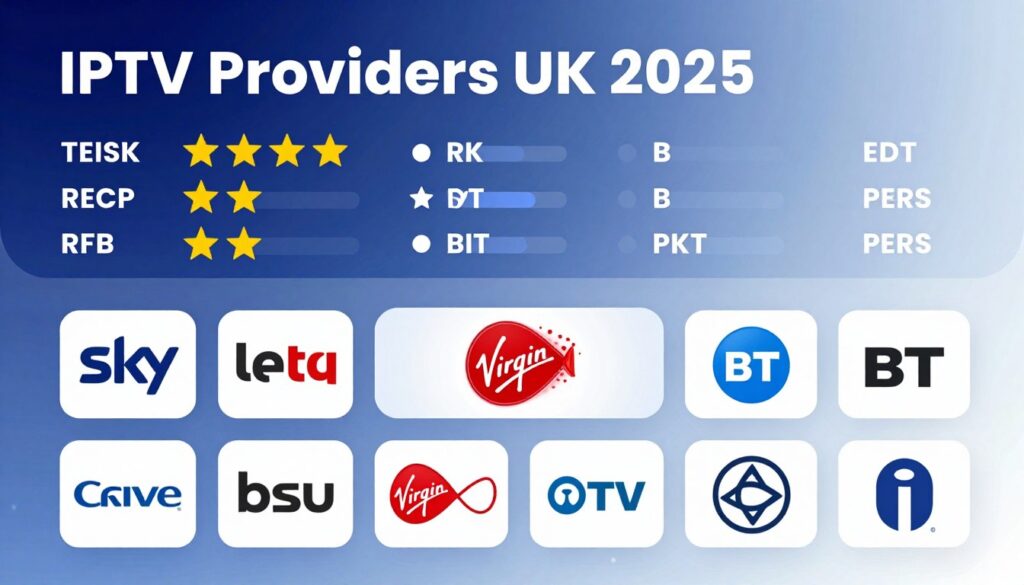
Here’s a quick, side-by-side snapshot to help you shortlist the top streaming options fast.
Viking reports ~30,000+ live channels and ~60,000 VOD titles, including 4K and FHD. Its mix of scale and steady streams makes it a solid everyday choice. Price examples: £25/3 months or £70/year—stability often beats raw counts for daily viewing.
Best for sports nights and big events
Monster IPTV focuses on sports packages (Sky Sports, BT Sport, DAZN, beIN) and claims low lag during major events.
IPTV Trends is known for stability and a large on-demand library (~19,000+ channels and ~60,000 titles). When you test either, verify kickoff-time streaming to avoid buffering.
Best for a UK-first experience
British IPTV emphasizes a cable-like guide with EPG, catch-up, and cloud DVR plus UK-based support. That setup helps if you want familiar navigation and scheduled recording.
Best for performance-focused streamers
Xtreme HD IPTV markets fast servers and broad device support (Smarters, TiviMate, MAG). If you dislike troubleshooting, look for a clean interface and proven server speed.
Best for broader provider variety
Layerseven TV, G-IPTV, IPTVVUK, and BestBuy IPTV are good fallback options when a top pick lacks a channel you need. BestBuy often offers a free 24-hour trial—use it to stress-test peak-hour performance.
“The best service is the one that stays stable during your must-watch events and supports your devices.”
- Quick tip: Use short trials to test live sports and evening load times.
- Shortlist rule: Favor consistent playback over huge channel counts.
- Readiness: Confirm device compatibility and support response time before paying.
For a concise external roundup that complements this snapshot, see this short list.
Provider Matchups: Which Service Fits Your Viewing Style?
Match your viewing habits to clear test points. Start by listing your top two priorities. Then use short trials to confirm real performance, not marketing claims.
If your priority is Premier League and other live sports streams
A vs. B: pick a sports-first service like Monster for kickoff stability, or choose IPTV Trends for steady peak-hour uptime.
Test point: run a kickoff test during peak time. Check channel reliability, fast recovery on drop, and any stream lag.
If you want the biggest movies and series VOD library
Big movie counts help, but check content refresh, new-release cadence, and playback quality.
Test point: watch a recently released film in prime time and scan the VOD menu for organization and subtitles.
If you need multilingual and international channel packages
Confirm regional packages, language labels, and time-zone-friendly guides before you buy.
Test point: search for specific channels in your language and run an evening watch to spot geo issues.
If you’re buying for family viewing and want simpler navigation
Favor British IPTV-style interfaces with clear EPG, profiles, and quick customer support.
Test point: try kids profiles, fast channel changes, and ask support a setup question to judge response time.
| Use-case | Strength to Prioritize | Trial Test |
|---|---|---|
| Sports fans | Peak stability, fast recovery | Kickoff stress test |
| Movie/series lovers | Fresh VOD, playback quality | Prime-time film play |
| Multilingual households | Accurate regional packages | Language channel check |
| Family/home users | EPG clarity, simple nav | Kids profile/navigation test |
Takeaway: choose the service that matches your top two needs. Trials reveal the true fit.
Pricing, Trials, and Subscription “Gotchas” to Watch
Before you buy, learn how prices hide trade-offs in uptime, EPG, and support. Cheap monthly plans (often around £10–15) can look tempting versus traditional bundles near £40+. But value comes from steady streams, fast channel changes, and clear customer help.
Typical cost bands and real value
Expect low-cost options, mid-range plans with better uptime, and higher tiers that include EPG and catch-up. Viking-style yearly deals (e.g., £70) can be reasonable if servers hold up.
Why a short trial matters
A 24–36 hour trial exposes peak-hour buffering and quality issues. Use your trial during evenings and a big event to see real performance.
- Trial checklist: test prime-time, try multiple devices, load the EPG, and open your must-have channels.
- Avoid sellers with no refund policy or unclear auto-renew terms.
- Use a separate email, save receipts, and avoid entering card details inside random apps.
| Risk | Safe step | Why it matters |
|---|---|---|
| Too cheap | Short trial | Reveals unstable servers |
| Auto-renew | Check terms | Prevents surprise charges |
| Sketchy seller | Reputable payment | Protects refunds and access |
Tip: paying a bit more is often worth it if it keeps your streams reliable for the key days you care about.
Setup Guide: How You’ll Stream UK IPTV on Your Devices
A short device checklist and simple app steps will get you watching in minutes.
Fast-start checklist: confirm you have a Fire Stick, Android TV/Google TV box, Smart TV, iOS/Android phone, or a laptop. These devices cover the most viewing needs.
App setup basics
IPTV Smarters Pro and TiviMate are common apps. You’ll add login details, pick Live or VOD, and let the app load the guide. Expect an EPG load step and a channel list import.
Credentials and access methods
Most access comes via an M3U URL or Xtream Codes. An M3U is a playlist link you paste into an app. Xtream Codes uses username/password and can offer faster channel updates. Some providers use web portals instead.
Run a speed test: target ~15 Mbps for HD and 25+ Mbps for 4K. Test again at night to check consistency.
| Device | App | Min Speed |
|---|---|---|
| Fire Stick | IPTV Smarters Pro | 15 Mbps (HD) |
| Android TV | TiviMate | 25+ Mbps (4K) |
| Phone / Laptop | VLC / Browser | 15 Mbps |
If channels or the EPG fail to load, restart the app and re-enter the M3U or Xtream info. For setup tips and a longer streaming guide, see our streaming guide.
Performance and Viewing Quality: How to Reduce Buffering
Smooth playback comes down to the network and a few simple device habits. Buffering often stems from network congestion, Wi‑Fi interference, or server load. Fix the right cause and you improve your overall viewing experience.
Network upgrades that matter
Use wired Ethernet when you can; it cuts packet loss and reduces buffering vs Wi‑Fi. Improve router placement—higher and central in your home—and limit other active devices during peak hours.
Device optimizations
Restart your device before big sports events, update apps, and clear app cache if playback stutters. Close background downloads or other streaming apps to free bandwidth for the match or movie.
When a VPN helps — and what to avoid
A reputable VPN can help with privacy, travel access, or suspected ISP throttling. Don’t rely on free VPNs: they often slow streams or use crowded servers. Pick a well-known service and test nearby servers for best results.
| Quick test | What to do | Why it helps |
|---|---|---|
| Is it your network? | Compare Ethernet vs Wi‑Fi | Shows if Wi‑Fi is the bottleneck |
| Is it the provider? | Try a second device on a different connection | Reveals server-side or account issues |
| Speed check | Run at prime time | Measures real-world performance |
Match‑day checklist: use Ethernet if possible, restart devices, close background apps, test one device on Wi‑Fi and one on wired, and only use a trusted VPN if needed.
For more router and streaming tips see the router and streaming tips, and for advanced device settings check this advanced settings guide.
Legality, Safety, and Trust: How to Choose a Legit IPTV Service
Deciding on a streaming service means weighing legality, safety, and long‑term trust.
Legal vs gray‑area: Licensed services have rights to the content they deliver. That means clearer terms, steady access, and fewer interruptions. Gray‑area sellers may promise every premium channel at very low prices. Those offers often risk sudden outages or removal of channels.
Red flags to watch for
- Too-good pricing: every premium channel for pennies.
- No real support: no documented setup steps or slow response to questions.
- Vague refunds: no trial, no clear refund policy.
Practical safety steps
Use a separate email for subscriptions and avoid typing card details inside unfamiliar apps. Keep passwords unique and prefer reputable payment methods that offer dispute options.
Trust signals that matter
Look for transparent prices, clear setup guides, and responsive customer support that can help during live events. These signs reduce risk for users and make your viewing experience more stable.
“A licensed option may cost more, but it protects your access and gives reliable support when you need it.”
If you want a legal-first option, consider reviewing GetMaxTV and its details at GetMaxTV. For an additional resource on verified choices, see this roundup of tested services.
Conclusion
Make your final choice by prioritizing uptime, channel fit, and a short real‑world trial. Focus on stability, app compatibility, and fast support rather than raw channel counts.
Quick decision checklist: test peak‑hour performance, confirm device support, and run a trial during the shows or sports you care about. Use Ethernet, aim for the right speeds, and optimize devices before big events to cut buffering.
Choose by need: pick sports‑first, VOD‑heavy, multilingual, or family‑friendly navigation based on your viewing habits. Favor licensed services for clearer terms and fewer interruptions.
If you want a legal subscription option to explore, check GetMaxTV’s offer for verified legal IPTV services.
FAQ
What is internet protocol television and how does it differ from cable or satellite?
Internet protocol television delivers live channels and on‑demand content over the internet instead of coaxial cable or satellite dishes. You get streams to apps or set‑top boxes, which lets you pause, rewind, and use catch‑up features more like streaming services. It also means your viewing quality depends on your broadband and the provider’s servers rather than a dish alignment or local cable infrastructure.
How do I know a service offers good live channel performance and low buffering?
Look for adaptive bitrate streaming, redundant servers, and clear uptime targets. Providers that publish latency or uptime figures and offer 24‑hour trials make it easier to test peak‑time performance. Also check support for wired Ethernet and whether the service recommends minimum internet speeds for HD or 4K viewing.
What devices typically work with these services?
Most services support Fire TV Stick, Android TV/Google TV, smart TVs (Samsung, LG with apps or webOS), iOS and Android phones, tablets, and desktop players like VLC. Popular frontend apps include TiviMate and IPTV Smarters Pro, while some providers also supply native apps or web portals.
What should I expect from trials, pricing, and refunds?
Trials vary: some providers offer 24‑hour checks, others seven days. A short trial helps reveal peak‑hour buffering and channel availability. Pricing usually ranges by channel count and stream quality; transparent refund policies and clear renewal terms are essential. Pay with traceable methods and avoid sellers that pressure immediate renewals.
Are there legal or safety concerns I should watch for?
Yes. Licensed services clearly state channel rights and offer official apps or partnerships. Red flags include unrealistically low prices for premium sports packages, no contact details, or no clear refund policy. For safety, use a separate email, prefer card services with dispute options, and avoid entering payment details directly inside unverified apps.
When does using a VPN make sense for streaming?
A VPN can protect privacy and help when you travel, or when an ISP throttles streaming traffic. Choose a fast provider with good server locations and avoid VPNs that reduce bandwidth too much. Don’t use a VPN to access content you know is geo‑restricted in violation of terms; that can create legal or account risks.
What features define a top‑rated provider for sports and live events?
For sports you want multiple concurrent HD streams, low latency, stable servers during major events, reliable EPG and catch‑up, plus quick customer support. Services that offer buffer‑free streams during peak matches and clear contingency plans for outages rank higher for live events.
How much internet speed do I need for HD and 4K streams?
Aim for at least 15 Mbps per HD stream and 25 Mbps or more per 4K stream. If multiple users share your network, add headroom. Use wired Ethernet for the best stability and Wi‑Fi on 5 GHz or mesh systems if you must go wireless.
What login methods and file types should I expect (M3U, Xtream Codes, etc.)?
Common access methods include M3U playlists, Xtream Codes credentials, and provider portals or native apps. M3U gives playlist URLs you add into players, while Xtream Codes supplies username/password and server details for automated setup in many apps.
How do I pick a service for family viewing and easy navigation?
Choose providers with user‑friendly EPGs, parental controls, and apps with profiles or simplified layouts. Look for large VOD libraries, clear category menus, and remote‑friendly interfaces so everyone in the household can browse easily.
What are common renewal and payment pitfalls to avoid?
Avoid one‑off sellers that force instant renewals or accept only anonymous crypto without receipts. Check auto‑renew settings, ask about prorated refunds for cancellations, and prefer providers with clear invoices and repeatable billing cycles.
Can you recommend a legal, licensed option for those who prefer a risk‑free choice?
If you prioritize licensed content and official support, look at established OTT services and licensed aggregators. One example is GetMaxTV, which promotes licensed access and clear terms; always verify current licensing details and device compatibility before subscribing.