Have you ever wondered why the same show buffers for some viewers but streams smoothly for others?
Your streaming experience often comes down to one hidden factor: where your service connects. In this guide you’ll learn how region choice, peering, and CDNs shape playback for live sports, premium channels, and on-demand shows.
GetMaxTV stands out as the top value choice for 2025: over 19,000 live channels and 97,000+ VOD for just $6.95/month, all sports and movie packs included, and universal compatibility with Firestick, Smart TV, Android, iOS, Windows, and Mac.
We’ll walk you from understanding latency to testing your route so you can pick the right region and start streaming risk-free. Activation takes about two minutes, there’s no contract, and 24/7 customer support helps if you hit snags.
Along the way you’ll see how streaming over the internet differs from satellite and cable, how VPNs can help on restricted networks, and simple device setup tips so your shows play fast and clean.
Key Takeaways
- Region choice and peering impact latency and buffering for live and on-demand content.
- GetMaxTV offers massive content at a low price, instant activation, and wide device support.
- Testing your route helps you pick the best region and avoid ISP congestion.
- CDNs and edge nodes reduce delay, making distributed architectures ideal for live sports.
- Use a VPN when traveling or on restricted networks to maintain access and reduce throttling.
- Follow simple setup tips for Firestick, Smart TV, phone, or computer to start in minutes.
- Learn more about architecture and quality comparisons at our detailed service guide: service guide.
Why IPTV server location matters for your streaming experience in 2025
Where your stream connects on the internet directly shapes how fast and smooth your shows play.
Your streaming experience depends on the path between your device and the provider. Each intermediate hop can add delay or instability that you’ll notice as buffering.
Good peering and CDN edges cut transit time. When providers peer with major ISPs, content takes a shorter, cleaner route. That means faster starts, fewer stalls, and steadier bitrates for live sports and big events.
GetMaxTV is optimized for U.S. viewers. You get a huge content lineup with all sports and movie packs included, instant activation, no contract, and 24/7 support to keep things worry-free.
- Closer regional servers reduce long-haul transit and peak-hour drops.
- Network-aware providers monitor health and distribute load for consistent quality.
- Use a VPN when traveling or on restricted Wi‑Fi to maintain access and avoid throttling.
| Factor | Impact | Check |
|---|---|---|
| Peering | Faster routes, fewer stalls | ISP peering charts or traceroute |
| Edge/CDN | Better peak performance | Regional edge presence |
| Device & home net | Limits achievable quality | Wired connection and router QoS |
What “IPTV server location” really means: latency, peering, and CDN coverage
The path your data takes matters. Think of it as a relay race: each handoff and cache point affects how fast video reaches your device. That directly shapes stable live sports, crisp movies, and quick channel changes.
Latency vs jitter:
- Latency is the delay between the source and your screen. High latency makes live action feel behind real time.
- Jitter is variation in that delay. High jitter causes stutters and frame drops during fast plays.
- For VOD, steady throughput wins; for live events, low latency and low jitter are the priority.
Why peering with major U.S. networks matters:
Good peering shortens the route and cuts congested handoffs. When providers peer directly with big ISPs, buffering drops and bitrate shifts smooth out. That means faster starts and fewer interruptions during peak events.
CDN edge vs origin: when proximity beats raw distance
CDNs copy content from an origin to many edge points. Watching from an edge near you often beats connecting to a distant origin, even if the straight-line distance looks similar.
| Feature | Edge | Origin |
|---|---|---|
| Latency | Lower for nearby users | Higher for remote viewers |
| Scalability | Better during events | Risk of hotspots |
| Best for | Live sports, fast channel changes | Initial content ingestion |
Distributed architectures place more caches near users and limit bottlenecks during big premieres or playoff games. Providers that monitor segment failures, manifest errors, and regional performance can fix problems before you notice.
Practical upshot: pick providers and regions with proven peering and strong edge coverage so your media starts fast, stays stable, and looks great. And remember—GetMaxTV gives you all major sports and movie packages for $6.95/month and you can be watching within two minutes of signup.
How to choose the best IPTV server location for the United States
Picking the right regional endpoint makes a noticeable difference in how your shows play at home.
Start with where you are. If you pick a nearby high-peering region, you get faster starts, fewer stalls, and better picture quality across all your devices. Adaptive bitrate (ABR) helps, but a solid connection and headroom matter most.
Regional routing realities
- East: NY/NJ/VA hubs offer dense peering and top coast-to-coast transit for news, sports, and national channels.
- Central: Chicago and Dallas balance reach to both coasts and stabilize quality for travelers.
- West: LA, SF, and Seattle optimize Pacific routes and international content access.
“Choose the nearest high-peering region for the best value and fewer interruptions.”
Bandwidth and home setup
Plan for at least 20 Mbps per active HD stream. Add more for 4K or multiple devices. A wired connection to your main TV keeps ABR steady and reduces interference.
| Area | Best uses | Transit strength | Recommended bandwidth |
|---|---|---|---|
| East (NY/NJ/VA) | News, sports, national channels | Dense peering, low latency | 20 Mbps+ per HD stream |
| Central (Chicago/Dallas) | Balanced national reach | Good coast-to-coast transit | 20–30 Mbps per HD stream |
| West (LA/SF/Seattle) | Pacific and international content | Strong Pacific routes | 25 Mbps+ per HD stream |
Tip: With GetMaxTV’s all-in $6.95/month offer, you can focus on picking the best region instead of juggling add-ons. Instant activation and no contract make testing simple.
Hands-on: test your route to an IPTV server before you commit

Before you subscribe, run a few quick tests to confirm your route will support smooth playback.
Running ping, traceroute, and a 4K bandwidth test
Start with a ping to gauge baseline latency. Aim for under 40–60 ms regionally for snappy channel changes.
Use traceroute to spot consistent spikes at intermediate hops. Repeated delays often mean congestion that can hurt peak-time quality.
Run a 4K bandwidth test on the device and app you’ll use. Repeat tests in the evening to reflect real-world internet conditions.
Peak-time checks and simple fixes
Compare wired vs Wi‑Fi tests to isolate wireless drops. Check jitter by watching ping variability—high variation causes stutters in live streams.
- Test with and without a VPN if you suspect ISP shaping of data.
- Clear the app cache and limit concurrent devices to reduce buffering.
- Always test on the actual platform or app you’ll use; phone results may differ from a TV box.
Once you’re satisfied, activate GetMaxTV in minutes. There’s no contract and 24/7 support if you need help verifying your route or troubleshooting performance.
IPTV architecture basics that influence server placement
The structure behind a service shapes how well your shows play during normal hours and big live events.
Centralized vs distributed setups and trade-offs
Centralized setups keep most content at a core site. That makes management simpler and cuts overhead for small providers.
But centralized designs lean on strong CDN reach and excellent peering to serve distant viewers. If those links get congested, you may see stalls during peaks.
Distributed architectures place caches and servers closer to you. That reduces long-haul transit, evens out load, and keeps quality steady for big events.
ABR packaging (HLS/DASH) and multi-bitrate ladders
Adaptive bitrate schemes let streams shift resolution as your bandwidth changes. A good ladder might include 1080p, 720p, and 480p renditions to match real-world home nets.
HLS and DASH are the dominant packaging types across platforms and players. They help deliver content to phones, TVs, and browsers without extra tweaks.
- Tailored bitrate ladders keep picture clarity while reducing stalls.
- Monitoring input quality and segment errors improves overall QoS.
- Balancing live streams and VOD libraries prevents hotspots during premieres.
| Architecture | Strength | Trade-off |
|---|---|---|
| Centralized | Simple ops, lower core cost | Depends on CDN/peering for reach |
| Distributed | Lower latency, better scale | Higher edge maintenance |
| ABR | Smooth playback across links | Requires multi-bitrate encoding |
Real benefit: GetMaxTV blends distributed caches with efficient ABR ladders so you get consistent quality nationwide at a low price and instant activation.
Best U.S. regions for an IPTV server location in 2025
Picking the right metro can shave seconds off channel changes and cut buffering during big games.
How to choose: pick a metro that matches where you live and where you travel most. Each major hub offers different peering, CDN edge presence, and reach for popular content.
Northeast hubs (NY/NJ/VA)
The Northeast offers dense peering with major ISPs. That helps stabilize live channels and speeds up on‑demand starts.
Choose this if you want low coast‑to‑coast transit times and strong performance during peak hours.
Central hubs (Chicago/Dallas)
Central metros balance reach across the country. They are a good pick when family members or travelers use the same account.
These hubs often give even routing and steady playback for national viewers.
West Coast hubs (LA/SF/Seattle)
West Coast nodes shine for Pacific routing and Asia connectivity. They help with international news, niche channels, and travel-heavy lifestyles.
- If sports matter most, pick the nearest high‑peering metro to cut latency and reduce stutters.
- In busy apartment areas, strong peering reduces your exposure to congested backbones at night.
- Look for providers that load‑balance across hubs so quality holds up when one metro is busy.
| Metro | Strength | Best for |
|---|---|---|
| Northeast (NY/NJ/VA) | Dense peering, fast coast‑to‑coast transit | Live channels, national news |
| Central (Chicago/Dallas) | Balanced routing, wide reach | Shared accounts, travel |
| West (LA/SF/Seattle) | Pacific and international routes | Global news, niche content |
Tip: With GetMaxTV you can test regions in minutes — activation takes about two minutes, there’s no contract, and all sports and movie packages are included.
Traveling or on restricted networks? Using a VPN for reliable access
When you move between airports, hotels, and campus Wi‑Fi, encrypted access can preserve your viewing routine.
Maintaining access to your usual content libraries while abroad
A VPN helps you keep access to your familiar channels and on‑demand content so your routine doesn’t skip a beat.
Install reputable native apps on your smartphones, tablets, and TVs, or set the VPN at the router level to protect every device at home.
Tip: pick a VPN server that matches your home region to keep apps and content behaving normally while you travel.
Bypassing content‑based throttling on congested networks
On school, office, or hotel networks that block streaming services, an encrypted path often restores reliable access to your services.
Encryption also reduces the chance of ISP shaping during peak hours, helping preserve consistent speeds and picture quality for live and on‑demand playback.
If an app acts up, connect the VPN, relaunch the app, and test again — many issues clear with a clean, encrypted route.
| Setup | Best for | Notes |
|---|---|---|
| Native VPN app | Phones, tablets, smart TVs | Easy install; quick on/off |
| Router‑level VPN | Whole home and multiple devices | Covers TVs and set‑tops without extra apps |
| Desktop client | Windows, Mac | Good for testing and traceroutes |
Keep your subscription and login details handy and test before important events. GetMaxTV works with common VPN setups, offers 24/7 support, instant activation, no contract, and an affordable $6.95/month plan so you can stay connected without hassle.
For a quick primer on trusted free options, see a roundup of VPN choices recommended by TechRadar.
Device setup tips by platform to maximize quality
The right setup makes a quick, big improvement in playback. A modern device and a tidy app install are often all you need to stop buffering and enjoy crisp channels and VOD.
Firestick and Smart TV: native apps, sideloading, and updates
Search for a native app on your Firestick or Smart TV first. Native apps run best on boxes and cut down on crashes.
If a native app is missing, sideload carefully using a trusted tool like Downloader. After installing, keep that app updated for stability.
Android, iOS, Windows, and Mac: players, browsers, and cache hygiene
On smartphones and tablets, use official apps from the store to simplify updates and security. Clear the app cache if the UI stutters.
For Windows and Mac, prefer the provider’s desktop app. If none exists, a modern browser works well as a fallback and gets frequent auto‑updates.
“Use wired Ethernet for your main box and 5 GHz Wi‑Fi for portable devices to reduce interference.”
- Use wired Ethernet for your primary TV box when possible; if not, run 5 GHz Wi‑Fi on a clear channel.
- Keep device firmware, app updates, and router software current.
- Aim for ~20 Mbps per HD stream so adaptive bitrate schemes can hold higher quality.
| Platform | Key tip | Why it matters |
|---|---|---|
| Firestick / Smart TV | Prefer native apps; sideload if needed | Stability and fewer crashes on your box |
| Android / iOS | Use official store apps; clear cache | Security and smooth UI on smartphones |
| Windows / Mac | Use app or modern browser | Quick access and easy updates |
If you hit a snag, GetMaxTV offers instant activation in about two minutes and 24/7 support to help troubleshoot your app, device, or connection. For full install steps, see the setup guide.
Network optimization at home: eliminate buffering at the source
Small home changes often stop freezing and make live matches play like they should.
Wired vs Wi‑Fi, router QoS, and channel selection
Prefer Ethernet for your main TV or box whenever possible. A wired connection cuts interference and keeps your bandwidth steady for HD streams.
If you must use Wi‑Fi, pick 5 GHz and move the router to a central, elevated spot. Change to a less crowded channel and enable QoS to prioritize streaming traffic during busy hours.
Concurrent device management and stream quality selection
Reduce simultaneous high‑bitrate streams, big downloads, or cloud backups when you watch live events. Reboot your router weekly and keep firmware and apps updated to free memory and improve stability.
- Set your app to auto quality (ABR) or drop one level if you see stalls.
- Limit gaming or large uploads during key matches for smoother playback.
- Clear app caches on TVs and boxes to keep navigation snappy.
| Tip | Why it helps | Quick action |
|---|---|---|
| Use Ethernet | Lower latency, stable data flow | Plug main box into router |
| Enable QoS | Prioritizes streaming packets | Set media priority in router UI |
| Limit concurrent tasks | Frees bandwidth for video | Pause backups and large downloads |
With a few tweaks, you can unlock a far better streaming experience at home and enjoy GetMaxTV’s huge content lineup for $6.95/month with no contract. Learn more in our streaming quality guide.
Comparing IPTV services: features, quality, and support that really matter
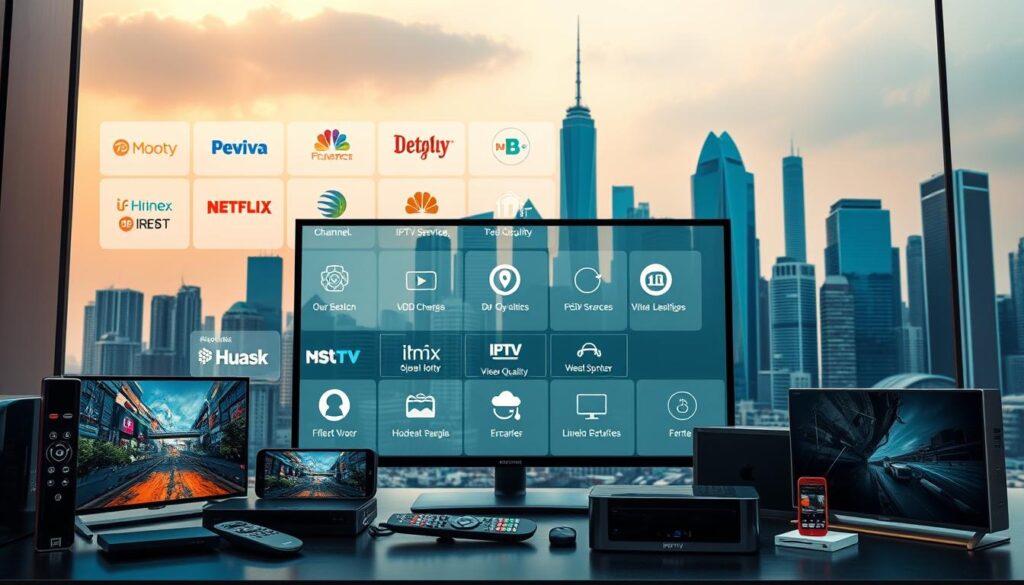
When you compare streaming options, focus on real-world features that affect daily viewing, not marketing jargon.
You should start with content depth. Check live channels, VOD libraries, and the reliability of networks you watch most.
Next, look at total cost. Compare what the subscription includes versus paywalls for sports or movie packs.
Device and app coverage matter too. Make sure the provider supports your phones, smart TVs, and streaming boxes with native apps and easy setup.
Operational features like catch-up, fast channel changes, and a stable EPG make everyday use far smoother. Also prefer providers that actively monitor performance and errors to keep quality high.
“Broad content, fast activation, and clear support channels are the difference between a frustrating trial and a reliable household option.”
- Evaluate content: live channels, VOD, and reliability of networks you use.
- Count total cost: what’s included versus add-ons for sports or movies.
- Confirm app and device coverage for every screen in your home.
- Prefer services that monitor analytics and offer fast, clear support.
| Factor | What to check | Why it matters |
|---|---|---|
| Content depth | Live channels, VOD count, catch-up | Matches your viewing habits without extra fees |
| Features | EPG, fast channel change, multi-device | Daily convenience and fewer interruptions |
| Support & ops | 24/7 help, monitoring, uptime record | Quicker fixes and steady picture quality |
Best value pick: For most households, GetMaxTV bundles 19,000+ channels and 97,000+ VOD with all sports and movie packages included. The plan is only $6.95/month, activates in about two minutes, has no contract, and offers 24/7 support.
Want a deeper comparison? See this subscription provider comparison or read tips for choosing the best provider.
Why GetMaxTV is the best value choice for 2025
For households that stream everything from live sports to niche shows, GetMaxTV bundles more for less.
Massive content library: unlock a huge catalog with 19,000+ live channels and 97,000+ VOD titles. You get movies, series, and niche shows so every viewer in your home finds something to watch.
Unbeatable price and inclusive packs
At just $6.95/month, GetMaxTV includes all major sports and movie packages at no extra charge. That removes the need to stack add-ons and keeps your monthly cost simple and predictable.
Universal compatibility and instant activation
The service works across Firestick, Smart TV, Android, iOS, Windows, and Mac so your favorite devices and apps run out of the box.
Activation is instant — you can be streaming in about 2 minutes after signup.
No contract and round‑the‑clock support
There’s no contract, so you keep flexibility to change devices or pause service as needed. And 24/7 customer support is ready when you need help, day or night.
Quick value summary: massive content, low price, universal device support, instant start, and nonstop support — a simple, transparent subscription for U.S. viewers in 2025.
Want help choosing a provider? Read our guide on choosing the best provider and then test regions and devices to start watching in minutes.
Quick start: choose your ideal region and start watching in minutes
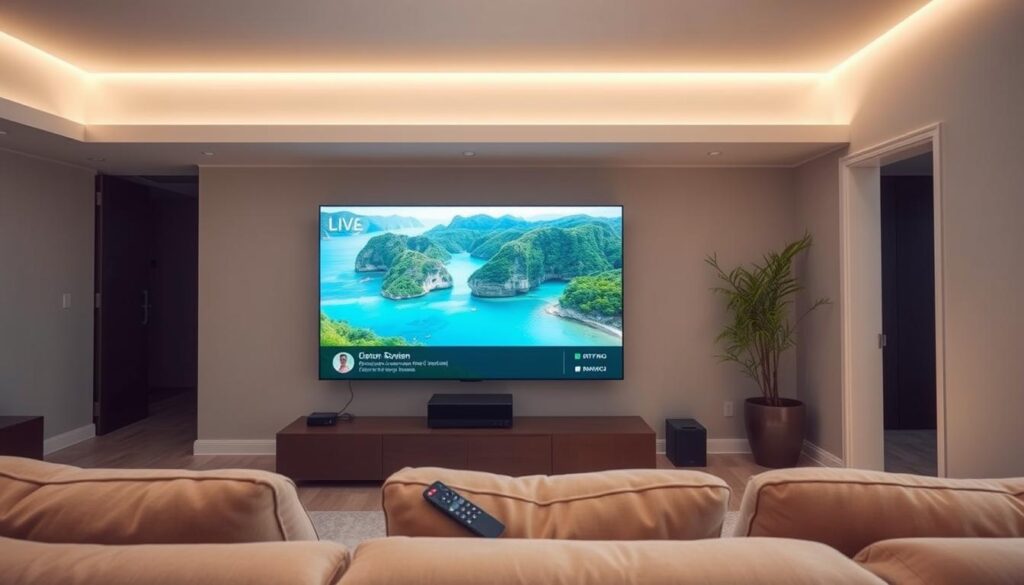
Ready to stop guessing and start watching? Pick a nearby high‑peering metro and you’ll notice channel changes and live events start faster.
Pick your nearest high‑peering region — Northeast (NY/NJ/VA), Central (Chicago/Dallas), or West (LA/SF/Seattle) — for the smoothest connection and fastest starts.
Pick your nearest high‑peering region and connect on your favorite device
Step 1: Choose the region that matches where you live or travel most. This improves your network path and reduces stalls.
Step 2: Activate GetMaxTV — sign up and be watching in about 2 minutes on your preferred device and app.
Stream live sports, movies, and series instantly—no commitment
Step 3: Enjoy all content for one all‑in price of $6.95/month, no contract, and 24/7 support if you need help.
- Run a quick bandwidth test to confirm HD or 4K readiness on your home internet.
- Keep the app updated on your devices for the best experience and fastest channel changes.
- If you want help, 24/7 support can walk you through region options and setup.
“Activate in minutes, try your preferred apps, and watch with no surprises.”
Ready to watch now? Subscribe at https://watchmaxtv.com/. Not ready to commit? Get a no‑obligation free trial via WhatsApp: https://wa.me/message/OZ4NORVZQTYAC1.
Conclusion
When your route and devices are optimized, you get fast starts and fewer interruptions every time.
Choose a nearby, well‑peered hub and tune your home network so live games and on‑demand programs run smoothly. Architecture, peering, and CDN edges shape reliability, and simple fixes—wired Ethernet, QoS, or a VPN when needed—stabilize access.
GetMaxTV delivers 19,000+ live channels and 97,000+ VOD for just $6.95/month, with all sports and movie packs included. Activation takes about two minutes, there’s no contract, and 24/7 support helps if you need it.
Ready to start? Subscribe now at https://watchmaxtv.com/. Prefer a test drive first? Try a free trial via WhatsApp: https://wa.me/message/OZ4NORVZQTYAC1.
FAQ
What does “IPTV server location” mean and why does it matter for your streaming?
It refers to where the streaming host and its infrastructure sit on the internet. That position affects latency, peering relationships, and content delivery coverage. A closer, well-peered host usually cuts buffering, improves channel change times, and lowers the chance of dropouts during live sports and big events.
How do latency and jitter impact live sports and on-demand video?
Latency adds delay between the broadcast and what you see; jitter causes irregular packet arrival that creates stutter. For live sports, low latency and stable jitter keep you in sync with play-by-play action. For VOD, steady delivery avoids frame freezes and long startup times.
What is peering with major U.S. ISPs and why is it important?
Peering means direct traffic exchange between networks like Comcast, AT&T, and Verizon. Good peering shortens hops, reduces congestion points, and improves throughput. That leads to fewer rebuffers and better picture quality across your devices.
When does a CDN edge node beat a distant origin server?
An edge node caches content near your ISP, so requests travel fewer network hops. For live channels and hot VOD, edge nodes lower latency and jitter. A distant origin might still be fine for less time-sensitive content, but edges usually win for real-time viewing.
How should you pick the best region in the U.S. for streaming your home?
Choose a high-peering region near your ISP’s backbone. East Coast hubs favor viewers in the Northeast, central hubs like Chicago or Dallas balance reach for the Midwest and South, and West Coast hubs help Pacific viewers and transpacific routes. Pick based on where most of your audience or streaming traffic originates.
What bandwidth do you need for SD, HD, and 4K streams?
Typical thresholds are about 3–4 Mbps for SD, 5–8 Mbps for HD, and 15–25 Mbps for reliable 4K. Multiply those by the number of concurrent streams and allow overhead for other devices on your home network.
How can you test your route to a streaming host before you subscribe?
Run ping and traceroute to the target IP or hostname to spot latency and hops. Use a 4K bandwidth test or speed test during peak hours to check sustained throughput. Those tests reveal ISP congestion or problematic routing before you commit.
What peak-time checks should you run to spot ISP congestion or throttling?
Test speeds between 7–11 PM on weekdays, compare results to off-peak runs, and monitor packet loss and latency spikes. Repeated drops or sharp speed reductions at peak times often indicate congestion or traffic management by your provider.
How do centralized and distributed architectures affect stream quality?
Centralized setups simplify management but can create single points of failure and longer paths for distant viewers. Distributed architectures place caches and edge nodes closer to users, improving resilience and lowering latency. Each approach has trade-offs in cost and complexity.
What are ABR, HLS, and DASH, and why do they matter?
Adaptive bitrate (ABR) systems like HLS and DASH serve multiple quality levels so the player switches bitrates based on your available bandwidth. That keeps playback smooth across variable connections and device types.
Which U.S. regions provide the best peering and transit for nationwide reach?
Northeast hubs (New York/New Jersey/Virginia) offer dense peering and coast-to-coast transit. Central hubs like Chicago and Dallas provide balanced latency for large swaths of the country. West Coast hubs (Los Angeles, San Francisco, Seattle) optimize routes for Pacific viewers and international links.
Can a VPN help when you travel or use restricted networks?
Yes. A reputable VPN can let you reach your usual content libraries while abroad and may bypass content-based throttling on congested public networks. Choose strong providers with fast, nearby endpoints to avoid added latency.
How do device choices and apps affect stream quality?
Native apps on devices like Amazon Fire TV, Roku, and smart TVs often deliver the best experience. On mobile and desktop, dedicated players and up-to-date browsers reduce playback issues. Keep apps updated and clear player caches when you see stuttering.
What home network tweaks reduce buffering?
Prefer wired Ethernet for main players, set router QoS to prioritize streaming, and pick the best Wi‑Fi channel to cut interference. Limit concurrent heavy downloads when you watch live events to keep quality steady.
How should you manage multiple devices streaming at once?
Identify your household’s peak concurrent streams, then add bandwidth margin. Use per-device quality settings to conserve throughput—downgrade secondary streams to SD or HD if you need to save bandwidth.
What features should you compare when evaluating streaming services?
Look for broad content libraries, consistent stream quality, device compatibility, fast activation, solid customer support, and transparent pricing. Also consider sports package availability and on-demand catalogs if those matter to you.
How fast can you typically get started after choosing a service and region?
With a modern provider and a compatible app, you can often activate and start watching in minutes. Pick the nearest high‑peering region, install the app on your device, and sign in—then test a live channel and a VOD title to confirm quality.