

Curious if you can turn streaming into a real subscription business without heavy tech or a big budget?
In plain terms: an iptv reseller setup lets you sell internet-based TV subscriptions under your brand using a white-label model. In the current U.S. market, providers offer credits, panels, and support so you can manage customers and billing.
You’re building a recurring-services business, not just sharing logins. That means focusing on user experience, reliable support, and clear policies to protect your customers and your reputation.
This guide previews how reseller plans and credit systems work, how the reseller panel runs day-to-day, how pricing and margins form, and which quality and support standards to demand. You’ll learn what to compare across providers and what questions to ask before you start iptv reselling.
By the end, you’ll know how to evaluate features like free trials, 24/7 tech help, anti-freeze tools, multi-device compatibility, and reporting capabilities — and when to check offers such as GetMaxTV’s.
Key Takeaways
- You’re building a subscription business, so prioritize support and experience.
- Understand credits, panels, pricing, and profit margin before you invest.
- Compare provider features: trials, 24/7 help, anti-freeze, multi-device, reports.
- Choose providers that protect customers with clear policies and secure payments.
- Ask the right questions and review offers like GetMaxTV before you commit.
What an IPTV Reseller Does and Why It’s a Real Business Model
As a seller, you package and deliver streaming subscriptions under your own brand.
What you actually do: you buy wholesale access—often via credit bundles—and sell monthly subscriptions at your own retail pricing. You choose a name, add a logo, and present the service as your offering.
That branding matters. Many plans support white labeling so your business looks professional from day one. Customers see your name, not the backend provider.
- You handle marketing, onboarding, renewals, and first-line support.
- Your provider runs infrastructure, servers, and uptime monitoring.
- Low overhead: no storefront, little inventory, and flexible staffing.
This setup can be a practical way to become iptv reseller or start a related business with modest startup costs.
Reality check: quality and service speed shape your reputation. Choose plans that match whether you want side income or to scale full time, and review offers like this reseller option before committing.
Why the IPTV Market Opportunity Matters in the United States Right Now
Demand for flexible, device-friendly TV is rising fast, and that growth changes the rules for new sellers.
Market growth signals
The IPTV market was valued at $44.29B in 2024 and is projected to reach $105.64B by 2029 (CAGR 18.99%).
That surge means more users looking for subscriptions, which creates room for your offering — but also raises the bar for quality and trust.
What’s driving demand
U.S. consumers are cutting cable and adopting monthly streaming services across smart TVs, sticks, phones, and tablets.
They expect one seamless login, fast credential delivery, and minimal buffering. Convenience often decides whether a trial converts to a paid customer.
- Competition rises: growth attracts more sellers, so support and reliability become your differentiators.
- Quality matters: many users expect HD/FHD and growing 4K demand — streaming quality affects retention.
- Build for volume: design onboarding, trial-to-paid flows, and renewal reminders to protect lifetime value.
| Metric | 2024 | 2029 (proj.) | Practical effect for you |
|---|---|---|---|
| Market value | $44.29B | $105.64B | More users, more competition — prioritize differentiation |
| CAGR | 18.99% | Fast expansion; scale operations carefully | |
| Consumer expectations | HD/FHD common | 4K rising | Choose providers with strong streaming quality |
Growth offers chance, not guarantee. Check market studies like this U.S. market analysis as you vet service partners.
How an IPTV Reseller Program Works Behind the Scenes
Behind every subscription you sell is a simple flow of credits, accounts, and a control panel that ties them together.
Credits explained: one credit, one month (usually)
Credits act like inventory. You buy credit bundles from a provider, then convert each credit into a monthly subscription for a single customer.
Terms vary, but a common rule is: one credit equals one month of service for one account. Volume purchases often lower your per-credit cost.
How the panel connects account and subscription management
Your reseller panel is the operational hub. From there you create accounts, deliver login details, renew or suspend subscriptions, and watch your credit balance.
When you activate an account the system generates credentials and starts the billing period. Trials, renewal windows, and access controls are usually set inside the panel.
| Step | What happens | Why it matters |
|---|---|---|
| Buy credits | Prepay inventory | Controls cash flow and margin |
| Activate account | System issues credentials | Customer gets immediate access |
| Manage in panel | Renew, suspend, report | Day-to-day operations live here |
Expect to learn the panel early and track credits closely. For a practical walk-through, review reseller panel basics at reseller panel basics.
Understanding the Reseller Panel: The Tool You’ll Use Every Day
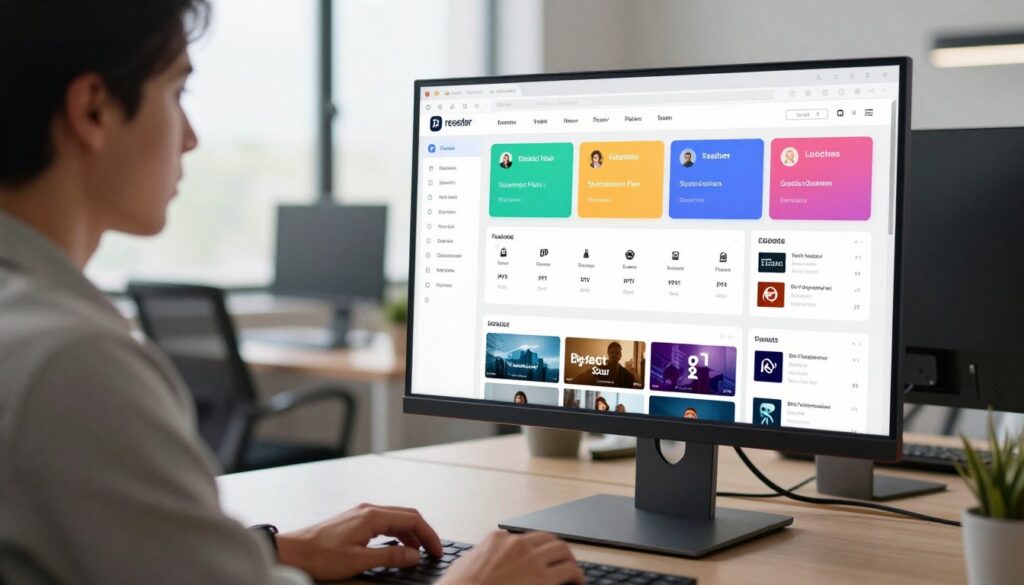
Think of the panel as your operational cockpit for every customer touchpoint. A good reseller panel is fast, stable, and clear so you can manage customers without constant provider support.
Core tasks you’ll do every day
Create subscriptions, assign duration, and deliver credentials in minutes. You should be able to confirm activation before or right after payment.
User management should be simple: reset credentials, extend time, suspend for non-payment, and handle device or app swaps without losing track of an account.
Analytics and reporting
Expect dashboards that show active vs. expired subscriptions, credit burn rate, renewals due, and trial conversions.
Good reports help you spot churn risk and fix issues—like frequent complaints or delayed renewals—before customers cancel.
Sub-resellers and access control
Adding sub-resellers makes sense if you work with partners or local agents. But you need strict role-based control and audit logs.
Too many sub-resellers without limits can cause credit leakage, inconsistent pricing, and support chaos. Choose a panel that offers fine-grained permission control, clear reports, and regular updates.
| Feature | Why it matters | What to look for |
|---|---|---|
| Credit management | Controls inventory and margin | Easy top-up and bulk views |
| Automated renewals | Improves retention | Fail-safes and manual override |
| Role access | Protects operations | Audit logs and permissions |
How to Become an IPTV Reseller Without Guesswork
Start with a clear plan so your new subscription business runs predictably from day one.
Choose a provider and reseller plans that match your goals
First, set goals: is this side income or a full-time business? Decide your target niche and how many customers you can support.
Shortlist providers by stability, content breadth, device compatibility, and response times for support. Look for trial options so you can test service quality before you commit.
Purchase credits and get panel access after payment
Pick a credit package sized for your first 10–30 customers to avoid excess upfront cost. After you purchase credits, most providers send panel access, credentials, and setup instructions—confirm turnaround time first.
Set pricing, activate accounts, and deliver credentials
Set pricing that covers your wholesale cost per month, payment fees, refund risk, and time spent on support.
Activate subscriptions in the panel, verify each account, then send a short setup email that covers login steps and common fixes.
Basic onboarding template (use with each customer)
- How to login: step-by-step credentials and app names.
- Supported devices: list common smart TVs, sticks, and phones.
- Buffering fixes: restart app, check network, and contact you.
- Renewals: explain auto-renew or manual renewal windows.
| Step | Action | What you get | Why it matters |
|---|---|---|---|
| Select provider | Compare stability and support | Provider shortlist | Reduces downtime and support load |
| Buy credits | Purchase appropriate credit bundle | Panel access and instructions | Keeps cash tied to customer count |
| Set pricing | Cover costs and time | Retail price per month | Protects margin and service quality |
| Activate & deliver | Create accounts in panel | Credentials sent to customers | Fast access increases conversions |
Reseller Plans, Credits, and Pricing: What You’re Really Paying For

Understand the tradeoffs before you buy credits or lock in prices.
What you pay for goes beyond content. Plans bundle infrastructure, uptime engineering, panel software, updates, and reseller-facing support. Those services keep accounts active and customers happy.
How volume discounts change your cost
Buying larger credit packages usually lowers the cost per month. That can widen your profit margin if your retail pricing holds steady.
But higher minimum buys increase short-term risk. Balance lower per-credit prices against the cash you must tie up in inventory.
Non-expiring credits: pros and cons
“Non-expiring” credits remove pressure to sell quickly and ease cash flow planning for a new business. They can help if your sales are seasonal.
On the downside, they can lock you into one provider and make switching harder if quality drops.
“Cheap credits that fail during peak hours cost you more in churn than you save up front.”
| Factor | What to compare | Why it matters |
|---|---|---|
| Cost per credit | Effective monthly wholesale cost | Directly affects profit margin |
| Minimum buy-in | Starter package size and price | Impacts cash flow and risk |
| Panel & support | Features, trial availability, response time | Affects churn and customer experience |
In short, don’t chase the lowest prices alone. Cheap credits can mean more buffering, weak app support, and unhappy customers.
Use a simple comparison: cost per credit, minimum buy-in, trial options, panel features, and support speed. For real offers to review, check a sample reseller plan and a white-label option at this reseller page.
Profit Margin and Revenue Model: How You Make Money Reselling IPTV
Your revenue model is straightforward: you buy months (credits) wholesale, sell them at retail, and then keep the difference while covering costs.
How the wholesale-to-retail math works:
- You buy one credit = one month of service, then sell that month to a customer at your chosen pricing.
- Gross margin = retail price − wholesale cost. Net profit subtracts payment fees, refunds, and time spent on support.
Example: buy credits at $3/month, sell at $12/month. Gross margin is $9. After a $1 payment fee and an estimated $2 in support or goodwill per month, your take-home is $6.
| Item | Amount | Notes |
|---|---|---|
| Wholesale (per credit) | $3 | Provider price |
| Retail | $12 | Your listed pricing |
| Payment & support | $3 | Fees + occasional fixes |
| Net | $6 | Repeatable monthly income if customer renews |
Retention matters: one retained customer yields recurring months, so invest in fast troubleshooting, clear setup instructions, and consistent streaming quality to protect lifetime value.
For practical pricing models and deeper margin ideas, review a detailed guide on tools and pricing and compare platform options before you buy credits: pricing & tools guide and platform examples at platform comparisons.
What to Look for in an IPTV Service Before You Offer It to Customers
Start by testing what customers will see: live channels, on-demand libraries, and how often new titles appear.
Why the offering matters: what you sell is ultimately the service experience. Content breadth, consistency, and regular updates determine whether customers stay.
Live channels and content updates
Check channel count, regional coverage, and stability. Sports, international, and local feeds matter differently depending on your niche.
Watch the lineup for a week to confirm channels stay online and updates arrive regularly.
VOD depth and movies
A large movies and VOD catalog helps retention only if it’s organized and refreshed. Quick search and clear categories reduce churn.
Streaming quality targets
Set baseline expectations: HD is required, FHD is common, and 4K is a premium differentiator when both network and devices support it.
Uptime and anti-freeze technology
Ask providers about uptime SLAs and anti-freeze tools. Then test during peak evening hours to spot buffering or stream drops.
Device compatibility and access
Ensure apps work on Smart TVs, popular streaming devices, mobile apps, and set-top boxes. Fewer “it doesn’t work” tickets saves you time.
Real-world trial: test on two device types and two networks (home Wi‑Fi and a mobile hotspot) before you offer the service to customers.
| Selection Factor | What to Check | Why it Matters |
|---|---|---|
| Live channels | Lineup stability, niche coverage, regional feeds | Customer satisfaction and repeat use |
| VOD & movies | Library size, organization, update frequency | Retention and perceived value |
| Streaming quality | HD baseline, FHD common, 4K where supported | Reduces complaints and upgrades your offer |
| Uptime / anti-freeze | SLA, peak-hour tests, recovery tools | Fewer buffering tickets and higher trust |
| Devices & access | Smart TVs, streaming sticks, mobile, boxes | Lower support load and better conversions |
Support Standards You Should Demand, Including 24/7 Technical Support
Good support is the backbone of any subscription business — when streams fail, your reputation is at stake.
What reseller-facing support should cover in the real world
Your reseller panel access must be backed by prompt fixes for login and credit issues. Expect help for activation failures, account creation, and bulk top-ups.
Ask for clear escalation routes for outages and wide buffering events. A reliable provider offers real-time status updates and a documented response timeline.
What customer-facing support you’ll own vs. what your provider should handle
You handle onboarding, device setup, and first-line troubleshooting with customers. Your provider handles server-side outages, panel bugs, and backend fixes.
- Test 24/7 technical support before you sign: open tickets and time the replies.
- Demand SLA-style response expectations and visible outage communication.
- Keep scripts for common fixes so customers get fast answers from you.
| Issue type | Who handles it | Desired response | Why it matters |
|---|---|---|---|
| Panel login / credits | Provider | 1–4 hour response | Prevents activation delays |
| Server outages / buffering | Provider | Immediate escalation, status updates | Reduces churn |
| Device setup / app issues | You | Fast, friendly walk-through | Improves retention |
Strong support reduces churn and protects your brand — test response speed before you commit.
Free Trials and Demos: Using a Trial Account to Convert Customers
A focused 24-hour demo gives prospects a real sense of channel lineup, streaming quality, and device compatibility in their home.
How 24-hour trials fit into your sales flow
Why trials work: they reduce purchase anxiety and let customers verify the live channels and VOD on their own network.
Qualify the lead first: confirm device type and basic network speed. Then create the trial from your panel or reseller panel.
Follow up with a short checklist and a friendly call or message near the trial end to answer questions and present paid subscription options.
Set expectations so trials don't become support nightmares
Be clear about what the trial covers: basic setup help only, one-device testing first, and that peak-time buffering may reflect the customer’s network.
Confirm how trials interact with credits—some providers count them, others do not—so check your iptv reseller program rules before offering unlimited demos.
“Limit trials per person and require a purchase intent to avoid repeat collectors.”
Use a short trial script: test live channels, play a VOD title, check EPG if available, and tell the customer how to report issues. If they like the trial, activate paid access immediately from your panel to deliver final credentials.
Trust, Legitimacy, and Customer Protection for Your IPTV Business
Before you offer service to customers, make sure the provider can prove its legal standing and stable history.
Verify legality and protect your business
Check licensing and public records so you don’t inherit legal risk. Standards vary by state, so confirm compliance for the U.S. market.
Business risk is real: if a questionable provider is shut down you can lose payment access, accounts, and customer trust overnight.
- Ask for written terms and clear ownership or licensing claims.
- Demand documented support channels and a service history you can verify.
- Prefer providers with transparent uptime and incident logs.
Privacy, security, and payment practices
Collect only essential customer data and protect credentials. Use encrypted storage and avoid sharing account details in public or insecure messages.
Offer mainstream payment methods, provide invoices, and keep business funds separate for clean bookkeeping. That helps with refunds and reduces disputes.
“Verify legitimacy first — protecting customers protects your brand.”
| Check | What to expect | Why it matters |
|---|---|---|
| Terms & licensing | Clear, documented claims | Reduces legal exposure |
| Privacy & security | Minimal data, encrypted accounts | Builds trust with customers |
| Payments | Mainstream gateways, receipts | Protects cash flow and reputation |
How to Scale Your IPTV Reseller Business Over Time
Scaling well means turning one-off tasks into repeatable systems that run without constant oversight.
Make scaling a systems problem. You grow fastest when onboarding, renewals, and support follow clear checklists. Document every step so new hires or partners can replicate success.
Customer acquisition channels that actually work
Focus locally and in niche communities. Try these proven channels:
- Local referrals and satisfied customers who send friends.
- Niche interest groups and online forums where your target audience spends time.
- Partnerships with small businesses that serve the same customers (install shops, community centers).
Operational upgrades to protect quality
Use your panel analytics plus a simple CRM or spreadsheet to track trial-to-paid conversion and retention by channel.
Automate renewal reminders, create standardized setup guides, and set clear hours and response times for support. These steps cut reply time and reduce churn.
When to expand credits and add services
Base inventory expansion on your renewal calendar and average monthly activations. If your buffer drops below two weeks of activations, increase credit packages.
Only add sub-resellers, premium support, or paid device setup once you can deliver consistently. Scaling too fast without staff or processes raises refunds and negative word-of-mouth.
| Area | Action | Trigger | Why it matters |
|---|---|---|---|
| Acquisition | Track channels in panel/CRM | Low conversion from a source | Focus spend on winners |
| Operations | Automate renewals & scripts | Support backlog grows | Maintain fast responses |
| Inventory | Increase credit packages | Buffer | Avoid stockouts at peak renewals |
| Services | Add paid setup or sub-reseller access | Consistent delivery for 60+ customers | New revenue without harming quality |
Quick tip: when you’re ready to expand sales channels, consider a simple Android onboarding page to help customers set up devices — see how to start on Android.
GetMaxTV as an Option When You’re Ready to Offer IPTV Subscriptions
When you evaluate providers, treat each offer as a choice you’ll attach to your brand.
GetMaxTV is one option to review if you want a straightforward subscription experience to offer customers. It’s worth checking how their listing matches your needs before you commit.
As you compare any service, look for four basics: device compatibility, content fit for your audience, clear pricing, and responsive support. These factors determine whether you can retain customers and avoid frequent trouble tickets.
Also verify legitimacy, privacy practices, payment options, and how quickly the provider responds to outages. Those checks protect your business and customers from surprises.
If you want to review an IPTV subscription option, you can check GetMaxTV’s offer at this page. Use the same due diligence checklist from earlier and decide on data protection and support posture before you sell subscriptions.
Conclusion
Conclusion
This guide shows how an iptv reseller program ties credits and a reseller panel to everyday operations.
You now understand how credits buy inventory, how the panel creates and delivers accounts, and why testing quality matters. Keep your setup simple and document each customer step.
Choose carefully: long-term success depends on reliable streaming, uptime, device compatibility, and fast support — not just low pricing. Set retail prices that cover support and refunds, and use trials to prove value.
Verify legitimacy, protect customer data, and test 2–3 providers at peak hours before you buy large credit packages. If you want a subscription instead of reselling, check GetMaxTV’s offer at https://watchmaxtv.com.
FAQ
What is the reseller model and how does it work?
You buy credit packages from a provider, use a management panel to create and activate customer subscriptions, and sell those subscriptions under your brand. One credit usually equals one month of service, so you control pricing, margins, and customer billing while the provider handles the streaming infrastructure.
Why is this a viable business model with low overhead?
You don’t host servers or manage large inventories. Costs are mostly credits, panel access, and marketing. That keeps fixed expenses low and lets you scale by adding customers or sub-distributors without heavy capital investment.
How big is the market opportunity in the United States right now?
The streaming market continues strong growth, driven by cord-cutting and demand for live channels and on-demand content. Recent industry figures show rapid expansion, creating room for new sellers who offer competitive pricing and reliable streaming quality.
What drives customer demand for streaming services?
Convenience, device flexibility, and a broad content mix — live sports, news, movies, and series — keep users switching to streaming. Customers also look for stable playback, HD/FHD/4K options, and easy account control.
How do credits work and why should you care?
Credits are the unit you buy to activate subscriptions. Buying in bulk often reduces your cost per month. Some packages are non-expiring, which helps cash flow, while others have expiration windows that require planning.
What does the management panel let you do every day?
You’ll create and renew subscriptions, manage user access, track credits, and run basic analytics. A good panel also supports account control, bulk actions, and reporting so you can monitor performance and customer churn.
When should you add sub-distributors (sub-resellers)?
Add them when demand outpaces what you can handle or when you want to expand into new niches or regions without direct marketing. Panels typically let you set permissions, margins, and reporting for sub-distributors.
How do you choose the right provider and plan?
Compare content breadth (live channels, movies, VOD), streaming quality, uptime, panel features, and pricing. Also check support availability and reviews. Pick a plan that matches your target market and budget for marketing and support.
What happens after you purchase credits?
The provider grants panel access and credits are added to your account. You then create customer accounts, set pricing, and deliver credentials. Keep records for renewals and monitor credit balances to avoid interruptions.
How should you set prices to ensure profit?
Calculate wholesale cost per subscription, add operating expenses and a margin that keeps you competitive. Factor in churn, promotional trials, and support time. Recurring revenue from retained customers improves long-term profitability.
What level of streaming quality should you promise customers?
Offer clear options: HD for most users, FHD for premium plans, and 4K where available. Make sure the provider’s uptime and anti-buffering tech match those promises so you reduce complaints and refunds.
Which devices should you support to reach more users?
Ensure compatibility with Smart TVs, Android and Fire TV devices, mobile apps, and popular set-top boxes. The broader your device support, the easier it is for customers to start watching quickly.
What technical support should you expect from your provider?
Look for 24/7 technical support for infrastructure issues, stream outages, and account restoration. Your provider should handle server-level problems while you manage customer onboarding and first-line support.
What customer support responsibilities will you keep?
You’ll handle billing questions, password resets, delivering credentials, and basic troubleshooting. Escalate server or streaming faults to provider support. Clear roles keep response times fast and customers satisfied.
How can free trials help convert leads?
Short trial periods let prospects test streaming quality and channel selection. Limit trial length, clarify expectations, and provide simple instructions to avoid support overload and reduce trial abuse.
How do you verify a service is legitimate before you sell it?
Check legal compliance, reliable payment processing, transparent terms, and customer reviews. Ask for uptime records and test streams yourself. Trust and clear privacy practices protect your brand.
What security and payment practices should you use?
Use secure payment gateways, protect customer data with encryption, and follow privacy standards. Clear refund and privacy policies help build trust and reduce chargebacks.
How do you grow the business after launch?
Use local referrals, targeted ads, social communities, and partnerships. Improve operations with automation, recurring billing, and better reporting. Increase credit inventory and add services like premium channels or installation help as demand grows.
When should you expand credit inventory or offer additional services?
Scale inventory when you see sustained growth or frequent stockouts. Add services when customers ask for extras like premium packages, device setup, or white-label options to increase average revenue per user.
Where can you review a ready-made offer when you’re ready to start?
Review provider pages that list plans, panel features, and support terms. For example, visit the provider’s offer page to compare packages and see if their content, pricing, and support meet your needs: https://watchmaxtv.com
The WatchMaxTV Team is a dedicated group of streaming specialists and entertainment technology reviewers covering IPTV services for viewers in the USA, UK, and Canada since 2023. Our team independently evaluates every service we feature — testing across Smart TVs, streaming sticks, mobile devices, and gaming consoles. We measure stream stability, picture clarity in HD and 4K, program guide accuracy, and customer support quality. Our goal is simple: help cord-cutters find reliable, affordable alternatives to overpriced cable. Every recommendation on WatchMaxTV.com comes from real-world testing — not sponsored content or paid placements.