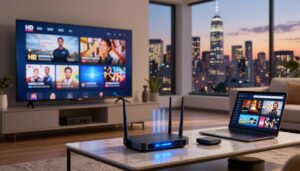
Can a simple app-based TV plan outdo a traditional bundle with a contract and set-top box?
Many U.S. viewers wonder if app-first streaming can match the features they know from cable and ISP TV bundles.
Worldwide, internet protocol television is now a mainstream way to get channels and on-demand shows. In France, operator bundles pair internet, TV channels, and hardware, but app-based services stream content across devices without extra boxes.
This guide translates that model for U.S. readers and previews a clear A vs. B comparison: traditional provider TV (bundles, contracts, hardware) versus subscription streaming services (apps, flexible access, multi-device). We will evaluate quality, channel lineups, pricing, devices, legality, and support.
Legality and safety matter. The article focuses on how to stream responsibly and how a legal subscription—such as exploring GetMaxTV—can provide stable service without risky shortcuts.
Key Takeaways
- Understand how operator bundles differ from app-first streaming in plain terms.
- Compare channel variety, video quality, and device support before switching.
- Check pricing, trials, and customer support to judge value.
- Prioritize legal, secure services to avoid interruptions or legal issues.
- Use the linked checklist to pick a trustworthy provider: how to choose the best provider.
Why People Search for an IPTV Alternative to Traditional TV Providers
When a bill keeps rising and the set-top box feels mandatory, people naturally start exploring different ways to watch TV.
Common frustrations include long contracts, early termination fees, and equipment rentals that add to the monthly price. Many users also hit limits on simultaneous streams or face device locks that stop them from watching where they want.
That push for freedom leads households to weigh other options: mainstream app-based plans or independent services that let you pick channels and devices more freely.
“People want predictable billing, broad channels, and support that answers quickly when things fail.”
Not all choices are the same. Big names like YouTube TV or Hulu + Live TV are familiar options. Other services offer app-first viewing without bundled hardware. For readers curious about the user experience, see this review on user experience with popular providers.
| Feature | Provider-style TV | Streaming-first plans | Independent app services |
|---|---|---|---|
| Contract | Often long-term | Monthly or annual | Flexible subscription |
| Device access | Set-top boxes | Apps on many devices | Multi-device options |
| Support & billing | Single provider support | Predictable price tiers | Varies by service |
Later sections will compare stability, channel breadth, and legality—especially important if you’re considering using iptv for premium sports. For a look at premium plans, check this premium IPTV plans.
Internet Protocol Television Basics: What IPTV Is and How It Works
Streaming TV today sends live channels and shows over your home internet instead of coax or satellite lines. Internet protocol television simply means video delivered as data packets across a broadband link. The player app decodes those packets and shows your program on-screen.
Live channels, on-demand, and catch-up features
Most services combine live channels, on-demand content, and catch-up or start-over features in one interface. Live channels stream in real time like broadcast TV.
On-demand content acts like a library you can pick from. Catch-up lets you watch recent shows you missed without a DVR.
How playlists and access systems connect streams
M3U playlists and Xtream Codes are common ways apps reach streams. Credentials look like a username, password, and a server URL. The app uses those details to fetch the stream — it does not supply the channels itself.
“An app is a player, not a channel provider — legality depends on the stream source and licensing.”
Why a steady internet connection matters
Video quality depends on a stable connection more than peak speed. Congested Wi‑Fi or slow upload routes can cause buffering even if your plan advertises high Mbps.
Guidelines often recommend ~16 Mbps for standard streams and ~25 Mbps for HD. Budget extra bandwidth for multiple simultaneous streams.
| Feature | What it does | Practical note |
|---|---|---|
| Live channels | Real-time broadcast streams | Requires low latency and steady throughput |
| On-demand content | Video library you pick from | Works well with buffering caches |
| EPG (program guide) | Shows what’s on and when | Guide data can break while video still plays |
| M3U / Xtream | Connection method for streams | Apps need valid credentials to access streams |
iptv sfr orange free alternative: What You’re Actually Comparing
The core choice comes down to two models: a provider-bound bundle with hardware, or a subscription service that runs on your own devices.
Provider-style TV means internet + TV sold together. You get a set-top box, a remote, and a channel guide managed by the provider. DVR features and routing often tie to that box. That makes support straightforward but limits how and where you watch.
How subscription services differ
Subscription streaming services work across smart TVs, phones, and streaming sticks. Your service follows you, not the hardware. This frees you to add a second device, watch on the road, or switch players without swapping a box.
Translating operator TV to the U.S. market
Think of the operator model like Xfinity, Spectrum, Verizon Fios, or AT&T bundles: negotiated channel packs, leased equipment, and single-provider support. The streaming side mirrors app-first plans that emphasize device compatibility and flexible options.
What to judge: the best services are not just big channel lists. Check stability, clear billing, and customer support. Device flexibility matters for families who want mobile viewing, second TVs, or travel access.
“Choose by stability and service experience, not by headline channel counts.”
| Aspect | Provider-style (bundle + box) | Subscription services (apps) |
|---|---|---|
| Hardware | Set-top box, gateway router | User devices: smart TV, stick, phone |
| Device flexibility | Limited, often one primary box | High—multi-device support |
| Support & billing | Single provider contact | Varies by service; often online support |
| Best fit for | Users wanting a managed, flat experience | Users who value portability and options |
Streaming Quality and Stability: IPTV vs. Traditional Provider TV

Consistent picture and fast channel changes make or break a streaming setup for most households. Stability means clear uptime, minimal buffering during peak hours, and quick zapping between channels—not a one-time successful play.
Buffering, uptime, and what “stable” really means
Stable refers to consistent service over days, not just moments. Check peak-time playback, channel switch speed, and failure rates. A reliable provider-side network plus a solid home setup equals repeatable quality.
Speed guidelines and practical margins
Most guides recommend ~16 Mbps for standard streams and ~25 Mbps for HD. For 4K or multiple simultaneous viewers, add generous headroom—often 50 Mbps or more for smooth results.
Wi‑Fi vs. Ethernet: why wired wins for main TVs
Wi‑Fi can suffer from distance, walls, and apartment interference. If one TV buffers while phones don’t, the issue is likely the local device or Wi‑Fi path. If all devices stutter, suspect ISP congestion or provider-side faults.
| Metric | Why it matters | Quick test |
|---|---|---|
| Uptime | Shows reliability across days | Run evening playback for three nights |
| Buffering incidents | Indicates network or server strain | Measure pauses per hour during peak |
| Channel zapping speed | User experience when switching | Time 10 rapid channel changes |
| Codec/device decoding | Affects perceived video sharpness | Compare H.265 vs H.264 streams on the same TV |
Troubleshooting tip: If only one device lags, update the app or use Ethernet. If everything slows, contact your ISP or check provider-side status. Also look for codec support (H.265/HEVC) on receivers; decoding affects HD and 4K quality.
To judge the best iptv claims, run peak-time tests, check zapping speed, and watch consistency over several days. For practical guides on testing service options and viewing behavior, see this viewing guide and a comparison of models comparing paid vs. free choices.
Channels and Content Libraries: Live Channels, VOD, and Premium Sports
Counting channels is easy; judging quality takes a bit more care. A long lineup can include duplicates, low-bitrate feeds, or channels that vanish without notice. Quality and licensing matter as much as raw numbers.
Live TV variety
Big channel counts can mislead. Some providers bundle regional variants or mirrored feeds to inflate totals. Check for consistent availability, HD options, and fast load times before you trust a number.
On-demand libraries
On-demand content should be organized and current. Look beyond totals: searchability, accurate metadata, and whether movies and series play smoothly are what you use daily.
| Checklist | Why it matters | Quick test |
|---|---|---|
| Consistent availability | Avoid surprise blackouts | Try evening playback for several nights |
| Fast load time | Reduces start-up buffering | Time channel load during peak |
| Accurate EPG | Tells what’s actually airing | Compare guide to live broadcast |
Sports and live events
Premium sports are the toughest test. Peak-time load and rights rules can cause blackouts or drops. Expect some latency compared with cable; seconds can matter during live goals or plays.
“Sports streams demand low buffering, accurate schedules, and reliable rights management.”
International channels
One real advantage is broader global lineups for expatriates and multilingual homes. Reputable services often provide legal international feeds that traditional US bundles lack.
For global news and multilingual channel options, see the round-up of global news channels.
Pricing and Plans: Monthly vs. Annual Subscriptions and Free Trial Options
A short trial can reveal more about a service than a glossy channel list ever will.
Monthly plans give flexibility if you want to switch quickly. Annual subscriptions often cut the effective price and suit households that confirm stability first. If the service proves steady for a month or two, an annual plan can save money.
How to use a free trial the right way
Treat a free trial as a real test. Try evening playback, multiple channels, and the device you use most.
- Peak-time buffering rate
- Channel switching speed and EPG accuracy
- VOD playback and subtitle/audio behavior
Hidden costs that raise the true price
Watch for extra connections for multiple TVs, premium sports add-ons, and setup or activation fees. Normalize costs by splitting the total by needed simultaneous streams to compare fairly.
“Never buy long-term without a clear trial and a written list of what’s included.”
| Charge type | What to check | How it affects monthly cost |
|---|---|---|
| Subscription term | Monthly vs. annual discount | Annual lowers effective monthly price |
| Connections | Simultaneous streams allowed | More connections = higher true cost |
| Add-ons | Premium sports, extra VOD | Often billed separately |
| Setup fees | Activation or support charges | One-time increase to first-month cost |
Compare normalized per-connection price using resources like an 12‑month pricing guide or an IPTV price comparison. Avoid services that refuse trials or pressure you into long commitments without proof. The cheapest plan isn’t a win if it lacks legality, support, or stability.
Legality and Safety: How to Stream IPTV the Right Way
Streaming apps and the underlying technology are legal tools, but what you watch and how you obtain it defines legality.
The legal line is simple: the app or player is lawful, while streaming copyrighted channels or movies without licensing is not. Using unauthorized feeds can bring account loss, payment disputes, or legal action.
Why “the app isn’t the content” matters
A legitimate app can play both licensed and unlicensed playlists. Conversely, a shady app may hide malware or steal credentials even if you intend to use it legally. Treat apps as tools, not guarantees.
Common security risks
- Malware hidden in unverified APKs or downloads outside official stores.
- Credential theft from scam sellers on forums or messaging apps with no support.
- Phishing pages and fake billing that mimic real providers.
Smart precautions to reduce risk
Install apps only from official app stores or verified developer sites. Keep the app and device updated to patch vulnerabilities. Do not share subscription credentials widely.
Privacy basics: secure your home Wi‑Fi with a strong password, use unique account passwords, and review what data a service collects before subscribing.
Choose providers that publish clear terms and offer responsive support. Avoid “DM-only” sales or links on forums; real services provide contact channels and transparent billing.
“A trusted service combines legal licensing, clear support, and safe distribution — that equals reliable day-to-day viewing.”
Picking the right app and verified services lowers frustration and improves the daily experience. The next section looks at the best apps and features to watch for.
Best IPTV Apps and Features That Matter Most

Choosing the right app starts with fast playback, clear navigation, and a reliable program guide that shows what’s on without guesswork.
EPG and program guide essentials
Look for time zone settings, guide refresh frequency, and channel mapping. A guide can appear wrong when metadata is out of sync even though the video plays fine.
Advanced tools households use daily
Recording, multi-screen viewing, parental controls, and profiles make sense in real homes. Recording may be app-limited; multi-screen helps during live sports.
Popular Android choices (neutral)
TiviMate offers a TV-first interface. IPTV Smarters Pro is broadly compatible. OTT Navigator favors customization. VLC is a simple fallback. None of these apps supply channels; they play streams your subscription provides via M3U/Xtream credentials.
| App | Strength | Best for |
|---|---|---|
| TiviMate | Simple TV layout, strong EPG | Living room / Android TV |
| IPTV Smarters Pro | Wide device support, login tools | Phones and boxes |
| OTT Navigator | Deep customization, filters | Power users |
| VLC | Lightweight, reliable playback | Quick testing / backup |
Good practice: install from official stores, keep the app updated, and avoid modded builds to protect security and ensure solid support.
Devices and Compatibility: Smart TVs, Fire Stick, Android TV Boxes, and More
Not all streaming gear is built the same—your device choice shapes daily viewing. Pick hardware that matches how you watch. A budget stick can work for casual viewing, while a more powerful box helps households that demand HD or 4K across several screens.
Fire Stick vs. Android TV box: the Fire Stick is simple and affordable, but it can hit limits on storage, RAM, and codec support. Android TV boxes often offer more memory, better multitasking, and native H.265/HEVC decoding for sharper 4K playback.
Minimum vs. smooth HD/4K specs
Minimum: recent Android or Fire OS, 2 GB RAM, 802.11ac Wi‑Fi, H.264 decode. Good for SD and light HD.
Recommended for smooth HD/4K: 4+ GB RAM, Ethernet port, Wi‑Fi 6 or 802.11ac, H.265/HEVC hardware decode, and updated Android builds.
Multi-device households and connections
If you want two TVs at once, most services require a second connection or stream slot. Ethernet on the primary device is the best way to avoid buffering during peak internet use.
| Device type | Strength | Consideration |
|---|---|---|
| Fire Stick | Cheap, easy setup | Limited storage/RAM for heavy playlists |
| Android TV box | Powerful, flexible | Higher cost, more options to manage |
| Smart TV app | No extra device | App store limits and varied performance |
Quick tip: check device compatibility and seek prompt support from your service when mixing Fire OS, Android TV, and phones. For a vendor guide to supported streaming devices, see streaming devices.
Setup and Troubleshooting: Getting IPTV Working Smoothly

A clean setup makes a world of difference when you want reliable streaming at home. Follow a simple flow to get started and to isolate issues fast.
Typical setup flow
Step 1: pick a reputable app and install it from an official store.
Step 2: enter your M3U URL or Xtream Codes credentials exactly as given, then enable and refresh the EPG.
Step 3: test a few channels during evening hours to confirm stability.
Common problems and what they usually mean
- Buffering: network congestion or provider-side load.
- Login errors: typos, expired credentials, or wrong login type (M3U vs Xtream).
- App crashes: low device resources or outdated app versions.
- Playlist/EPG mismatches: metadata delays or wrong time zone settings.
Quick fixes and testing steps
- Restart the device, update the app, and clear cache.
- Try Ethernet on the main TV — wired beats Wi‑Fi for steady quality.
- Move the router nearer or reduce interference (walls, other radios).
- Test the same channel on another device or a mobile hotspot to isolate the problem.
“Fast, clear support is a good sign—services that publish guides and respond quickly usually offer steadier daily viewing.”
If issues persist, contact the service support with logs and exact steps you tested. That saves time and points to the real problem: device, home connection, or provider side.
Customer Support and Trust Signals: How to Spot Reliable IPTV Providers
Reliable help makes the difference between a TV night ruined by buffering and one that runs smoothly. Good customer support shows when issues happen during prime time and live events.
What good support looks like
Fast response times, clear setup guides, and step-by-step troubleshooting matter most.
Look for evening and weekend availability. 24/7 support is a valuable differentiator when live sports or shows peak.
How to read reviews and judge trust
Read multiple reviews and note patterns: stability during peak hours, how quickly issues are resolved, and whether outages are communicated.
Check that pricing, refund terms, and contact channels are transparent before you buy.
- Transparent pricing and clear trial/refund terms
- Published support channels (email, chat, ticket)
- Evidence of timely issue resolution in reviews
“A slightly higher price can be worth it if support solves problems fast and quality stays consistent.”
| Trust Signal | Why it matters | Quick check |
|---|---|---|
| 24/7 support | Helps during peak viewing | Contact test at night |
| Published terms | Shows transparency | Read refund/trial policy |
| Consistent reviews | Signals real service quality | Look for patterns, not single comments |
For a deeper look at how real providers handle support and uptime, read these provider reviews to compare options and choose with confidence.
Where GetMaxTV Fits: A Practical Option for Viewers Wanting a Legal IPTV Subscription
Choosing a lawful subscription means prioritizing transparency, stable playback, and reachable customer support. This is the practical path if you want reliable day‑to‑day streaming without legal or technical surprises.
What licensing transparency looks like: clear terms, plain billing, and an explicit list of supported devices and connections. Consumers should see what channels and VOD are included and what requires add‑ons.
Performance and device checks
Quality over headline counts. Test evening playback, EPG accuracy, and the exact devices your household uses—Fire Stick, Android TV, or smart TVs—before committing.
Support and trust signals
Customer support should be responsive, publish setup guides, and offer clear troubleshooting steps for buffering or login issues. Good support reduces downtime and frustration.
| Priority | Consumer check | Why it matters |
|---|---|---|
| Licensing clarity | Read terms and channel list | Avoids surprise blackouts or illegal feeds |
| Streaming quality | Test peak‑hour playback | Shows real-world stability |
| Customer support | Try contact at night | Measures real response speed |
If you want to evaluate a legal, supported option, explore GetMaxTV’s offer as a next step at GetMaxTV. Use a short trial to validate EPG, device compatibility, and steady playback before choosing longer plans.
Conclusion
Test real-world playback before you trust any provider’s headline channel counts. A short trial shows how the service handles peak-night sports, movie streams, and multiple devices at once.
Quick takeaway: operator-style bundles offer a managed, hardware-focused experience, while app-first services give more device flexibility and plan options when sourced legally. Pick by consistent channels, steady quality, and reliable customer support—not by big numbers alone.
Final checklist: confirm device compatibility, count required simultaneous connections, test your home internet (aim for ~16 Mbps per SD stream and ~25 Mbps for HD), and use Ethernet for the main TV when possible.
Ready to try a legal option? Check GetMaxTV for a supported subscription and a free trial to validate EPG, peak stability, and app compatibility: https://watchmaxtv.com.
FAQ
What is an internet protocol television service and how does it differ from cable or satellite?
Internet protocol television delivers live channels and on-demand video over the internet rather than through satellite dishes or coaxial cable. It uses apps and playlists on devices like smart TVs, Fire TV Stick, or Android TV boxes. Unlike traditional bundles, it often offers flexible plans, device-friendly apps, and features such as electronic program guides and catch-up content.
How do apps and playlists work—are they the same as the content provider?
Apps (like TiviMate or VLC) are the playback tools; they read M3U playlists or use Xtream Codes-style credentials to access streams. The app does not create the channels—content comes from the streaming provider. Always get apps from official stores to reduce security risks.
What internet speed do I need for smooth streaming?
For stable viewing, aim for about 16 Mbps for standard HD and 25 Mbps or more for HD/4K streams. Consistent throughput matters more than peak speed—use Ethernet when possible and ensure your Wi‑Fi supports modern standards like 802.11ac or ax for multiple devices.
Which devices work best: Fire Stick, Android TV box, or a smart TV?
Fire TV Stick is simple and affordable; Android TV boxes often deliver better performance and codec support (H.265/HEVC) for 4K. Smart TVs can be convenient but vary by app availability. Prioritize device RAM, CPU, and supported video codecs for the best experience.
Are live sports and premium events reliable on a streaming service?
Many legal services provide solid live sports, but expect differences in latency, blackout rules, and event rights. Choose a provider with proven uptime, appropriate rights for events, and clear latency info. High-profile matches require robust servers and network capacity to avoid interruptions.
What should I check during a free trial?
Test streaming stability across peak hours, EPG accuracy, device compatibility, and how quickly content loads. Try live channels, on-demand titles, and any DVR or multi-screen features. Confirm customer support responsiveness while you’re still in the trial period.
How do I know a provider is legal and safe?
Legal providers publish licensing or rights information and appear in reputable app stores. Avoid unverified APKs, shady forum links, or offers that sound too cheap. Use up-to-date apps, strong passwords, and consider a privacy-conscious VPN if you’re concerned about network security.
What features matter most in a viewing app?
Look for a reliable EPG/program guide, easy channel organization, recording or timeshift options, parental controls, user profiles, and multi-screen support. Smooth navigation and regular updates are signs of a well-maintained app.
How many devices can I stream on simultaneously?
That depends on the plan. Basic subscriptions often allow one or two concurrent streams; family or premium plans permit more. Check for connection limits and extra-connection fees before you commit to a subscription.
What common troubleshooting steps fix buffering or playback problems?
Restart the app and device, update to the latest app version, switch from Wi‑Fi to Ethernet, place the router closer to the streaming device, and clear app cache or reload the playlist. If issues persist, contact provider support for server-side checks.
Are there hidden costs I should watch for?
Watch for extra-connection fees, premium sports or movie add-ons, setup charges for certain devices, or dedicated hardware rental. Read the plan terms carefully to avoid surprises.
How do I evaluate customer support quality?
Good support offers clear contact options, fast response times, troubleshooting guides, and honest status updates during outages. Check recent user reviews focused on issue resolution speed and transparency rather than just marketing claims.
Can international channel lineups beat local operator offerings?
Yes—legally licensed international services often provide broader language options and niche channels that traditional operators don’t include. Verify rights and regional availability to ensure the channels you want are included.
What privacy or security precautions should I take?
Install apps only from official sources, keep software updated, use strong account passwords, avoid suspicious playlist sources, and be cautious with third-party APKs. For added privacy on public networks, consider a reputable VPN service that doesn’t log activity.
Where can I compare providers for quality, pricing, and licensing transparency?
Compare based on streaming stability, verified licensing, customer support responsiveness, device compatibility, and trial options. Look for providers that clearly state channel rights and publish uptime or status pages so you can judge reliability before subscribing.