Curious which provider actually beats cable satellite and gives you smooth streaming without the fuss? You’ll get a testing-backed, heads-up comparison so you can choose with confidence.
We tested 15+ providers across Ontario, Quebec, and British Columbia from Sep–Dec 2025. This roundup focuses on uptime, stream start times, EPG accuracy, support response, and overall value. Expect clear ratings by use case: overall winner, sports pick, VOD/catch-up pick, multi-device winner, budget-like option, and mobile-first choice.
This guide is for you if you want reliable live TV, a strong VOD library, fast support, and pricing that cuts your bill compared to traditional cable. Annual plans commonly ran CAD $97–$118 during testing.
Quick note: we compare legal subscriptions and avoid sketchy streams. You’ll also find setup tips, troubleshooting steps, and safety notes. We tested each provider over 90 days and mention GetMaxTV as a notable pick.
Key Takeaways
- Testing covered 15+ providers across three provinces between Sep–Dec 2025.
- We judge on uptime, stream start, EPG, support, and value.
- Expect winners by use case: sports, VOD, multi-device, budget, mobile.
- Annual price range observed: roughly CAD $97–$118 for top plans.
- This guide favors legal subscriptions—consider a legal plan on watchmaxtv.com.
What “Premium IPTV” Means in 2026 (and What You Should Expect)
What matters now is whether your live lineup starts fast, your on-demand content is deep, and catch-up actually works. That is the practical test you should use when comparing providers.
Live channels vs. VOD library vs. catch-up TV
Live channels are for events and news. You need near-zero delay and consistent picture quality.
A strong vod library gives choices when you want to watch on your schedule. Catch-up fills gaps when you miss a live show.
Uptime, buffering, and stream start times as real quality signals
Fast stream start, minimal buffering, and stable peak-hour performance are what you feel first. Aim for ~10 Mbps for HD and ~25 Mbps+ for 4K.
EPG/program guide usability and time-zone accuracy
A usable program guide has search, categories, and accurate schedules. Time-zone accuracy matters—Pacific viewers need correct show times for West Coast live events.
Customer support speed benchmarks (why minutes matter)
Response in minutes, not hours reduces downtime when login or playlist issues occur. Good customer support gets you back to streaming quickly.
| Feature | Practical Target | Why it matters |
|---|---|---|
| Live channels | Instant start, stable during peaks | Prevents missed scores and news |
| VOD library | Large, current catalog | Better on-demand content choices |
| Program guide | Searchable, time-zone accurate | Helps you find shows fast |
| Customer support | Replies in minutes | Reduces outage impact |
Quick Snapshot: Results From a 90-Day Test of 15+ IPTV Services
Over three months we monitored more than a dozen providers to measure real uptime, channel counts, VOD depth, and how fast support replies. The tests ran Sep–Dec 2025 and covered Ontario, Quebec, and British Columbia to reflect regional routing and load differences.
Where testing happened and why it matters
We tested in multiple provinces because reliability varies by ISP routes and regional peaks. If you live near Vancouver or Victoria, those British Columbia checks are most relevant to your experience.
What we measured and why it matters
- Channel verification — confirm listed channels actually play.
- VOD depth — check on-demand titles and freshness.
- Automated uptime monitoring — detect real outages.
- Support response timing — measure minutes-to-reply under load.
- Streaming performance — peak vs. off-peak playback and mbps needs.
How to read uptime claims
99.9% uptime means about 8.76 hours of downtime per year. A measured 99.7% equals roughly 5.4 hours lost annually. Small percentage gaps can still cost you multiple missed games.
| Metric | Target | Why it matters |
|---|---|---|
| Channels | Verified list | Confirms what you can watch |
| Uptime | 99.7–99.9% | Limits annual downtime |
| Support | Minutes | Gets you back to streaming fast |
You can use these same checks to evaluate any provider you’re considering. For more context and comparisons, see our reference roundup at provider comparisons.
Comparison Table: Top IPTV Providers Compared on Channels, VOD, Uptime, and Support
See the main specs at a glance and match the options available to how you actually watch.
This table is the fastest path to narrow choices without reading every review. Use it to compare channel counts, on-demand content, uptime, and real-world support times.
How to read the columns
Channels shows total listings, but focus on the channels you use. High counts can hide duplicates.
VOD or vod library indicates titles available; freshness matters more than raw totals.
Uptime and support are tiebreakers when two providers have similar channel counts.
“Fast support and steady uptime save you hours when a major live event matters.”
| Provider | Channels | VOD Titles | Uptime | Avg Support | Yearly Price (CAD) |
|---|---|---|---|---|---|
| Sonix IPTV | 45,000+ | 140,000+ | 99.9% | 4 min | $97 |
| Pioneer TV | 42,000+ | 138,000+ | 99.5% | 12 min | $104 |
| IPTV Geeks | 43,500+ | 145,000+ | 99.6% | 8 min | $111 |
| Kick IPTV | 41,000+ | 130,000+ | 99.4% | 15 min | $100 |
| IPTV Service | 40,500+ | 125,000+ | 99.3% | 45 min | $97 |
| Kick LTV | 40,000+ | 120,000+ | 99.2% | 60 min | $100 |
Quick buying tips
Typical annual price for top plans is CAD $97–$118 per year. Monthly options run about CAD $10–$12.
If two providers have similar channels, pick the one with higher uptime and faster support. Match your household use: sports viewers need stability during peak events, while families often favor VOD and catch-up features.
Note: Methodology and trial checks are explained later. Use the table as a short list to test during any trial period.
How We Ranked These Providers (Methodology You Can Trust)
We used repeatable, logged tests so you can see exactly how each provider performed under real-world conditions. Below is how we turned observations into scores you can trust.
Channel verification
We verified 500 randomly selected channels per provider. Teams ran three daily checks of 20 random channel streams to catch drops and region-specific failures.
Automated uptime monitoring
Monitoring ran 24/7 for 90 consecutive days. We logged brief hiccups separately from true outages to keep uptime figures meaningful.
Support and streaming tests
We submitted 15 support requests per provider across different hours and measured first-response and resolution rates.
Teams logged 300+ hours of streaming across peak (7–11 PM) and off-peak windows at 50–100 Mbps to reflect realistic customer conditions.
Value analysis
We calculated cost per usable channel and weighed features versus price. Remember: more channels add little value if they don’t play.
“Repeatable checks and open logs are the only way to judge reliability.”
| Test | What we measured | Why it matters |
|---|---|---|
| Channel checks | 500 vs daily samples | Catch intermittent failures |
| Uptime | 90 days continuous | Shows real reliability |
| Support | 15 requests per provider | Measures real response and fix |
Want to replicate this at home? Try our short trial checklist later, or compare regional notes in the Canada provider roundup and UK provider notes.
What to Look For When You’re Comparing an IPTV Service
Start by matching a provider’s lineup to your real habits. Focus on the channels you use every week, how often you watch movies shows, and how many people stream at once.
Channel variety and premium channels you’ll actually use
Check channel lists for the categories you need: local news, sports, kids, and international. Ignore inflated totals and count the channels you watch most.
Tip: mark 10–15 must-have channels and confirm they play during a trial.
VOD depth: recent titles, metadata, and playback
Good VOD is more than volume. Look for recent releases, accurate metadata, subtitles, and consistent playback.
Program guide quality and search features
A usable program guide loads fast, shows correct times, and has reliable search and categories. Test search speed and timezone accuracy.
Multi-device streaming and concurrent streams
Decide how many devices in your home stream at once. Plans often cap concurrent streams, so pick one that fits family use.
Live chat vs. tickets vs. email: support channels that work
Live chat usually resolves urgent issues fastest during a game or late-night problem. Tickets and email work for non-urgent fixes.
Try a trial and compare verified plans to see which options available and how support responds before you commit.
Best premium iptv service british columbia: What Matters Most for BC Viewers
If you watch West Coast sports or late-night news, your provider’s time settings can make or break the experience. This short guide focuses on what you should check for Pacific-time accuracy, sports coverage, and real-world buffering fixes.
Pacific time-zone guide accuracy and late-night programming
Why it matters: if the program guide is off by even one hour, recordings, catch-up, and live alerts fail. That’s frustrating for late-night shows and local news channels you rely on.
How to spot drift: open the program guide and compare the shown start time for a known live event (e.g., local news at 11 PM). If it’s wrong, the EPG is misconfigured for Pacific time.
West Coast sports coverage expectations and blackout claims
You want dependable streams during big games. Expect providers to list sports channels, but test them during a Canucks or playoff window.
- Check Sportsnet Pacific and regional feeds during peak hours.
- Be skeptical of vague “zero blackout” claims—verify in a live test.
- Pioneer TV ranked well in our BC sports tests for Pacific scheduling and stability.
ISP and connection realities: what to do if you see buffering
Use this quick decision tree to find the cause of buffering:
- Switch to Ethernet—if streaming improves, fix Wi‑Fi first.
- Lower player resolution temporarily (HD to 720p) and retest.
- Run a speed test; aim for 10 Mbps per HD stream, 25 Mbps+ for 4K.
- If speeds are fine but problems persist, contact the provider—support speed matters.
“Stable routing and low latency often matter more than peak download numbers during peak sports windows.”
Quick tip: prioritize providers that proved fast support, accurate program guides, and sports stability in Vancouver/Victoria tests. That combination reduces missed plays and late-night annoyances.
Best Overall Premium IPTV Provider: Sonix IPTV (Based on Testing Data)
When reliability, library depth, and fast help matter, Sonix stood out in our hands-on testing.
Quick verdict: Sonix offers a strong balance of uptime, channel count, and rapid help. You get a large catalog without sacrificing day-to-day reliability or quick replies when issues pop up.
Verified specs:
- 45,000+ live channels and 140,000+ VOD titles.
- Table-listed uptime: 99.9% (our measured figure was ~99.7%, ~5.4 hours downtime/year).
- Average response time: 4 minutes; concurrent streams: up to 3; EPG: 7-day guide.
What those numbers mean for you
Large channel and VOD counts translate to more choices, but the real gain is consistency. Near-99.7% uptime means fewer missed games and shows during peak hours.
Support and streaming quality
Fast support matters: a 4-minute average reply often fixes account or playlist problems before you miss an event.
Sonix streams include many 4K feeds, but 4K results depend on your device, bandwidth, and the original feed. Expect top quality if you meet the requirements.
Price and who should consider it
At CAD $97/year, you pay roughly the cost of a month or two of cable per year. It’s a solid value if you want broad content, reliable uptime, and rapid customer support.
- Best for: viewers who value steady uptime, large channels and VOD choices, and fast support.
- Skip if: you need more than three concurrent streams or prefer the absolute largest VOD library above support speed.
Best for Sports Fans: Pioneer TV for High-Traffic Live Events
If major matches are your priority, Pioneer TV is tuned to handle heavy demand and tight schedules. Our tests show it keeps streams steady during peak windows and large events.
Sports footprint and event readiness
Pioneer offers 200+ dedicated sports channels within a 42,000+ channel lineup. That focus matters more than raw totals: these channels are optimized for live play and regional feeds like Sportsnet Pacific.
4K sports and tested stability
About 85% of its sports feeds delivered in 4K during our checks. That means crisp viewing for big events — provided your device and internet meet the demands.
Who should pick it vs. who should skip
- Pick it if: you want reliable streaming for games, regional feeds in Pacific time, and quick recovery during peak crowds.
- Skip it if: you need more than three concurrent streams or prioritize the deepest VOD over live sports.
What to expect: measured 99.5% uptime, a ~12-minute average support response, and an annual price near CAD $104. That combination makes it a strong choice for event-focused viewers who value stability and timely help.
Best Premium Experience for VOD and Catch-Up: IPTV Geeks
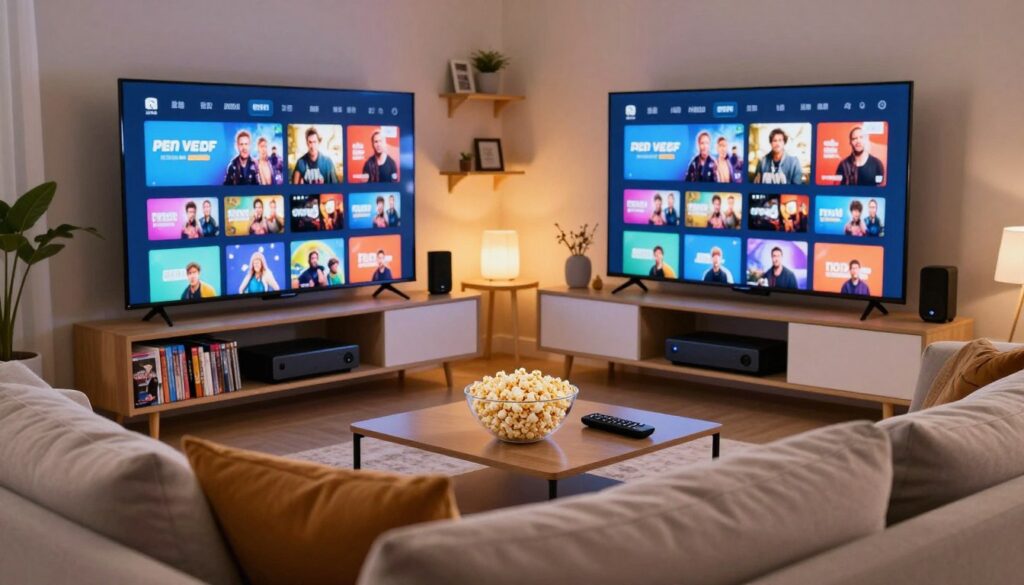
For households that binge, search, and rewatch, IPTV Geeks centers on deep on-demand content and a long catch-up window. You get a large catalog that helps families, hobby viewers, and niche fans find what they want without endless scrolling.
Why a larger vod library matters
43,500+ channels are useful, but the real value is the 145,000+ VOD titles. A bigger vod library helps when you hunt older seasons, foreign films, or little-known documentaries.
Check freshness and playback. Look for recent releases, working subtitles, and quick start times for on-demand content. That keeps browsing smooth for everyone in your home.
Program guide and 14-day catch-up
The advanced program guide improves search and tagging so you find shows fast. Better navigation saves time when kids or guests need quick picks.
14-day catch-up means you can watch missed broadcasts up to two weeks later. That feature helps shift workers and busy parents keep up without watching live.
“Large VOD and solid catch-up turn a crowded channel list into usable content you can actually enjoy.”
| Feature | What you get | Why it helps |
|---|---|---|
| VOD library | 145,000+ titles | More niche and older seasons available |
| Channels | 43,500+ | Wide live lineup to complement on-demand |
| Catch-up | 14 days | Watch missed broadcasts on your schedule |
| Uptime / Support | 99.6% / ~8 min | Reliable viewing and timely help |
| Price | CAD $111 / year | Worth it if on-demand depth is your priority |
Who should pick this: you if on-demand content and catch-up matter more than the cheapest month cost. The guide and search tools make discovering content simple. If quick support is important, the ~8-minute average is solid, though not the fastest.
Best for Multi-Device Households: Kick IPTV
If several people in your home watch different shows at once, concurrent streams become the key value metric.
Kick gives you up to 5 concurrent streams, 41,000+ channels, and about 130,000 VOD titles. Measured uptime sits near 99.4% and average support replies were ~15 minutes. That mix makes Kick a strong option when many devices need to play at the same time.
Why concurrent streams matter
More streams mean fewer logouts and less account juggling. Think sports on the living-room TV, kids on a tablet, and someone catching news on a phone—without forced sign-outs.
What you trade off
You give up a bit of VOD depth and the fastest help compared with top picks. The interface may also feel less polished than higher-tier providers.
Practical device mix and value
For the best results, use a Smart TV plus a Fire Stick or Android box and phones/tablets for secondary viewing. That setup spreads load across a dedicated streaming device and smaller screens.
“Up to five streams changes the price-per-person math—CAD $100/year works out well when several people watch at once.”
Quick tip: confirm concurrent-stream limits in the plan fine print before you buy so you know how many devices truly can stream at once.
Best Budget-Like Pricing With Premium Basics: IPTV Service
A low sticker price can be attractive, but you should know the practical limits before you subscribe.
What you get: at CAD $97/year (about CAD $10/month) this plan includes ~40,500 channels and roughly 125,000 VOD titles. Uptime averages 99.3%, so daily viewing is generally stable.
What you don’t get and how to plan
Support is the main trade-off: average first replies run near 45 minutes. That lag can be fine if you rarely need help, but it hurts during live events or setup troubleshooting.
Practical tactics to work around slower support
- Set up accounts and devices during off-hours so you avoid peak support needs.
- Keep screenshots and logs of errors to speed any ticket resolution.
- Use stable players and Ethernet where possible to reduce avoidable issues.
- Try the monthly option first to verify stability on your ISP and Wi‑Fi.
| Item | Included | Why it matters |
|---|---|---|
| Channels | 40,500+ | Wide live lineup for general viewing |
| VOD | 125,000+ | Solid on-demand content for families |
| Uptime / Support | 99.3% / ~45 min | Good baseline quality; slower help |
| Price | CAD $97 / year (~$10/month) | Low cost vs. traditional pay TV |
Bottom line: this is a budget-like pick that keeps core features intact. Always run a short trial and confirm the options available and playback quality on your home network before you commit. For a primer on how IPTV works, see what is IPTV.
Best for Mobile-First Streaming: Kick LTV
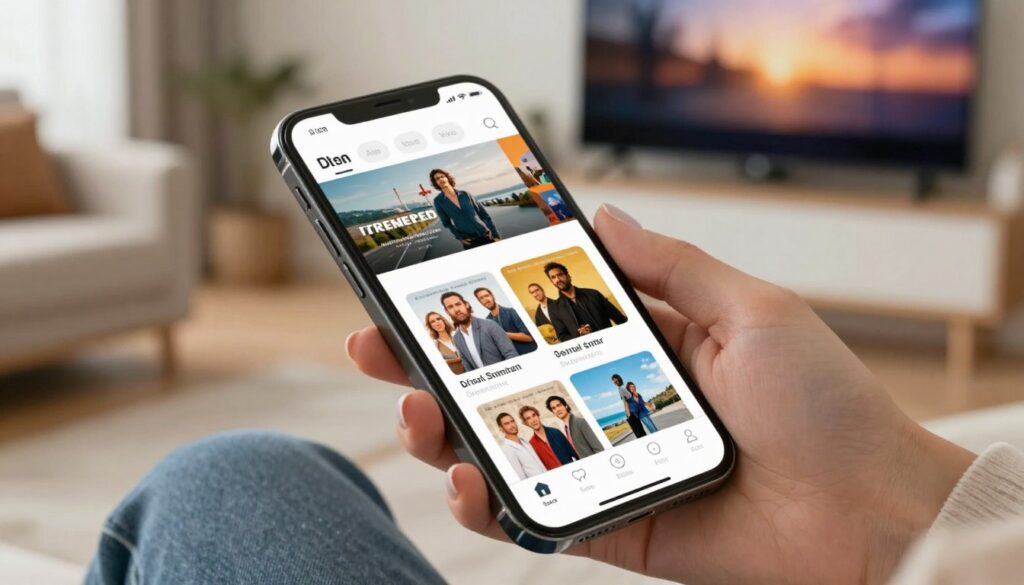
If most of your viewing happens on a phone or tablet, prioritize an app-first lineup that stays smooth on the go. Kick LTV positions itself as mobile-optimized with a lean app and quick channel switching.
What you get: about 40,000+ channels, 120,000+ VOD titles, roughly 99.2% uptime, and an average support reply near one hour. The annual cost sits near CAD $100.
Who should consider this
Choose this if you commute, travel often, or your household watches on phones and tablets. The app is tuned for cellular handoffs, fast channel swaps, and compact navigation for small screens.
Mobile optimization checklist
- Stable playback on cellular and Wi‑Fi.
- Fast channel switching and clear UI in the app.
- Low startup lag and compatible across common devices.
Trade-offs and practical tips
The trade-off is a smaller VOD library than top picks and the slowest tested support response. If you need quick fixes, plan for longer wait times for account or playlist help.
To reduce mobile buffering: use strong Wi‑Fi, avoid crowded hotspots, and lower resolution when needed. Also validate your must-watch channels on mobile specifically before you subscribe — apps can differ from TV playback.
“Fast app navigation and reliable mobile playback can matter more than raw channel counts for on-the-go viewers.”
For a wider comparison, see a concise roundup at provider comparisons.
Devices and Apps You Can Use for IPTV (Setup-Friendly Overview)
Think of IPTV as three parts: access from a provider, an app that plays channels, and a streaming device where you watch. This simple frame keeps setup non-technical and quick to test.
Common devices and trade-offs
- Fire Stick — small, affordable, easy remote control. Good for a single TV.
- Android boxes — more power, better codec support, great for 4K and advanced players.
- Smart TVs — built-in convenience, but some models limit player options.
- Phones and tablets — handy for mobile viewing and quick checks.
Popular player apps and setup basics
IPTV Smarters and TiviMate are common app choices. They accept M3U playlist URLs or Xtream-style credentials. M3U is a simple playlist link. Xtream gives username/password access and often includes EPG and catch-up.
Simple sanity checklist
- Use Ethernet or strong Wi‑Fi to avoid dropouts.
- Confirm the M3U/Xtream URL and that credentials aren’t expired.
- Enable EPG and set your time zone so guides match local schedules.
- Test one channel and one VOD title before relying on it for an event.
Internet speed targets and picking the right setup
Aim for ~10 mbps per HD stream and ~25 mbps or more for 4K. Consistent mbps matters more than a single high reading—router placement, congestion, and Wi‑Fi strength affect playback.
Practical pick: use one TV-first streaming device for daily viewing, plus phones as backups, or choose multiple devices with a multi-stream plan if several people watch at once.
Troubleshooting Quality Issues: Buffering, Freezing, and EPG Problems
Most quality problems trace back to your home network; fix that first before blaming channels or providers.
Fix your network first
Switch to Ethernet if possible. Wired connections cut packet loss and reduce buffering. Move the router so it has a clear line to devices. Avoid heavy use during peak hours. Aim for ~10 mbps per HD stream and ~25 mbps+ for 4K.
Player settings that help
Try a different player app, then adjust buffer size and decoder mode. Lower output resolution to match your bandwidth. These options often stop freezing without changing your plan.
When it’s the provider
Signs of overloaded servers include many channels failing, long start times, or repeat peak-hour freezes. If multiple customers report the same issue, the fault is likely at the provider side.
Support workflow
Before you contact support, gather time, channel name, device, app, ISP, and a screenshot. Send exact timestamps so customer support can trace logs and reply faster.
| Fix | Quick test | Provider sign | Next step |
|---|---|---|---|
| Ethernet | Compare Wi‑Fi vs wired | No change | Contact support |
| Change player | Play same channel in another app | Only one app works | Report app + device |
| Lower res | Set 720p, retest | Still freezes at peak | Try hotspot test |
| Collect logs | Screenshot and note time | Many users same issue | Send evidence to support |
For deeper tips on diagnosing streaming and server-side issues, use our quality guide for a step-by-step approach to faster fixes.
“Start local, collect evidence, then escalate with clear details — that saves time and gets you back to watching.”
Legal and Safety Considerations When You’re Using IPTV
You can use IPTV technology safely if you know how to spot risky providers and protect your data. Start by separating the technology from the legality of any given provider. IPTV is just a delivery method; legality depends on licensing and transparent terms.
How to spot risky providers
- Copycat domains or multiple imitator URLs that change frequently — a red flag for unstable offerings.
- Vague refund or refund-policy wording, or no clear billing address and contact options.
- Claims like “no buffering ever” or guaranteed uptime with no evidence — unrealistic promises often hide weak infrastructure.
- Hidden fees, unclear billing cycles, or support channels that only exist as anonymous chatbots.
Privacy and payment hygiene
Protect your payment info and identity with simple steps. Use a dedicated card or virtual card for subscriptions. Keep receipts and screenshots of plan terms and refunds.
Use strong, unique passwords and enable two-factor authentication where available. Avoid following sketchy links from third parties; always access provider sites directly.
Why legitimate subscriptions matter
Choosing a licensed option reduces shutdown risk, gives clearer refund rules, and usually means predictable billing and consistent support. Responsive customer support is often a practical signal of a lawful, stable provider.
When you evaluate options, look for transparent pricing, public support channels, and clear content licensing statements. If in doubt, compare plans and support responsiveness at a trusted listing like recommended IPTV plans.
Where GetMaxTV Fits In: A Safer, Support-Forward Option to Compare
If you prioritize clear policies and reachable help over marketing claims, GetMaxTV is worth a short checklist-driven comparison.
How to evaluate GetMaxTV against the same quality checklist we used:
- Live channel reliability — test 20 of your must-watch channels during peak hours and note start times and buffering.
- VOD and catch-up — play a recent on-demand title and check metadata, subtitles, and start latency.
- Program guide accuracy — confirm EPG times match local time zones for at least three live events.
- Support responsiveness — open a ticket and try live chat or email; measure first-reply time and resolution clarity.
- Devices and app compatibility — install the app on your TV and phone, then test playback and account sync across both.
Mini trial plan you can run: test at peak evening hours, verify EPG alignment, confirm your top 20 channels play, and try one VOD item per device type you use. That simple routine shows whether a provider meets your household needs.
Policy clarity matters: look for transparent billing, an easy refund path, and clear contact channels so you can reach real help when things go wrong. Position GetMaxTV as a comparison point if legal compliance and dependable support are priorities for you.
To compare plans and features directly, see GetMaxTV: https://getmaxtv.com.
“Choose by how a provider performs in your home, not by promises—test channels, EPG, and support before you commit.”
Conclusion
Quick recap, your top priorities should be uptime, fast support, and whether the channels and content match your habits.
If you want steady quality and quick help, Sonix led our tests. For big sports events choose Pioneer for peak stability. If on-demand depth and catch-up matter most, IPTV Geeks is the pick.
Do a short trial on your own connection at normal viewing times before you pay. Test channel playback, EPG accuracy (check Pacific times if relevant), concurrent streams, and realistic support response.
Final tip: compare options by price, streaming reliability, and customer support speed. If you prefer a legal subscription, check GetMaxTV’s current offer at https://watchmaxtv.com.
FAQ
What does “premium IPTV” mean in 2026 and what should you expect?
In 2026, a premium IPTV offering combines a large live channel lineup, a deep VOD library, reliable catch-up TV, and a responsive electronic program guide (EPG). You should expect low buffering, fast stream start times, accurate time-zone support in the EPG, and clear customer support channels like live chat and email. Look for multi-device apps that work on Fire Stick, Android boxes, and smart TVs and for transparent uptime guarantees and bitrate recommendations.
How do live channels, VOD libraries, and catch-up TV differ?
Live channels stream scheduled programming in real time. VOD libraries give you on-demand movies and shows to start anytime. Catch-up TV lets you rewind or watch recent broadcasts you missed. Each has different storage and delivery needs, so check title freshness, folder organization, and how many days of catch-up are available.
What quality signals should you check like uptime and buffering?
Key signals include measured uptime (99.9% is a common target), average buffering incidents per hour, and stream start time. Also check peak-hour stability, bitrate consistency for HD and 4K, and whether the provider offers adaptive streaming to match your bandwidth.
How important is the EPG/program guide usability?
Very important. A usable EPG shows accurate start/end times, supports time-zone offsets (Pacific vs. Eastern), and includes search and genre filters. Good guides also offer thumbnails, episode descriptions, and easy access to catch-up content.
What customer support response times are reasonable?
Fast responses matter. For live-stream problems, average response times under 10 minutes via live chat are excellent. Ticket systems should reply within a few hours, and email support should acknowledge within 24 hours. Look for providers that publish response-time benchmarks.
How were services tested in the 90-day comparison?
Tests ran across multiple locations and ISPs to simulate real-world use. The team measured channel availability, VOD access, uptime via automated monitors, support responsiveness across channels, and streaming performance during peak and off-peak hours.
What does “99.9% uptime” mean in real terms?
Ninety-nine point nine percent uptime equals roughly 8.76 hours of downtime per year. That’s calculated from total minutes in a year. Lower percentages can translate to days of interruption, so verify SLA details and historical uptime reports.
How do you read comparison tables for providers?
Focus on columns for channel counts, VOD title counts, measured uptime, average support response, and annual price. Also note concurrent stream limits and device compatibility. Cost per channel and feature-to-price ratios help you decide value.
What pricing ranges should you expect for annual plans?
Typical premium annual plans often fall in a mid-range band. For context, many competitive offerings price between around CAD and 8 per year, though bundles and regional taxes can change final cost.
How did reviewers verify channel availability?
Verification used random channel checks at varying times over the testing window, cross-referencing with EPG listings, and replay checks for VOD titles. That helps catch temporary blackouts or channel drops early.
How is automated uptime monitoring performed?
Monitoring tools poll streams on predefined intervals and log response codes, buffering metrics, and time-to-first-frame. Alerts trigger if a stream fails or quality drops below thresholds, allowing side-by-side uptime comparisons.
How was support testing carried out?
Testers opened tickets, used live chat, and sent emails at different hours and days. They measured first-response time, resolution time, and whether support solved technical issues like EPG sync or stream buffering on request.
What should you look for in channel variety?
Choose services that include the networks you actually watch: news channels, sports networks, movie channels, and regional stations. Verify availability of premium channels you want and confirm blackout or geo-restriction policies for live events.
How deep should the VOD library be and why does freshness matter?
Look for a mix of movies and series you’ll watch now plus regularly updated titles. Freshness matters so you don’t see stale catalogs. Advanced features like content tagging and watch lists make discovery easier.
What EPG features should you prioritize?
Prioritize accurate time-zone settings, fast search, genre filters, episode metadata, and one-click access to catch-up or VOD. A usable EPG saves time and reduces channel-hunting frustration.
How many concurrent streams do multi-device households need?
For most families, 3–5 simultaneous streams cover TVs, phones, and tablets. If you have frequent simultaneous viewers, pick providers that explicitly allow multiple streams and test device compatibility for Fire Stick, Android boxes, and smart TVs.
Which support channels work best: live chat, tickets, or email?
Live chat is best for urgent playback issues. Tickets work for reproducible or complex problems that need tracking. Email is fine for billing questions but expect slower responses. Providers that offer 24/7 live chat tend to resolve streaming outages faster.
What should BC (Pacific time) viewers watch for?
West Coast viewers should verify Pacific time-zone EPG accuracy, late-night program timing, and West Coast sports coverage. Check blackout rules for regional sports and confirm the provider’s handling of daylight saving changes.
How do ISPs and connection quality affect streaming?
Your ISP and peak-hour congestion impact buffering. Use Ethernet where possible, choose higher Mbps tiers for multiple HD/4K streams, and run speed tests during peak hours. If you see consistent buffering, test on a different network to isolate the issue.
What device apps are commonly supported?
Most providers support Fire TV Stick, Android TV boxes, Samsung and LG smart TVs, iOS and Android phones, and web apps. Popular players include IPTV Smarters and TiviMate; some providers also offer native apps. Confirm M3U/Xtream or dedicated app support.
What internet speeds do you need for HD and 4K?
Aim for at least 10 Mbps per HD stream and 25 Mbps or higher for 4K. If multiple devices stream at once, add those numbers together and allow headroom for other household usage.
How can you fix buffering, freezing, and EPG issues?
Start with your network—use Ethernet, optimize router placement, and limit concurrent heavy usage. Adjust player settings for buffer size and decoder options. If problems persist, gather logs, timestamps, and screenshots before contacting support to speed resolution.
How do you spot risky or illegal providers?
Watch for unclear pricing, imitator sites, sketchy payment flows, or providers that won’t provide a clear channel list. Legitimate providers publish refund and privacy policies and use secure payment processors. When in doubt, choose legal subscriptions to reduce risk.
What payment and privacy steps protect you?
Use a credit card with fraud protection, avoid sharing unnecessary personal data, and check for HTTPS on checkout pages. Consider separate emails for streaming accounts and enable two-factor authentication if offered.
How should you evaluate a support-forward provider like GetMaxTV?
Compare GetMaxTV against the quality and support checklist: measured uptime, EPG accuracy, device compatibility, and average support response time. Look for third-party test data and user reviews that confirm fast resolutions and reliable streams.