
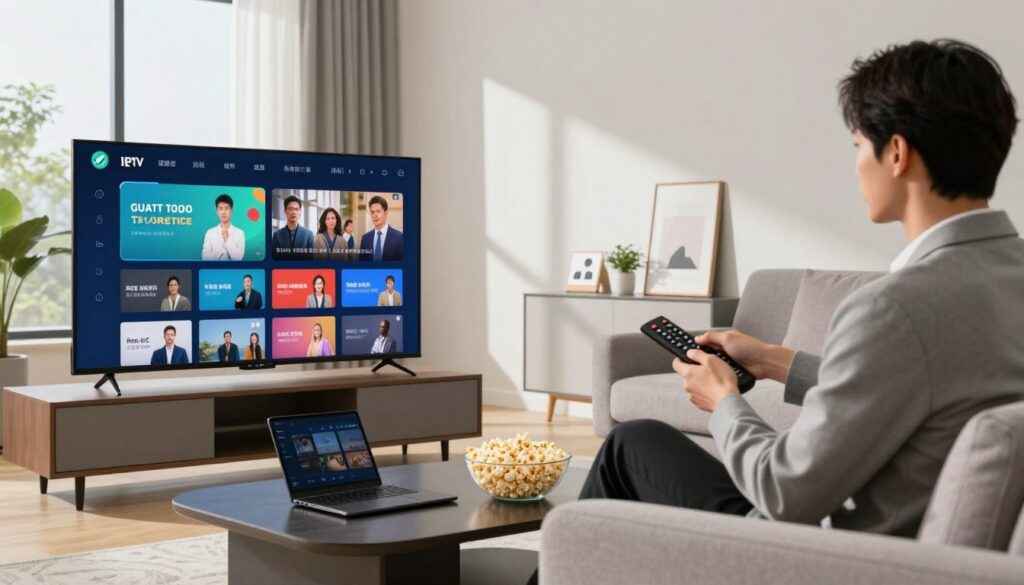
Can a short trial really reveal whether a streaming service will hold up on game night?
You want to know what you’re buying. A free iptv test gives you a short window to stress-check channel lineup, picture stability, and guide accuracy before you subscribe. Use that time to try live channels, on-demand playback, and device compatibility.
Verified services often offer multi-day trials, while many third-party providers limit you to 24–48 hours. That matters because prime-time congestion and sports events can expose problems you won’t see in a quick demo.
This guide shows what to check, how to set up a realistic trial run, and which trust signals matter. You’ll learn to weigh content variety, streaming quality, device support, and support responsiveness—plus privacy and payment practices.
Compare offers like GetMaxTV and other providers, then make a safe, informed choice. Visit GetMaxTV to see current plans and start your evaluation.
Key Takeaways
- Use a trial to judge real-world performance, not marketing claims.
- Focus on live stability, channel accuracy, and VOD playback.
- Expect short trials from many providers; longer trials often signal verified services.
- Test across your devices and during prime-time if possible.
- Check privacy, payment practices, and support responsiveness.
- Compare providers like GetMaxTV before you commit.
Why a free IPTV test matters before you commit
A short service trial can reveal how streaming holds up when it matters most.
You can reproduce your real setup in 24 hours: your Wi‑Fi, your devices, and the shows or sports you watch. That quick window lets you check buffering, channel swaps, and guide responsiveness under prime‑time load.
How a 24-hour trial helps you “stress-test” streaming quality
Stress-testing means you use the service like a normal evening. Switch channels fast, open the guide, and watch live sports or news during peak time. Strong services stay stable; weak ones reveal freezes and resolution drops.
Key benefits of no-credit-card trials
No credit card required trials lower financial risk and speed up access. You share less personal data, which improves practical privacy for tentative users. Quick signup also gets you to real-world checks sooner.
What one day versus multiple days teaches you
One day is enough to confirm performance and must-have channels. More days help you test consistency across weekdays, weekends, and special events.
| What you test | One-day result | Multi-day result |
|---|---|---|
| Peak-hour stability | Immediate signal: buffering or smooth play | Consistency over several evenings |
| Channel lineup | Presence of top channels you watch | Rare or niche channels verified |
| Privacy & access | Quick signup with limited data | Confirm account, support, and renewal behavior |
Free IPTV test checklist: what to evaluate during your trial

Start your trial with a plan: what you check and when matters more than random clicking.
Use this quick, step-by-step checklist to learn real performance during your free trial without wasting time.
- Peak-hour stress — Run checks between 7 PM and 11 PM local time. Repeat during a big sports event to spot congestion.
- Streaming quality signals — Note buffering frequency, any resolution drops from HD to SD, and whether a whole game or episode stays stable.
- Channel lineup fit — Search and play must-have local channels, national news, kids shows, premium nets, and international content.
- Channel changing test — Flip through 10–15 channels quickly and time load delays or failures.
- EPG accuracy — Confirm the guide loads fast, schedules match on-screen content, and program details appear.
- VOD and library checks — Play movies and series, scrub, and test search and catch-up reliability.
- Multi-device experience — Verify the same streams on your Smart TV, Fire TV/Android box, phone, and desktop.
“A short, focused trial reveals the most important signs of long-term reliability.”
Practical DVR note: If cloud DVR matters, verify limits and availability during the trial; verified services often include robust cloud dvr options. When ready, start a free trial and follow this checklist.
How to start an IPTV free trial quickly and set it up on your devices

Within minutes you can confirm whether the service works with your gear.
After you request a trial, most providers send an email that includes a portal URL, login credentials, and sometimes an M3U playlist link. Keep that message handy so you don’t lose access details.
What you typically receive and which setup path to choose
Portal login uses a web interface or app sign-in. It’s simple but may limit which player apps you use.
M3U link gives flexibility across apps and devices, but requires copying the URL into your player.
Player apps to try right away
Install IPTV Smarters, TiviMate, OTT Navigator, or VLC. Your provider may recommend one app. If a channel fails, switch players to isolate the issue.
| Item | Portal | M3U / Playlist |
|---|---|---|
| Ease of use | Login via browser/app | Paste URL in player |
| Flexibility | Lower across apps | High (many devices) |
| Best for | Quick setup on TV boxes | Advanced users and multi-device checks |
Device-by-device notes and a quick plan
Smart TVs often need the store app. Fire TV and Android boxes install apps fast. Desktop checks with VLC validate streams before you spend trial time.
- Load the playlist or login.
- Play several live channels, check EPG, then open a VOD title.
- Record portal URL, credentials, and playlist name for repeat access.
“Start small and confirm core channels during prime hours.”
To learn device-specific steps, see the user guide at setup guide. If something fails, verify your internet, re-copy the M3U URL, and try a second app.
Choosing between verified streaming services and third-party IPTV providers
Pick the type of service that matches your appetite for convenience, channels, and legal certainty.
What "verified" means and trial-length examples
Verified streaming service brands hold licensing agreements, predictable billing, and polished apps. They also tend to give longer trial periods so you can judge quality across days.
- YouTube TV — up to 21 days.
- fuboTV — 7 days.
- Hulu + Live TV — 3 days.
- DirecTV Stream — 5 days.
Longer trials help you test local live channels, cloud DVR, and performance over multiple evenings.
Why many third-party trials last 24–48 hours
Independent providers often offer short trials to limit free access and reduce abuse. That means you must be disciplined: check peak-hour sports, your must-have channels, and device compatibility fast.
Legal, safety, and privacy basics in the U.S.
Licensing is the core difference. Unlicensed redistribution can expose you to service instability and potential legal risk, even if the streams work well at first.
Privacy matters too: no-credit-card signups lower exposure. Be cautious about sharing personal data with services you haven’t verified.
“If mainstream U.S. channels and a polished app matter most, choose verified; for niche international content, weigh cost versus risk.”
To compare provider credentials and selection criteria, consider choosing the right supplier as part of your decision process.
| Factor | Verified services | Third-party providers |
|---|---|---|
| Trial length | Longer (3–21 days) | Short (24–48 hours) |
| Predictability | High — clear plans and billing | Variable — pricing and access may change |
| Content mix | Mainstream U.S. channels, reliable sports | Broader lineups, niche international feeds |
Trial terms, privacy, and support signals that reveal provider trustworthiness
Small contract items often show whether a provider will protect your data and deliver the expected service.
Confirm basic trial rules before you start
Ask exactly when the trial ends, whether access simply stops, and which features are limited during the window.
Know the cutoff time so you don’t lose access during a prime‑time check.
See the trial terms for examples of clear expiration behavior.
Watch for payment information red flags
Pushy checkout flows, vague renewal language, or requests for excessive personal data are warning signs.
No credit card required trials reduce the chance of surprise charges and keep your payment details safe.
Run a simple customer support test
Submit one setup question (EPG or login) and one policy question (connection limits, trial length).
- Measure response time.
- Check clarity of instructions.
- Note whether support gives specific steps or vague replies.
“Good support gives clear steps, timing estimates, and fixes — not canned answers.”
Document response time and resolution so you can compare providers and pick the best monthly subscription options, like those listed at monthly subscription options.
Common free-trial mistakes that lead to the wrong IPTV subscription
Many buyers pick a plan the easy way — and regret it later.
One big mistake is trying a trial when networks are quiet. If you only check during off hours, you won’t see buffering during prime time or a big sports event.
Timing and peak-hour failures
Schedule a test block between 7–11 PM and watch a full game or movie. That reveals congestion and real stability issues.
Missing must-have content
Search for the actual sports packages, local stations, and channels you need. Don’t assume a long channel list equals the channels you care about.
Device checks and M3U validation
Try the service on the exact devices you use nightly. Also validate any M3U link in multiple players so you aren’t trapped if one app breaks.
“Test like it’s game night — same devices, same time, same priorities.”
| Mistake | Why it matters | Quick fix |
|---|---|---|
| Quiet-hour testing | Misses prime-time buffering | Run 7–11 PM; stream a full game |
| Channel count bias | Top channels may fail | Verify your key channels first |
| Device-only checks on phone | TV box or smart TV may fail | Test on all your devices |
| No M3U validation | Leaves you app-dependent | Load playlist in 2–3 players |
If something breaks, isolate your internet by switching devices or using Ethernet. For setup help and troubleshooting, see the guide at troubleshooting guide. When you’re ready to compare plans without surprises, check this affordable subscription option.
Conclusion
Make your final pick by scoring each service on real-world performance, not on marketing claims. Use an iptv free trial to confirm playback during peak hours, on your devices, and with the channels you watch most.
Quick checklist: rate stability under load, channel lineup fit, EPG accuracy, VOD/catch-up reliability, and support responsiveness. Treat each trial like game night so you evaluate a subscription plan the way you’ll actually use it.
Watch privacy and terms closely: prefer no-credit-card trials and clear expiration rules. Compare scores across services and providers, then choose the subscription that earns the best overall results.
If you’re ready to move from testing to a subscription, review GetMaxTV’s current offer at https://watchmaxtv.com. Readers who want an IPTV subscription should check GetMaxTV’s offer on https://watchmaxtv.com.
FAQ
What should you look for during a 24-hour streaming trial to evaluate quality?
During a one-day trial, check buffering frequency, resolution stability, channel change speed, and audio sync. Test during different hours, play a live sports feed and an on-demand movie, and note any pixelation or repeated reconnections. Those signals reveal the service’s real-world performance.
How does a no-credit-card trial protect your privacy and reduce risk?
Trials that don’t require payment details limit recurring charge risk and prevent your card data from being stored. You also avoid marketing follow-ups tied to billing. If privacy matters, choose providers that only ask for an email or offer token-based access.
Can you learn everything about a provider in a single-day trial?
A day shows basic streaming stability, channel availability, and EPG responsiveness, but it may not reveal long-term peaks or intermittent outages. For heavy sports fans or households with many devices, a multi-day trial gives a clearer picture of consistency.
Which streaming quality signals should you track on your checklist?
Log buffering events, resolution drops, stream start times, and channel zapping speed. Also test VOD load times, seek behavior, and whether guides update correctly. These metrics help you compare plans and providers reliably.
When are peak hours for U.S. streaming and why test then?
Peak hours usually run from about 7 PM to 11 PM local time, especially on weeknights and during live sports. Testing in that window reveals congestion issues and how the service handles many simultaneous viewers.
How do you evaluate channel lineup fit during a trial?
Scan for local affiliates, news, kids’ content, premium channels, and any international packages you need. Make a checklist of must-have channels and verify availability and broadcast quality during the trial period.
What should you check about the EPG and guide performance?
Confirm that the electronic program guide loads quickly, shows accurate schedules, and provides program descriptions. Fast guide navigation and correct timestamps are essential for live viewing and recording decisions.
How can you test the VOD library and catch-up TV effectively?
Search for a few series and movies you know, play episodes, test resume playback, and try fast-forward and rewind. Note catalog depth, playback failures, and how quickly catch-up items appear after broadcast.
What devices should you include when testing multi-device compatibility?
Try the service on your Smart TV, Fire TV or Android TV box, phone, tablet, and desktop browser. Confirm app availability, stream quality, and whether features like closed captions and casting work across devices.
What information do providers usually send to start a trial?
Expect a portal URL, temporary login credentials, and sometimes an M3U or playlist link. Keep those details handy and test access immediately so you don’t waste trial time resolving setup issues.
Which player apps work well for playlist-based access?
Popular third-party players include IPTV Smarters, TiviMate, OTT Navigator, and VLC. Choose one that supports your device, EPG import, and parental controls to get the best trial experience.
Any quick device setup tips to avoid losing trial time?
Install your chosen player beforehand, verify your home network speed, and have login details ready. If you use a VPN, disable it initially to isolate service issues from routing problems.
How do verified streaming services compare in trial length and reliability?
Major services like YouTube TV, fuboTV, and Hulu + Live TV often provide short trials or satisfaction guarantees and run on licensed infrastructure, yielding more predictable quality. Their trial lengths vary, so check current promotions before you sign up.
Why do many third-party providers offer 24–48 hour trials?
Short trials reduce abuse and let you quickly assess channel availability and stream stability. They also reflect the provider’s confidence in immediate playback and help you spot setup or compatibility problems fast.
What legal and safety basics should you verify in the U.S. before subscribing?
Confirm the provider uses licensed content, check user reviews for trust signals, and avoid services that require clandestine delivery methods. Protect your privacy by not sharing payment details with unvetted vendors.
What trial terms should you confirm to judge a provider’s trustworthiness?
Read how the trial ends, whether features are limited, and how account access works post-trial. Check refund policies, cancellation steps, and whether the provider automatically enrolls you into a paid plan.
What are payment information red flags during sign-up?
Watch for required full card numbers with no secure checkout, ambiguous billing descriptions, or vendors demanding wire transfers. “No credit card required” is a strong positive signal when paired with clear terms.
How can you test customer support quality during a trial?
Send a few questions via email, chat, or phone about setup and channel issues. Time the response, note technical accuracy, and see if agents provide troubleshooting steps rather than scripted replies.
What common mistakes lead to picking the wrong subscription after a trial?
Testing only during off-peak hours, ignoring must-have channels, skipping compatibility checks, and failing to validate playlists on multiple players often cause wrong choices. Make a plan before you start the trial to avoid these errors.
Why is it important to validate an M3U on multiple players?
Different apps handle playlists and EPGs differently. Testing an M3U in several players ensures you have alternatives if your primary app misbehaves and confirms broader compatibility for future device changes.
The WatchMaxTV Team is a dedicated group of streaming specialists and entertainment technology reviewers covering IPTV services for viewers in the USA, UK, and Canada since 2023. Our team independently evaluates every service we feature — testing across Smart TVs, streaming sticks, mobile devices, and gaming consoles. We measure stream stability, picture clarity in HD and 4K, program guide accuracy, and customer support quality. Our goal is simple: help cord-cutters find reliable, affordable alternatives to overpriced cable. Every recommendation on WatchMaxTV.com comes from real-world testing — not sponsored content or paid placements.