
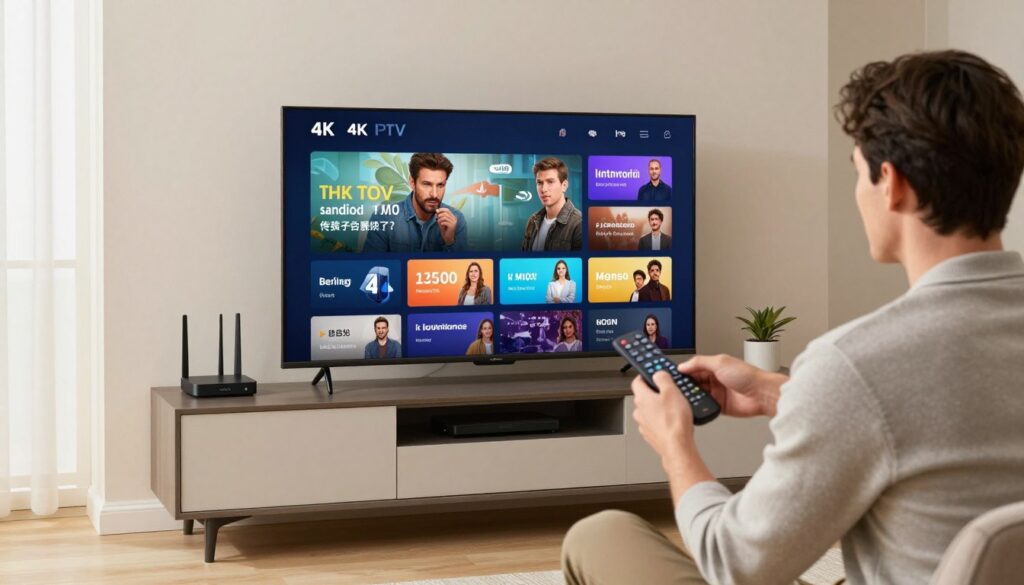
Want flawless match-night streaming in Greater Manchester without the usual buffering or shady sellers?
You need a practical checklist that shows what matters in real life: internet speed, device support, app settings, and how to spot risky offers. This short guide frames those points so you don’t buy a plan that looks great on paper but fails when it counts.
We’ll cover which devices work best — Firestick, Smart TVs, Android/iOS, Windows/Mac — and how common problems like buffering and scams happen. You’ll also get a quick note on legal IPTV tech and how to avoid unlicensed sellers.
Quick heads-up: later in the article you’ll find a curated provider roundup and device-by-device setup steps, plus a contextual link to https://getmaxtv.com for more setup help. If you want a legal IPTV subscription, check GetMaxTV’s offer at https://watchmaxtv.com.
Key Takeaways
- Understand real-world needs: speed, connection, and device limits.
- Look for reliability, not just big channel lists.
- Watch for scams and unlicensed streams; legal tech matters.
- Device setup and simple settings fixes often stop buffering.
- Manchester searches usually mean sports-focused, low-lag viewing.
- GetMaxTV simplifies setup and can help you test before you commit.
What a 4K IPTV Subscription Is and What “4K” Really Means for Your Stream
Let’s break down what true 4K delivery looks like and why streaming over your internet feels different from cable or satellite. IPTV is simply TV sent over your home network. That includes both live channels and on-demand libraries of movies and series.
Live channels vs VOD in 4K
Live channels must be encoded and delivered in real time. That leaves less room for buffering. VOD (video on demand) lets players fill a buffer ahead, so high-resolution shows and movies often play smoother.
Why 4K can still buffer if your setup is weak
“4K” means higher resolution and a higher bitrate. Providers may advertise 4K support, but not every stream is true 4K. Your router, Wi‑Fi interference, and device decoding limits can cause stutters even with a 4K plan.
Set a realistic goal: consistent, stable quality beats forced 4K that freezes during key moments. You’ll see trial tests and quick desktop checks later to confirm real-world access and performance before you commit.
| Aspect | Why it matters | Practical tip |
|---|---|---|
| Channels | Number and type of channels affect bandwidth | Test popular live channels during peak times |
| VOD libraries | Movies and series are easier to buffer | Try an HD VOD first to verify stability |
| Device limits | Older devices may not decode high bitrates | Use a modern player or lower resolution if needed |
Internet Speed Requirements for Smooth 4K Streaming Today
Before kickoff, make sure your network can handle peak demand—raw speed and steady delivery both matter.
Minimum Mbps vs "comfortable" Mbps for consistent quality
You can sometimes play a high-resolution stream with a minimum plan, but that often leaves no margin for hiccups. Aim for at least 30 Mbps as a baseline for one smooth 4K stream. A more comfortable target is 50–80 Mbps if others use the same network.
Why major live sports events stress your connection
Big match nights push local networks and your ISP. More viewers at the same time increase congestion. Live delivery also gives less buffer room, so a short drop can cause freezes during key moments.
Wi‑Fi vs Ethernet for peak performance
Use wired Ethernet whenever possible. It cuts interference and packet loss and boosts steady throughput for streaming.
5GHz Wi‑Fi is great for high throughput at short range. Choose 2.4GHz when you need range or if walls block signals. If possible, place the router near the TV box for the best result.
How your household’s devices affect streaming time and stability
Other devices like game consoles, cloud backups, and video calls compete for bandwidth. Multiple simultaneous streams sharply raise the risk of drops.
- Test your speed before events and restart the router.
- Pause large downloads and backups during live sports.
- Use Ethernet for your main player; switch to 5GHz if Ethernet isn’t possible.
| Scenario | Recommended Mbps | Tip |
|---|---|---|
| Single high-res stream | 30–50 | Use Ethernet or close 5GHz Wi‑Fi |
| Household with multiple devices | 50–80 | Limit background uploads during events |
| Peak live events | 80+ | Test speed and use wired connections |
Connection Quality Factors That Matter More Than Raw Speed
You need more than a big Mbps number to guarantee smooth live viewing. Real-world stability depends on timing and consistency, not just peak speed.
Latency and jitter: the hidden causes of freezing
Latency is the delay for data to travel from server to your player. Jitter is variation in that delay.
Both can cause micro-stutters, audio dropouts, or sudden quality shifts even when a speed test looks fast.
Router placement and 5 GHz Wi‑Fi best practices
Keep the router out of cabinets and near the center of your living space. Elevate it and avoid microwave or thick-wall interference.
Use 5 GHz for high performance at short range. Choose a less crowded channel and keep the distance reasonable. Consider mesh Wi‑Fi if your layout blocks signal.
ISP congestion and why uptime claims need testing
Providers often advertise “99.9% uptime” and fast servers, but peak-hour congestion at your ISP can still hurt streams.
Do a trial and test during the hours you watch live events. Check responsiveness from support if you see repeated drops.
- Spot jitter: look for random micro-stutters and audio gaps.
- Quick fixes: use Ethernet, restart router before events, pause backups.
- Evaluate service: test stability and support response during a trial.
| Factor | Why it matters | Action |
|---|---|---|
| Latency/Jitter | Causes freezing | Test with ping and traceroute |
| Wi‑Fi placement | Affects signal | Move router centrally |
| ISP load | Peak slowdowns | Test at event time |
Best Devices for 4K IPTV: What Works and What to Avoid
Not all players and boxes handle high-bitrate live feeds the same—choose wisely for consistent playback.
Smart TVs and app availability
Smart TVs are convenient: fewer cables and a tidy living room setup. They work well for family viewing and casual sports nights.
But app stores vary. Your TV may not offer the iptv player you prefer, or updates can run slow. Check the TV’s app list before you buy.
Fire TV Stick and Fire TV
Fire TV devices are a popular simple setup. They support many players and remote-friendly apps.
Choose Fire TV when you want easy installation and a hassle-free remote experience for shared living rooms.
Android vs iPhone/iPad
Android phones and tablets offer flexible players and wider support for playlist formats like M3U and Xtream. They are handy for travel or single-viewer use.
iPhone and iPad give a polished app experience but can be stricter about app side-loading. Use them if you value a smooth mobile interface.
PC and Mac as test tools
Desktops are great for troubleshooting. Use VLC or desktop players to confirm whether buffering is from services, your app, or Wi‑Fi.
MAG and Enigma boxes
Set-top boxes still have a place. Choose MAG/Enigma if you need portal-style setups or a dedicated STB for multiple TVs.
For most users, modern streaming sticks are cheaper and easier to manage unless you need advanced set-top features.
- Quick buyer tip: pick a device that decodes high bitrate smoothly — a stable device often matters as much as network speed.
- Match by use: sports fans: wired stick or TV box; families: Smart TVs; travelers: phone or tablet.
- For recommended players, see the best iptv player roundup to match apps with your chosen device.
IPTV Player Apps and Formats You’ll Use (M3U, Xtream Codes, EPG)
Start by learning the three delivery types you’ll meet during a trial. M3U playlists are link-based files or URLs. Xtream-style access uses a server URL plus username and password. EPG is the electronic TV guide that organizes channels.
Common apps and compatibility
IPTV Smarters and TiviMate are widely supported on Android devices and many set-top boxes. Smart TV app stores vary, so confirm app support before buying a long plan.
Quick desktop testing with VLC
Use VLC to open an M3U link. If VLC stutters, the problem is likely the stream or your network, not the app on your TV box.
EPG, catch-up, and cloud DVR explained
Good EPG speeds channel discovery and program jumps. Catch-up lets you watch recent shows; cloud DVR stores recordings on the provider side. Ask providers about retention length and device support during trials.
- Create a small test list: one sports channel, one news channel, and one 4K VOD title to validate the workflow.
| Format | How it works | Why it matters |
|---|---|---|
| M3U | URL or playlist file | Easy to test with VLC |
| Xtream Codes | Server + user credentials | Often required by premium apps |
| EPG / DVR | Guide data and recordings | Improves daily usability |
4K IPTV Settings That Improve Picture Quality Without Causing Buffering

Before chasing a “zero-buffer” promise, try simple player and audio changes that save viewing time.
Adaptive bitrate is the safer default. It lowers resolution briefly when your connection dips so playback stays continuous. Use it if you watch over Wi‑Fi or with other devices active.
When forcing 4k makes sense: pick forced 4k only on a wired connection and a modern device with plenty of CPU headroom. Otherwise it can cause stalls and frame drops.
Adjust buffer size in your player to reduce stutters. Increase the buffer for live sports by small steps (for example, 3→6 seconds). Too large a buffer slows startup, so tune it to your viewing habits.
Simple player tweaks
- Enable hardware decoding to cut CPU load.
- Match refresh rate if the app offers it to avoid judder.
- Pick a stable video renderer in settings when available.
Audio and subtitles
Avoid on-the-fly transcoding: choose common audio (AAC or AC3) and disable extra subtitle tracks to reduce processing.
Test one change at a time and run a short A/B trial at match time. For guided trials, see a free-trial checklist at trial tips or consider provider setup help from GetMaxTV.
| Setting | Suggested value | Why it helps |
|---|---|---|
| Adaptive bitrate | On (default) | Keeps playback continuous during drops |
| Buffer size | 3–8 seconds (tweak) | Prevents micro-stutters without long startup |
| Hardware decoding | Enabled | Reduces CPU load and improves performance |
| Audio format | AAC/AC3 | Avoids transcoding delays and lip-sync issues |
Setup Guide: How You’ll Install IPTV on Common Devices
A fast checklist makes setup painless. Have your provider login, a stable internet connection, and the player you want ready. Enable EPG if the service provides it so guide times show correctly.
Smart TV (Samsung, LG)
Open your TV’s app store and install IPTV Smarters Pro or TiviMate if available. Enter the M3U URL or Xtream credentials and restart the app.
Once the app reloads, your channels and guide should populate. If times are off, set the TV time zone to match the EPG.
Firestick
Search the Appstore for your chosen player, install it, then enter credentials. Pin the app to the home bar for quick access on match days.
Android and iOS (phone or tablet)
Install the platform-appropriate app (IPTV Smarters on Android, iPlayTV on iOS or similar). Paste login details carefully and confirm time zone so the EPG aligns.
Windows and Mac
Use VLC to test an M3U link quickly. For daily use, install a desktop player that supports EPG and favorites for easier channel browsing.
- Troubleshoot: if one device buffers, try another on the same network to isolate hardware vs access problems.
- If issues persist, reboot router and device, then contact provider support.
Need guided help? Follow a step-by-step setup guide for hands-on assistance at setup help.
What to Look for in a Reliable IPTV Service in the UK
Choosing a reliable streaming provider starts with checking what you actually watch, not the headline channel count. Look past big numbers and focus on usable coverage for the shows and sports you follow.
Channel depth: live channels, movies and series libraries
Channel depth means more than a total. Verify that the provider carries the UK sports and news channels you use. Also check the VOD library for movies and series you want to watch.
4K and Full HD support across devices
Confirm playback on the device you use most. A stream that works on your phone may fail on a TV box. Test both Full HD and 4K on your living-room setup.
Uptime claims and real-world stability
“99.9% uptime” is marketing. Run simple tests: load times, stability during evening hours, and consistency across three separate channels rather than one demo stream.
Customer support speed and setup help
Fast, knowledgeable support matters. Good customer support can walk you through Xtream, EPG setup, or extra connections when needed.
Trials, pricing, and contract-free plans
A meaningful trial or free trial should include live channels, VOD playback, and EPG accuracy during peak hours. Start with a short plan to verify stability before you commit to a longer plan.
| Aspect | What to check | Quick test |
|---|---|---|
| Channels | UK sports & core picks | Open three live channels at peak |
| Playback | Device compatibility | Test TV box and phone |
| Support | Response speed | Send a setup question and time reply |
For a short guide on provider selection and setup, see how to choose providers.
4k iptv subscription manchester: What to Prioritize If You’re Streaming in Greater Manchester
Local broadband helps, but your living room gear decides match-night quality. Fast lines give you headroom, yet a poor router, crowded apartment Wi‑Fi, or late-night ISP dips can still cause freezes.
Why fast local infrastructure helps—but isn’t the whole story
Speed is only one piece. Use Ethernet when you can, place the router high and central, and avoid heavy uploads during games.
“Test from the room you watch in, not next to the router, to see real performance.”
Sports-first needs for Manchester viewers
If you follow Premier League or Champions League action, prioritize stability over headline resolution.
- Wired player for main TV.
- Choose providers known for big-event reliability.
- Ask about peak-time performance and multi-device limits.
Family viewing: kids’ content, parental controls, and profiles
Look for child-safe channels, profile separation, and adult-content toggles so your shows and kids’ content stay apart.
| Need | What to check | Quick ask to provider |
|---|---|---|
| Live sports | Big-event uptime | How do you handle peak nights? |
| Multi-device | Concurrent streams | Are extra connections extra cost? |
| Family | Parental controls | Can I set profiles and block content? |
Provider Roundup for 2025: IPTV Options That Advertise 4K and Broad Channel Access
Use a simple set of criteria to compare contenders. Look at channel breadth, sports performance, VOD depth, device and app support, EPG quality, and how fast support responds.
Viking IPTV — global reach with big VOD libraries
Strength: massive channel and VOD counts.
Offers 30,000+ live channels and 60,000+ VOD titles. It suits households that want variety beyond the UK and world feeds. Pricing starts at £25/3 months or £70/year.
XtremeHD IPTV — speed and app compatibility
Strength: performance-led, quick support.
About 20,000 channels with 4K/HD/SD streams. Works with IPTV Smarters, TiviMate, and MAG boxes. Good if you value fast help and flexible app options.
Monster IPTV — live sports and event reliability
Strength: sports-first line-up and event tuning.
Focuses on Sky Sports, BT Sport, DAZN and beIN. VOD includes major movies and series libraries. It adds an adult-content toggle for family setups.
British IPTV — UK-focused simplicity
Strength: full EPG, catch-up and cloud DVR.
100% UK channels with local support. Choose this if you want a guide-like experience and reliable UK content delivery.
CatchOn TV — Europe and multilingual mixes
Strength: international channels and fast activation.
Combines UK and European feeds (Italy, France, Germany). Useful for expats and mixed-language homes; payments and activation are secure and quick.
| Provider | Strength | Channels / VOD | Notable |
|---|---|---|---|
| Viking | Variety | 30k live / 60k VOD | Best for world content |
| XtremeHD | Performance | 20k+ | App-friendly, fast support |
| Monster | Sports | Sports-first + VOD | Big-event reliability |
| British | Local focus | UK channels | EPG & DVR |
| CatchOn TV | Multilingual | UK + EU mixes | Quick activation |
Quick note: these options aim at different needs. Try each service during your normal viewing hours to confirm real-world stability before you commit to any paid plan.
Spotlight on IPTVUKS: Claimed 4K Streaming, UK Servers, and Plan Options
IPTVUKS positions itself as a UK-focused service with big channel catalogs and several price tiers. You should read the numbers, then test what matters to you.
What "fast UK servers" aims to fix
Fast UK servers are intended to lower delay, speed channel start times, and reduce buffering spikes for viewers in the UK. That helps when you stream live sports and news during peak hours.
Plans, price and how to compare
IPTVUKS lists 24,000+ live channels and 150,000+ movies and series. Their published plans are: 1 month £15, 6 months £40, 12 months £60, lifetime £200.
Compare by channel relevance and real-world uptime, not just totals. If price worries you, start with a short plan to limit risk.
Multi-device rules and trials
Each subscription works on one device at a time; extra connections are sold separately. Devices supported include Firestick, Smart TV, Android, iOS, Windows/Mac, and MAG/Enigma.
They offer a free trial by contact. Use it at peak evening hours: open one live sports channel and one VOD title on your main device to verify performance.
“Smooth streaming on my Firestick and phone — Emma W., Manchester”
| Feature | Claim | Why test it |
|---|---|---|
| Channels | 24,000+ live | Check UK sports and local channels you use |
| VOD | 150,000+ titles | Open a 4K category title you care about |
| Plans | £15/1m, £40/6m, £60/12m, £200/lifetime | Compare trial results vs price |
| Device rule | 1 device at a time | Buy extra connections for family viewing |
How to Compare Price, Plans, and Value Without Getting Burned

Before you buy, learn how to weigh price and real-world performance so you don’t pay for a flaky service.
What a true premium iptv plan should include: stable streaming during peak hours, clear device compatibility, a working EPG, and rapid customer support when setup fails.
Red flags to watch for
- Unrealistically low price with vague channel lists or screenshots.
- Sellers who refuse to share a sample channel list or demo login.
- Promises of unlimited concurrent streams without clear rules—servers get oversold fast.
What a useful trial must let you test
Ask for a trial that covers live channel zapping, peak-hour stability, EPG accuracy, and VOD playback. Time how long channels take to start and note any drops during prime time.
| What to check | Quick test | Why it matters |
|---|---|---|
| Channels you care about | Open key sports/news channels | Confirms actual coverage |
| Peak-hour stability | Test during evening | Shows real uptime |
| Support response | Send setup question | Shows real help speed |
Practical tip: start with a short plan or a paid trial. Upgrade only after the service proves stable for your household. For help matching apps to devices, see the best iptv player roundup.
Live Sports and Big Events in 4K: How to Stream Without Lag
Match nights push networks and streams to their limits, so a short pre-game routine keeps you watching, not fixing.
Why peak games create the worst traffic
Big events concentrate viewers at the same time. That stresses both your ISP and provider servers. Live feeds can’t buffer far ahead the way VOD can, so tiny drops show up as freezes or audio gaps.
Pre-kickoff device and connection checklist
- Reboot your router and TV box 15 minutes before kickoff.
- Use Ethernet or a strong 5GHz Wi‑Fi link for your main player.
- Close downloads, pause backups, and free up device storage and CPU.
- Have a backup feed or channel category ready; some providers offer alternate sources.
When to switch players or drop resolution
If one app stutters, try another player — different apps manage buffering and decoding in different ways.
Set realistic expectations: a stable Full HD feed often beats a stuttering 4k stream during key moments. If problems persist, drop resolution, increase the player buffer slightly, or move the player from Wi‑Fi to Ethernet.
| Action | When | Why |
|---|---|---|
| Drop to Full HD | Immediate stutter | Reduces bitrate and keeps picture steady |
| Switch player app | Repeated micro-stutters | Different buffering engines may help |
| Use backup feed | Channel freeze | Provider-side alternative often available |
Pro tip: services like Monster IPTV market “no lag” for big events, but always test at match time to confirm real-world performance.
Stay Safe and Legal: IPTV Technology vs Unlicensed Content
Smart viewing starts by separating the delivery method from the rights to the shows you watch. The streaming protocol itself is legal. What can get you in trouble is the content being delivered without rights.
What triggers warnings or fines? Unlicensed redistribution of pay channels, live pay-per-view events, or large-scale sharing can draw enforcement. Sellers who can’t prove licensing or offer wildly cheap access are high risk.
Why avoid free apps and unverified sellers
Free players and unknown resellers may promise tons of channels but often deliver unstable streams, malware, or no support. They also have no accountability when an account stops working.
VPNs: privacy and limits
A VPN like NordVPN, Surfshark, or CyberGhost can improve your privacy and sometimes help with geo-blocked access.
Important: a VPN does not make illegal content legal. Use it for privacy, not as a shield for piracy.
Choose transparent providers
Pick a provider that lists clear terms, payment methods, and fast support. Ask for a short free trial and test during peak hours before you commit to a long subscription.
| Risk | What to ask | Action |
|---|---|---|
| Unverified seller | Proof of licensing? | Avoid or demand trial |
| Free app | Source and reviews? | Skip if unclear |
| Privacy | VPN allowed? | Use trusted VPNs |
For a reputable option and setup help, check reputable iptv services that offer clear terms and customer support so you can watch without legal surprises.
Where GetMaxTV Fits: A Simpler Path to a Stable Viewing Setup
When your main goal is a stable stream, clear support and fast setup beat flashy channel counts.
Think reliability-first. A practical service gives concise setup instructions, quick customer support, and realistic performance notes so you know what to expect on match night.
GetMaxTV is positioned as a practical option if you value that approach. It focuses on responsive support and contract-free plans so you can test without a long commitment.
What reliability-first looks like
- Clear device steps and simple login details.
- Fast response from support when channels or guides fail.
- Real-world trial windows for peak-hour testing.
| Feature | Why it matters | Quick check |
|---|---|---|
| Setup guides | Less time troubleshooting | Follow steps and start a live test |
| Customer support | Fixes before kickoff | Send a question and time the reply |
| Trial policy | Low-risk evaluation | Test during peak hours |
Compare providers using the checklist from earlier sections. To review GetMaxTV’s main offer and see if it matches your needs, check their details at GetMaxTV. For local reseller guidance, see a short guide on finding a reseller.
Conclusion
In closing, prioritize stable connections and real-world trials over flashy channel counts and marketing claims.
Start with the basics: a low-jitter Ethernet or strong 5GHz link, a capable device, a reliable player, and sensible settings like adaptive bitrate. These items matter more than a long channel list when streaming big events.
When you choose services, focus on the channels and movies you actually watch, test sports performance at peak time, and confirm EPG and catch-up work for your household.
Remember: claims are only useful after you test them on your network. Stay legal by avoiding unknown sellers and free apps that promise too much.
Next step: if you want a legal iptv subscription and clear setup help, check GetMaxTV’s offer at https://watchmaxtv.com.
FAQ
What does 4K streaming really mean for your viewing experience?
4K means four times the pixel count of Full HD, so you get sharper detail and richer color when content and your screen support it. To enjoy it, your device, player app, and connection all need to handle the higher bitrate. If any link in that chain is weak, you’ll see buffering or downscaling instead of full-resolution playback.
How do live channels differ from VOD when watching high-resolution content?
Live channels are streamed in real time and can spike bandwidth use during big events. VOD (movies and series) often uses adaptive bitrate streaming and can buffer ahead, making it less sensitive to short network hiccups. For live sports you need steadier throughput to avoid frame drops or pauses.
What minimum internet speed do you need for smooth 4K streaming today?
Aim for at least 25–35 Mbps per stream as a practical minimum. For consistent, high-quality playback—especially during live sports or on multiple devices—target 50 Mbps or more. Also factor in other household traffic like gaming or video calls.
Why can major live sports events cause buffering even with a good headline speed?
Big events create peak demand on servers and ISPs. Congestion at your provider or the content origin can add latency and packet loss, which your player can’t always hide. That’s why uptime and real-world stability matter as much as advertised Mbps.
Is Wi‑Fi good enough, or should you use Ethernet?
Ethernet gives the most reliable throughput and lowest latency. If you must use Wi‑Fi, prefer 5 GHz, place the router close to the device, and minimize interference. For critical streams like Premier League matches, wired is the safer choice.
How do other devices in your home affect streaming stability?
Multiple streaming devices, smartphones, cloud backups, and smart home gadgets all share your bandwidth. High concurrent use can reduce available throughput per stream and increase jitter. Limit background uploads and prioritize your streaming device with QoS on the router if possible.
What are latency and jitter, and why do they cause freezing?
Latency is the delay for packets to travel; jitter is the variation in that delay. High latency or jitter disrupts the steady flow of data your player needs, causing rebuffering or stutter even if average speed looks fine. A stable, low-latency connection prevents these issues.
Where should you place your router for best 5 GHz Wi‑Fi performance?
Put the router in a central, elevated spot away from thick walls, microwaves, and large metal objects. Keep a clear line of sight to your main streaming area and avoid crowded channels. Small moves can significantly improve signal and reduce drops.
Which smart TVs work best for high-resolution streaming?
Recent Samsung and LG models with native app support and HEVC/AV1 decoding perform well. Check that the TV supports your chosen player formats and has hardware decoding for 4K codecs to avoid excessive buffering and batteryless player reliance.
Is Amazon Fire TV a good choice for simple setup?
Yes—Fire TV Stick and Fire TV devices are popular for easy installs and broad app compatibility. They handle many player apps with decent playback, but choose a higher-spec model for the best decoding and smoother 4K performance.
Can you stream from mobile devices like Android phones or iPhones?
Absolutely. Modern Android phones and iPhones stream high-resolution video well, but screen size and codec support vary. For long viewing sessions, prefer tablets or cast to a TV; on mobile, use a wired or strong 5 GHz connection to avoid drops.
How do PC and Mac streaming options compare to set-top boxes?
PCs and Macs offer flexible players like VLC or dedicated apps and can handle high bitrates if the hardware is capable. Set-top boxes may be simpler and optimized for TV playback. Choose based on convenience, codec support, and whether you need portability.
When do MAG or Enigma boxes make sense?
These traditional set-top boxes suit users who want a dedicated appliance, EPG support, and offline stability. They can be excellent for fixed installs, but ensure firmware and codec support match modern formats before buying.
What player apps and file formats should you expect to use?
Common formats include M3U playlists and Xtream Codes for credentials. Popular players are TiviMate and IPTV Smarters for Android/TV, and VLC for desktop testing. Look for EPG and cloud DVR support in the player if you rely on guides and catch-up.
How can you tweak player settings to reduce buffering without losing too much quality?
Enable adaptive bitrate if available, increase buffer size slightly in the player, and avoid forcing the highest resolution unless your network is rock-solid. Lowering audio bitrate or disabling subtitles can also ease load in tight conditions.
What are the basic steps to install a player on a Samsung or LG smart TV?
Open the TV app store, search for the supported player (or sideload if the model allows), install, then enter your playlist or account credentials. Restart the TV and test a live channel and a VOD title to confirm playback and EPG mapping.
How should you set up a Firestick for viewing?
Update the Fire OS, install the player app from the Amazon Store or sideload via Downloader, grant required permissions, then enter your login or playlist. Use the Firestick remote or a paired keyboard to enter credentials quickly.
What should you check before installing on Android or iOS?
Verify app compatibility with your device OS version, confirm codec support, and ensure a stable Wi‑Fi or wired network. On iOS, app availability is more limited, so you may need to use AirPlay to cast from a Mac or iPhone to a TV for bigger-screen viewing.
How do Windows and Mac installations differ?
On desktop, you’ll often use VLC or vendor-supplied apps. Windows has broader native app support; on Mac, check for a compatible player or use browser-based portals. Desktop setups are ideal for testing bandwidth and adjusting advanced player options.
What should you look for in a reliable service provider in the UK?
Prioritize broad channel depth, clear EPG and catch-up features, multi-device support, honest uptime claims, and responsive customer support. Trials and transparent pricing help you test real-world performance before committing.
How important are trials and money-back options?
Very important. A proper trial should let you test live sports, multiple devices, and peak-time performance. Trials reveal real stability and channel accuracy, so avoid providers that refuse any hands-on testing.
For viewers in Greater Manchester, what should you prioritize?
Look for providers with strong UK server presence and reliable live sports coverage—especially Premier League and Champions League feeds. Local infrastructure helps, but choose a service with proven uptime and quick customer support.
How do you evaluate plan value without getting burned by cheap offers?
Check channel lists, decoder and player compatibility, the number of simultaneous connections, and the presence of EPG/DVR features. Extremely low prices with vague channel details are a red flag for poor reliability or missing channels.
What are common red flags when choosing a provider?
Unrealistic low cost, no trial, absent or slow support, unclear server locations, and missing codec or EPG information. Those signs often predict interrupted service during key events and limited device compatibility.
How can you reduce lag on match nights?
Use a wired connection, close background apps and updates, switch to a lower resolution temporarily if needed, and have a backup player app ready. Also test your connection during peak hours to see how it holds up ahead of kickoff.
What’s the legal side you should know before using such services?
Streaming licensed content from authorized providers is legal. Avoid free or unverified sources that distribute copyrighted material without rights—those can expose you to warnings, account blocks, or fines. Use legitimate apps and reputable providers.
Do VPNs help with privacy and geo-restrictions?
VPNs can improve privacy and may bypass geo-blocks, but they add latency and can reduce throughput. Use a high-quality VPN only when necessary and test performance before relying on it for live events.
What should you expect from good customer support?
Fast response times, clear setup guides, and remote assistance options. Reliable providers help you install apps, troubleshoot player settings, and verify channel access quickly—especially during live-event issues.
What does a useful free trial typically let you test?
A good trial provides access to live channels, VOD libraries, EPG, and multiple device logins. It should let you check peak-time performance, sports feeds, and device compatibility so you can assess stability and picture quality.
How many devices should a quality plan support simultaneously?
Look for plans that offer at least two to four concurrent streams for families. If you regularly watch across multiple rooms or share with housemates, choose a higher concurrent connection limit to avoid forced logouts.
What’s the difference between premium and basic plans?
Premium plans usually include more channels, 4K or Full HD streams, multi-device connections, better EPG/catch-up, and priority support. Basic plans may limit resolution, channels, and simultaneous streams to lower costs.
How do you set up multi-profile or parental controls?
Many modern players and providers offer profile creation and PIN-protected parental controls. Check the provider’s feature list and app settings to assign age limits, restrict channels, and create separate watch histories for family members.
Are there recommended players for testing playback quickly on desktop?
VLC is a reliable, quick option for testing streams and playlists on Windows and Mac. It shows codec compatibility and streaming stability without needing a full app install, making it ideal for troubleshooting.
The WatchMaxTV Team is a dedicated group of streaming specialists and entertainment technology reviewers covering IPTV services for viewers in the USA, UK, and Canada since 2023. Our team independently evaluates every service we feature — testing across Smart TVs, streaming sticks, mobile devices, and gaming consoles. We measure stream stability, picture clarity in HD and 4K, program guide accuracy, and customer support quality. Our goal is simple: help cord-cutters find reliable, affordable alternatives to overpriced cable. Every recommendation on WatchMaxTV.com comes from real-world testing — not sponsored content or paid placements.